Blog

Vocal behaviour and ecology of syntopic Balloon Frogs from Central India

Most amphibians call but why do they call? Well, a male frog can call to attract a female or to defend his territory. As a part of the research, a team of scientists in Asia decided to study two elusive and syntopic species of balloon frogs – Marbled Balloon Frog and Indian Balloon Frog, and the findings of the study are published in BMC Zoology. Not much is known about their ecology and behaviour since they are highly secretive and spend most of their life underground. They surface only for a few days to breed. The research is also summarised in this video.

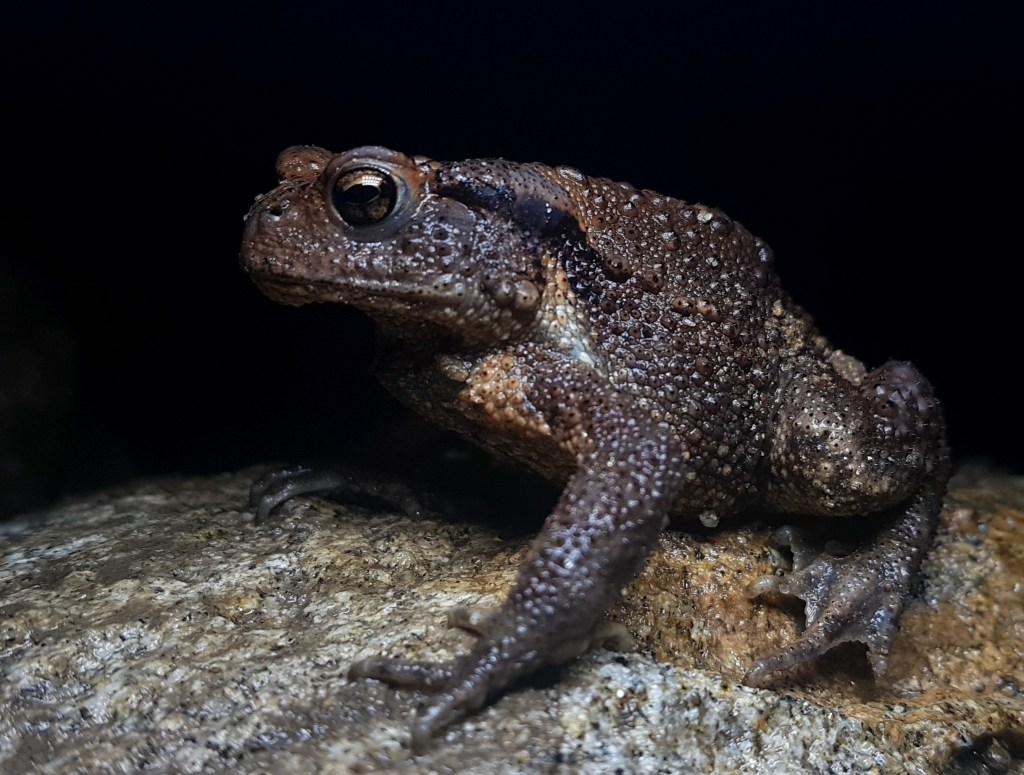
The two elusive syntopic species of Balloon Frogs, Uperodon systoma and U. globulosus

When breeding in same habitat, species may be forced to utilise the same habitat. This may increase the risk of cross breeding, which may result in unsuccessful reproduction. The researchers were interested to find ‘How do these two frog species overcome this problem and breed successfully?’. And they found that the two balloon frog species adapted to diverge in their acoustic behaviour by making a clear segregation in call properties. Helping them to distinguish their calls… making it easier to detect by females.

Acoustic segregation in the call properties of Uperodon systoma and U. globulosus. Our results demonstrated that the advertisement calls of U. systoma are pulsatile with a call rate of3.00 ± 0.97 calls per second while those of U. globulosus are not pulsatile with a lower call rate of 0.53 ± 0.22 calls per second. For both species, the variations in call properties among individuals was higher than that within individual, a pattern consistent with that of other fossorial anurans. The body condition and air temperature did not significantly impact the call properties of either species.

The two balloon frog species also used different calling locations within the same habitat. Creating a calling microhabitat partitioning. These strategies allowed them to breed successfully and help them co-exist!
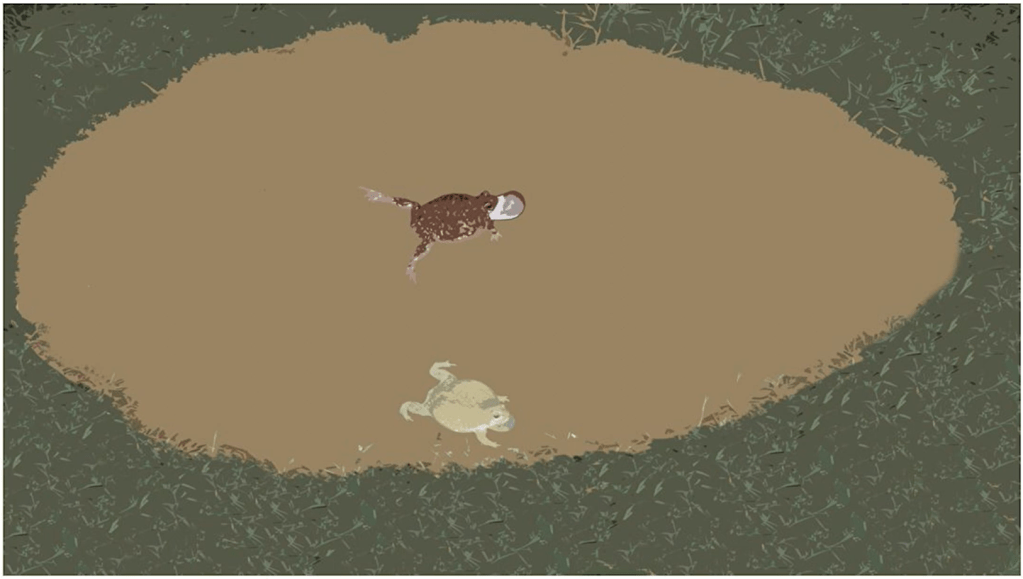
Breeding microhabitat segregation between Uperodon systoma and U. globulosus. we successfully demonstrated that there is a clear segregation in calling site microhabitat between the two species, where U. globulosus calls floating close to the bank of the waterbody while U. systoma calls floating further away from the bank

Also, both the species have a potential of individual recognition through individual calls as shown in this research study.

The outcome of the Beecher’s index (HS) showed that the calls of U. systoma can be used to identify 14 different individuals and the calls of U. globulosus can be used to identify 26 different individuals.

Conclusion: This study provides the first detailed analysis of the vocal behaviour of elusive marbled balloon frog and Indian Balloon Frog and highlighting the potential for pre-mating isolation, character displacement and assortative mating in these two syntopic species. Leading to the association between acoustic and calling microhabitat niche as an important behavioural and ecological trait.

Prasad V. K., Chuang M-F., Das A., Ramesh K., Yi Y., Dinesh K P. & Borzée A. (2022). Coexisting good neighbours: acoustic and calling microhabitat niche partitioning in two elusive syntopic species of Balloon Frogs, Uperodon systoma and U. globulosus (Anura: Microhylidae) and potential of individual vocal signatures. BMC Zoology. 7:27. DOI: 10.1186/s40850-022-00132-x
~ SAVE AMPHIBIANS OF HIMALAYAS AWARENESS PROGRAM! ~

Some good news from the Himalayas of Uttarakhand, India! Our lab member Vishal Kumar Prasad and his team and colleagues organised a major awareness and education program: ‘Saving Amphibians of Nainital Himalaya’ on 2nd April 2022 for school students (age under 15) in Aarohi Peora, Nainital district. With the decline in covid-19 cases locally and further relaxation in restrictions, they were allowed to organise this program in villages.

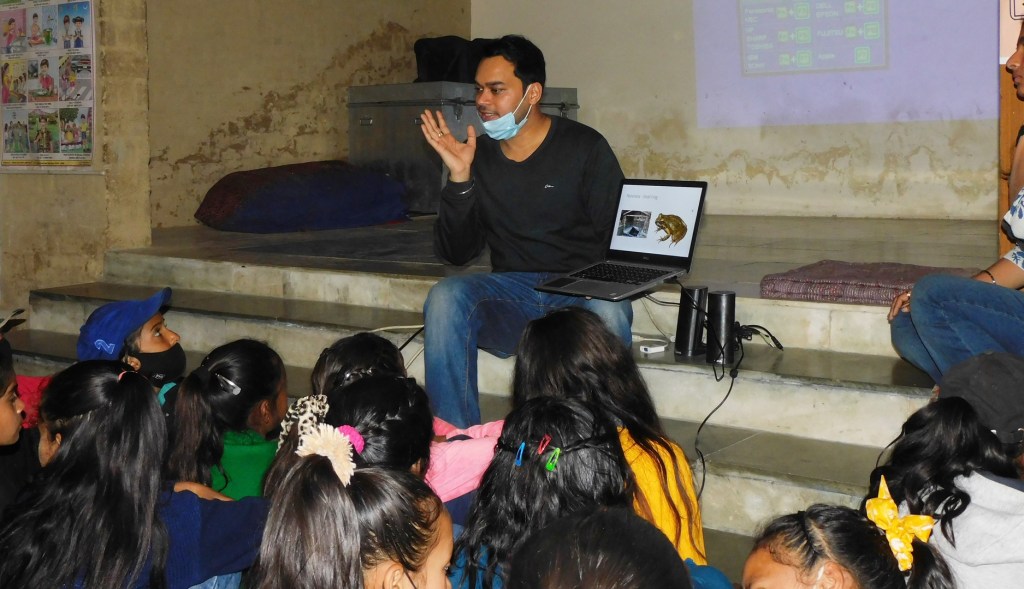
Vishal Kumar Prasad explaining about amphibian conservation to students in Nainital

The program included an interactive session on the research of endemic amphibians. Vishal presented his research work on the frogs and toads, natural history, importance, and threats the amphibians are facing in the Himalayan landscape. The team also organised some activities like memory games and the most exclusive the ‘FROG RACE!’ The winning team was awarded with prizes and certificates. All students enjoyed refreshments after a tiring ‘Frog Race’. Good teamwork was displayed by students in these group activities. This shows children are the hope for future conservation.

The ‘Frog Race’

Interestingly, there was a pre-assessment of the existing knowledge of children about amphibians by providing them a questionnaire (10 questions). This activity will be monitored after imparting further knowledge to the children to see how their perspective has changed over a period of time.  

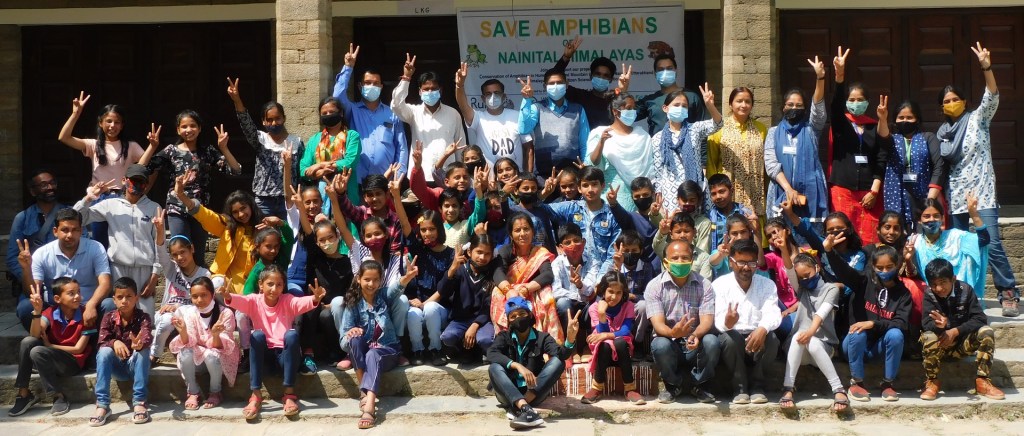
Participants of the awareness and education program: ‘Saving Amphibians of Nainital Himalaya’

Awareness program about amphibian conservation in Nainital district

Participants of the awareness program on the 18th of March 2022

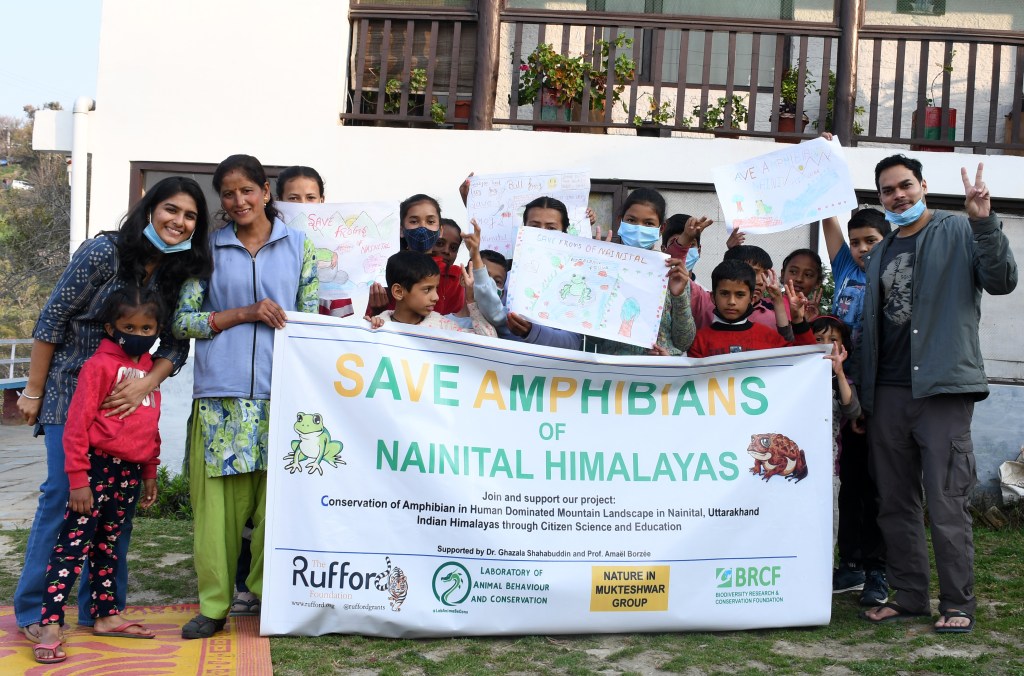
Vishal and his team organised on the 18th of March 2022 an awareness program on amphibians conservation for the children of Simayal village in the Nainital district in India. It was a two hours long event that included a short talk, a poster competition, and refreshments for about 20 children. Due to exams period, it’s difficult to conduct such event in a school and initially they didn’t expect much from the village children in terms of involvement and enthusiasm for toads and frogs, but surprisingly children were really excited about the amphibian stories.

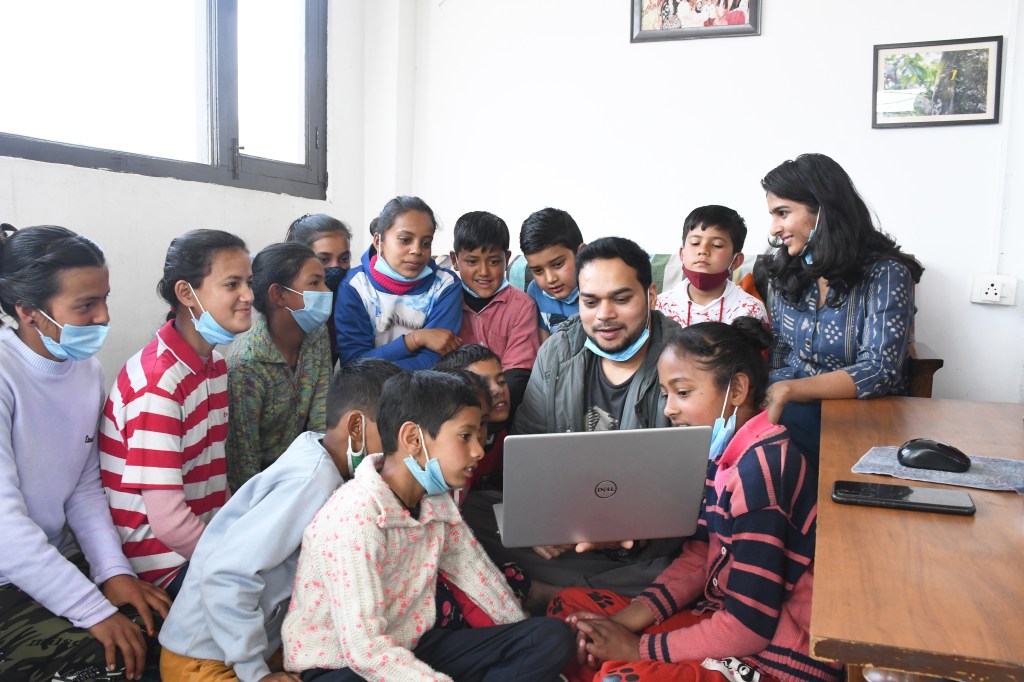
Short talk on amphibian conservation

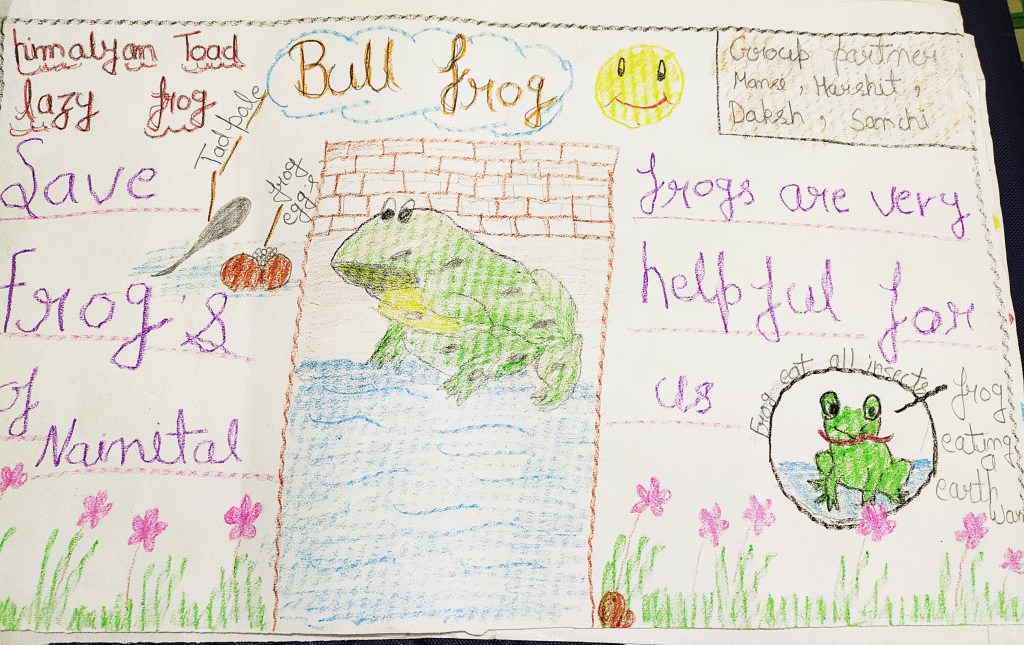
They tried to ignite their young minds with frog picture and videos and they all enjoyed the session and learned about amphibians that are found in their vicinity. Vishal hopes that this will bring some interest in the local anuran species. The children made some really cool posters and Mansi Raikwal (ninths grade) made the best poster with frog eggs, tadpole and adult frogs with a message about saving amphibians of Nainital district.

Best poster of the competition on amphibian conservation!

Новый детальный анализ филогеографии и таксономии настоящих жаб рода Bufo в Восточной Палеарктике

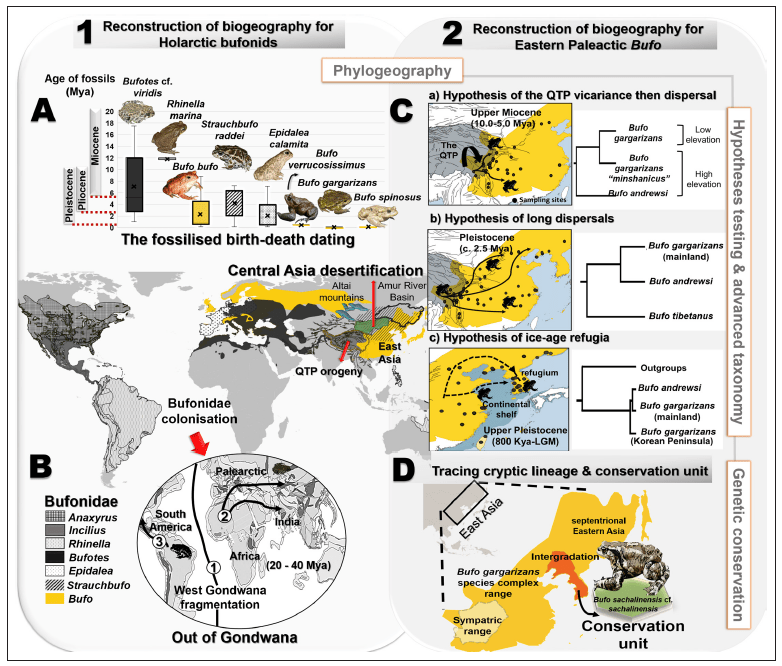
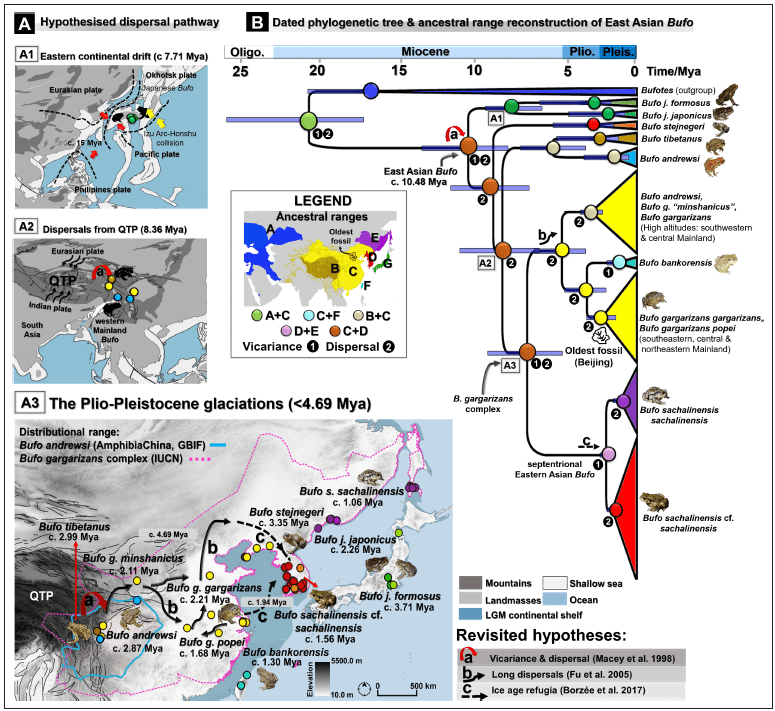
Широкое распространение настоящих жаб (род Bufo) в Восточной Палеарктике скрывало за собой большое скрытое разнообразие, неопределенность происхождения видовых комплексов и нечеткость таксономических границ. Для того чтобы реконструировать историческую биогеографию азиатских представителей этого рода и решить таксономические проблемы в таком сложном комплексе видов, как B. gargarizans, мы использовали филогеографические методы и филогенетические подходы с использованием анализа многолокусных генетических фрагментов. Было установлено, что комбинированные эффекты, связанные с особенностями расселения и выживанием в разных ледниковых рефугиумах привели к глубокому расхождению некоторых популяций внутри этого комплекса. Моделирование ареалов видов подтвердило наши выводы о том, что  самая северная группа популяций в этом комплексе имеет независимую эволюционную историю. Модели расселения видов и анализ путей их постледниковых миграций показали сильную разницу в экологических требованиях между популяциями, расположенными к востоку и западу от Желтого моря, что также подтверждает расхождение между этими кладами.

Resolution of the diversifications of bufonids in the Holarctic and the Eastern Palearctic.

Определив таксономические границы комплекса B. gargarizans, мы восстановили для северо-восточных популяций видовое название Bufo sachalinensis. Таким образом, мы показали, что в Китае проживает не один, а два вида. Кроме того, мы обращаем внимание на то, что на Корейском полуострове и Российском Дальнем Востоке встречается только B. sachalinensis, который может быть разделён на два подвида: B. sachalinensis sachalinensis в России и B. sachalinensis cf. sachalinensis на юге Кореи (этот подвид еще нуждается в описании). Это важно учитывать при планировании природоохранной деятельности для того, чтобы правильно охранять эти подвиды.

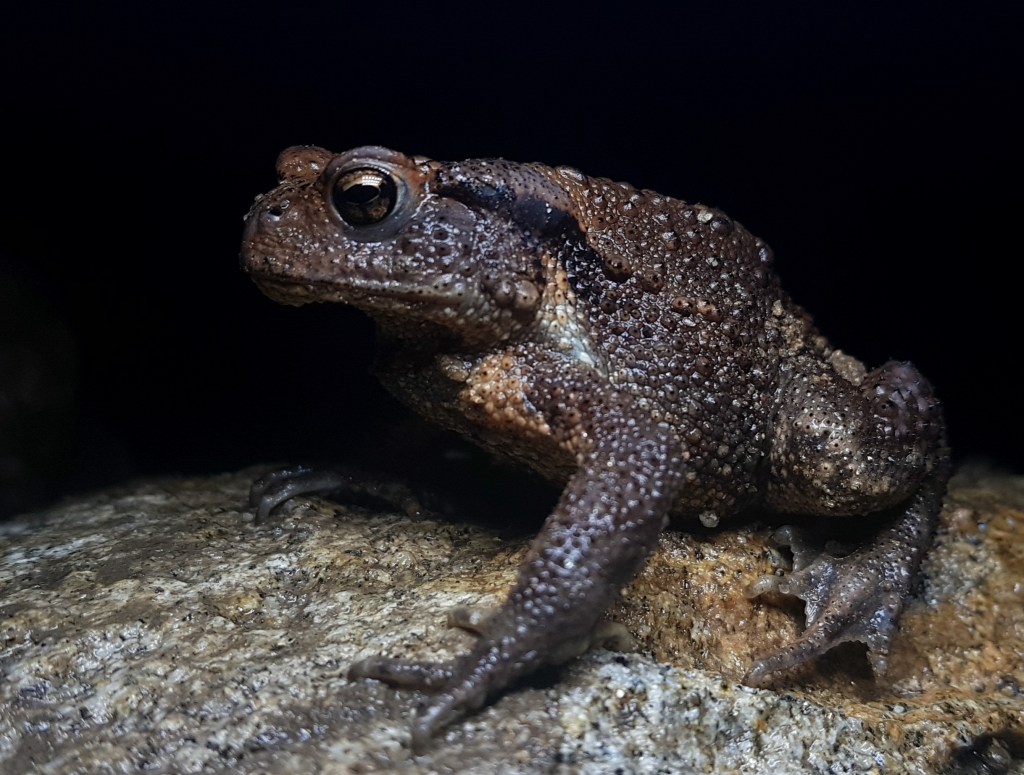
Bufo sachalinensis

Более подробную информацию об этой научной публикации можно получить на веб-сайте eLifeScience https://elifesciences.org/articles/70494.

Dated phylogeny and biogeography patterns of Bufo in the Eastern Palearctic.

동부 구북구 전역의 두꺼비속(Bufo)의 계통학 및 분류학에 대한 새로운 해결책

동부 구북구에 있는 두꺼비과(Bufo 속)는 지리적으로 광범위하게 분포하고 있기 때문에, 그 다양성을 알기 어렵고 종의 기원 또한 불확실하며, 분류학적인 경계도 불분명하다. 우리는 아시아 두꺼비과의 역사적 생물 지리를 재구성하고, 동아시아의 B. gargarizans의 사례 등에서 찾아볼 수 있는 종 복합체 분류 문제를 해결하기 위해 B. gargarizans 복합체의 전 지리적 범위에서 433 개체를 샘플링했다.

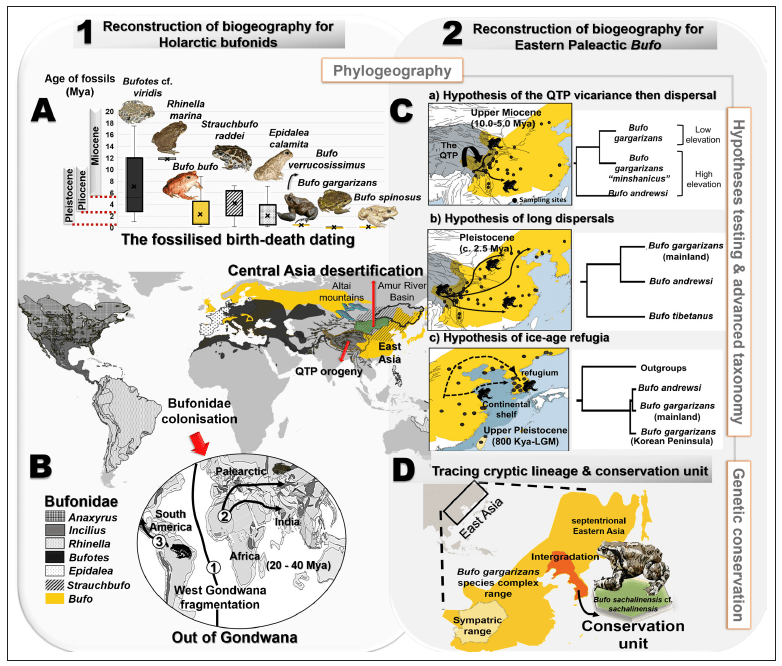
Resolution of the diversifications of bufonids in the Holarctic and the Eastern Palearctic.

예측 계통지리학 툴과 다중 유전자좌 단편을 사용한 고급 분류법을 통합하여 분석한 결과, 긴 분산 거리와 빙하기 레퓨지아의 효과가 결합되어 B. gargarizans 복합체에 있는 깊은 분기(divergence)를 초래했다는 것을 밝혀냈다. 종 구분 모델링 결과, 종 복합체의 최북단 개체군이 독립적으로 진화적 계통을 이루고 있음을 보여준다. 종 분포 모델과 이주 패턴은 황해의 동쪽과 서쪽 개체군의 생태학적 필요 조건에서 차이가 있으며, 광범위하게 분포되어 있는 B. gargarizans복합체로부터 황해의 동쪽 Bufo 계통군이 분리되어 있다는 사실을 뒷받침해준다.

Bufo sachalinensis

B. gargarizans 복합체의 분류학적 경계를 재정비하기 위해 우리는 Bufo sachalinensis이라는 종명을 다시 부활시켰고, 중국에 있는 두 두꺼비 종이 헷갈리지 않도록 동북 두꺼비 (东北蟾蜍; Dōng Běi Chán Chú; 동베찬추) 라는 중국 이름을 부여했다. 또, 우리는 B. sachalinensis만이 한반도와 러시아에서 발생한다는 점을 강조하며, 이 종을 러시아의 B. sachalinensis sachalinensis와 한반도의 남부B. sachalinensis cf. sachalinensis (아직 아종에 대한 기술이 필요하다) 두 개의 보전 단위로 나누었다. 우리는 이러한 아종을 보전하기 위해 별도의 보전 관리 체계를 만들 것을 권장한다.

이 논문에 대한 자세한 내용은 eLifeScience https://elifesciences.org/articles/70494에서 확인할 수 있다.

Dated phylogeny and biogeography patterns of Bufo in the Eastern Palearctic.