Blog

New resolution in phylogeography and taxonomy of the true toads Bufo across the Eastern Palearctic

The broad geographic range of true toads (genus Bufo) in the Eastern Palearctic has resulted in hidden diversity, uncertain origins of species complexes and unclear taxonomic boundaries. To reconstruct the historical biogeography of Asian Bufo, and resolve the taxonomy of problematic species complex such as B. gargarizans in East Asia, we sampled 433 individuals across the totality of the B. gargarizans complex range.

Resolution of the diversifications of bufonids in the Holarctic and the Eastern Palearctic.

We integrated predictive phylogeographic tools and advanced taxonomy using multi-locus genetic fragments and we determined that the combined effects of long dispersal and glacial refugia resulted in deep divergence within the B. gargarizans complex. The species delimitation modelling supported the independent evolutionary lineage of the northern-most population in the species complex. The species distribution model and migration patterns suggested a difference in ecological requirements between the populations east and west of the Yellow Sea, supporting the segregation of the Bufo clade east of the Yellow Seafrom the widespread B. gargarizans.

Bufo sachalinensis

Resolving the taxonomic boundaries of the B. gargarizans complex, we resurrected Bufo sachalinensis, also giving it a Chinese common name as two species from the clade are now in the nation: Dōng Běi Chán Chú. Additionally, we highlight that only B.sachalinensis occurs on the Korean peninsula and Russia, divided into two conservation units: B. sachalinensis sachalinensis in Russiaand B. sachalinensis cf. sachalinensis, in southern Korea (where the subspecies still needs to be described). We recommend a separate conservation management system to preserve these subspecies. 

Further details on this scientific publication are available from eLifeScience https://elifesciences.org/articles/70494 .
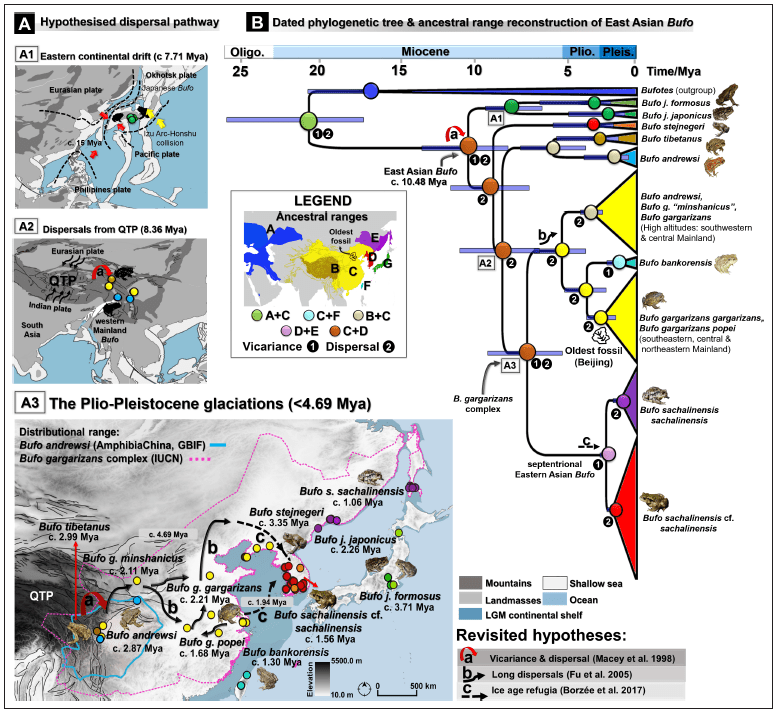
Dated phylogeny and biogeography patterns of Bufo in the Eastern Palearctic.

Amphibian introductions to Ulleung Island.

New publication in BioInvasions Records: “Record of invasive Rana huanrenensis and Pelophylax nigromaculatus on Ulleung Island, Republic of Korea”. A paper led by Yoonhyuk Bae.

Invasive species have a significant negative impact on the environment where they have been introduced, and amphibians are among some of worse invasive species. All known amphibian introductions are linked to human activities, generally in relation with pest control or food provisioning.

This is the case of all amphibians on Ulleung Island, Republic of Korea, which were originally and mistakenly thought to be “reintroduced” after extirpation, or introduced for unrealised purposes such as food provisioning and pest-control. We conducted call and visual encounter surveys in all valleys of Ulleung Island, Republic of Korea, in April and May 2021 to detect the presence of amphibian species. The call surveys and subsequent call analyses revealed the presence of two geographically independent populations of Pelophylax nigromaculatus, and encounter surveys resulted in the sampling of Rana tadpoles identified as Rana huanrenensis with molecular tools. These results highlight the presence of these two species at low density on this island, but do not provide data on the impact of their presence.

Introduction routes of Pelophylax nigromaculatus and Rana huanrenensis to Ulleung Island.

Saving the amphibians of the Himalayas

Text by Vishal Kumar Prasad

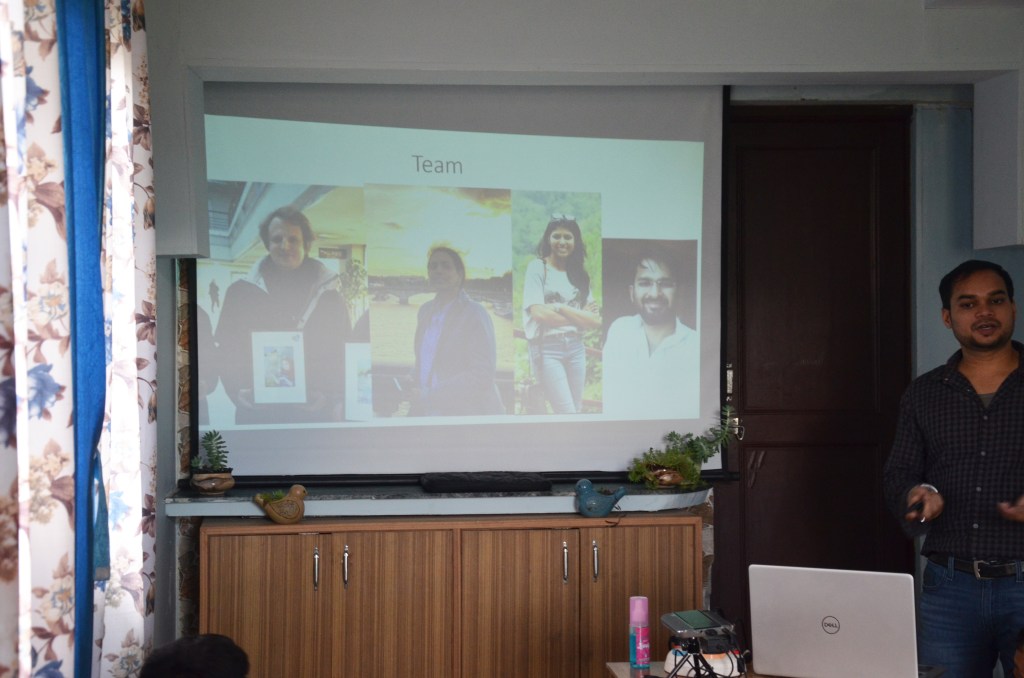
Vishal Kumar Prasad giving a talk

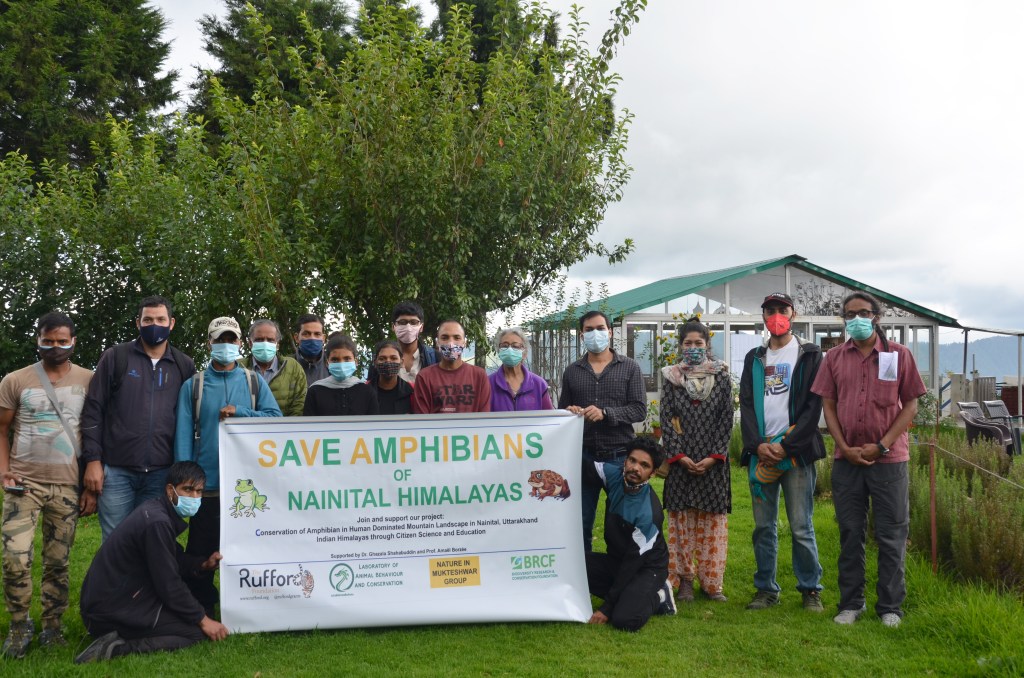
We are happy to share some updates from the people in our lab working in the Himalayas, India. This week we organised an amphibian conservation talk in Mukteshwar hill town to encourage local youths and public to protect the amphibians of Himalayas. Due to COVID-19 restriction, many people couldn’t join the talk but we are glad that some passionate young nature guides of the ‘Nature in Mukteshwar’ group made it to the event. Participants were very much interested and happy to learn about frogs of their region. We believe it takes positive intent and some efforts to educate people in the right direction and with consistency locals can pick up and get well on knowledge of their own local biodiversity. Without participation of local communities, no conservation program is successful. A big thanks to Ram and Ghazala for arranging everything! This program was organised under a grant received from Rufford Foundation, United Kingdom. We hope our work in the Himalayas will ignite many young minds to start thinking to save amphibians of the Himalayas!

Participants of the workshop
Vishal Kumar Prasad giving a talk
The team supporting Vishal Kumar Prasad’s project
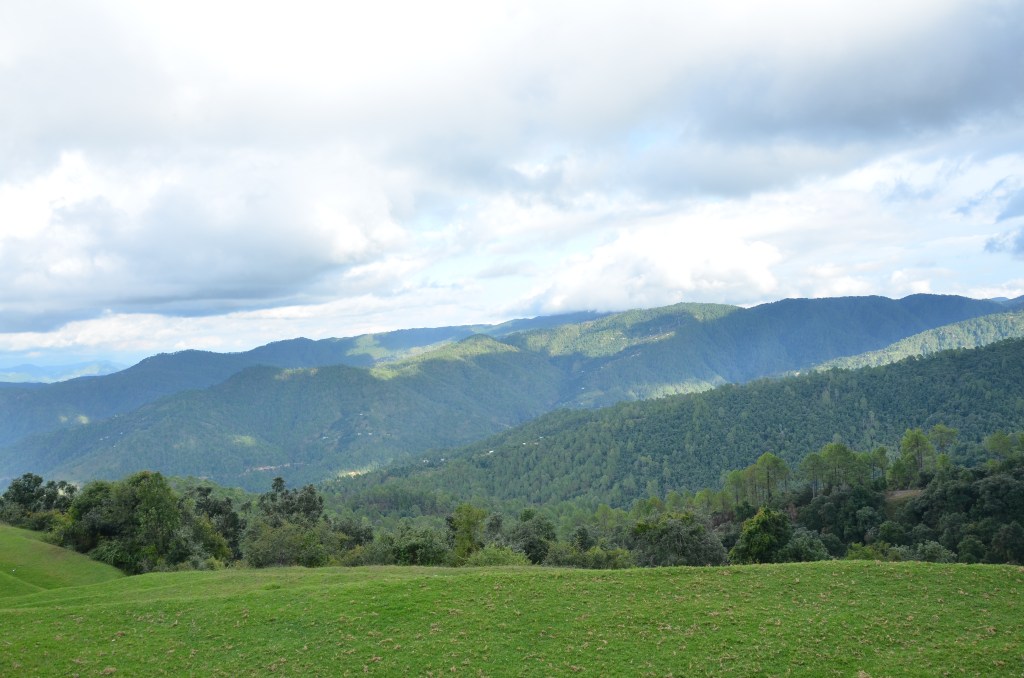
Landscape of Mukteshwar

全球两栖动物保护重点的综合研究

研究组与华盛顿州立大学Sky Button博士合作在权威期刊《Global Change Biology》上发表题为:全球两栖动物保护优先保护的整合研究(PDF *)。

人类活动正在将众多物种推至灭绝边缘,而当前保护区设置仅能微弱缓解受胁物种的生存压力,这中差异反映出现有的全球保护区体系的设置并没有很好的整合不同物种的生态、进化或其保护价值。因此,正如两栖动物生物多样性丧失地理格局所体现,栖息地的丧失将持续影响受胁物种。

为更好的指导保护区的设置以便其与生物多样性丧失高风险区相切合,我们评估了诸多因素在确定全球和生物群落层面上对优先保护区域识别(特别是两栖动物)的重要性。通过整合分析,我们对全球两栖动物物保护关键区域进行了识别、绘制和排序,并对每个物种的保护紧迫性进行了评分。这一方法基于物种特征和生态区域层面上人类活动的影响,并考虑了数据缺乏的物种可能面临的威胁以及系统发育独特的物种不可替代性。同时我们阐述了特有种的保护策略并预测未来人类活动对生态区域的可能影响。因此,该方法具有较高的创新性。

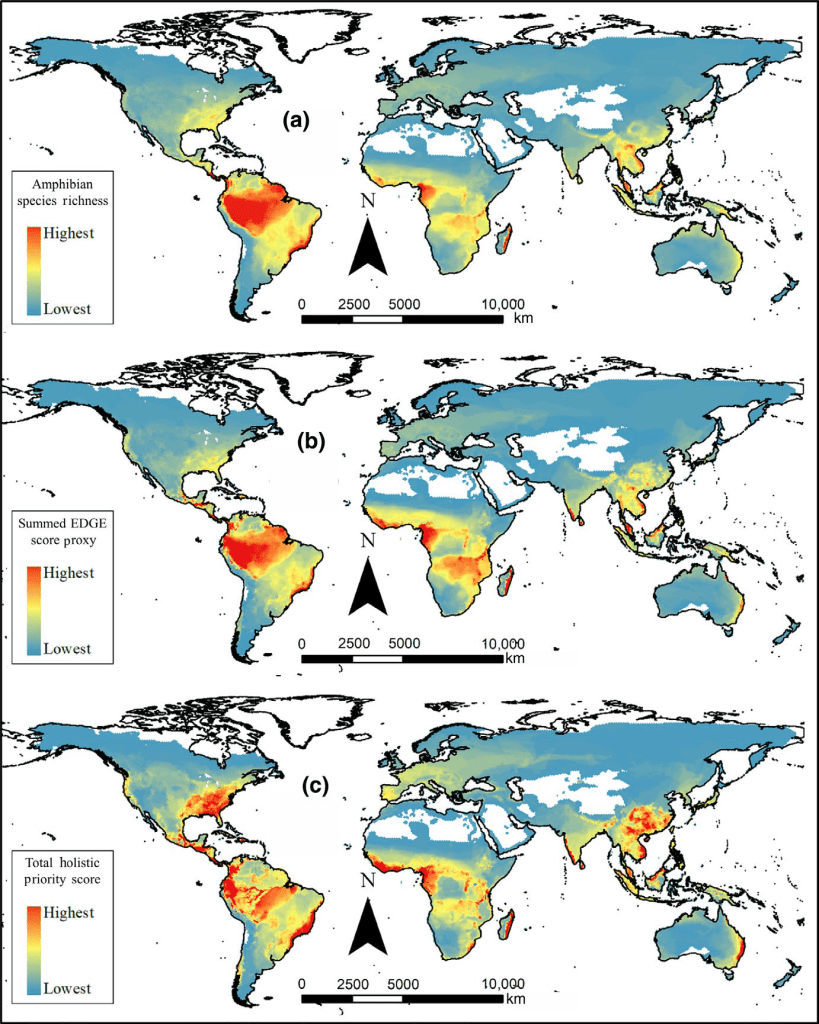
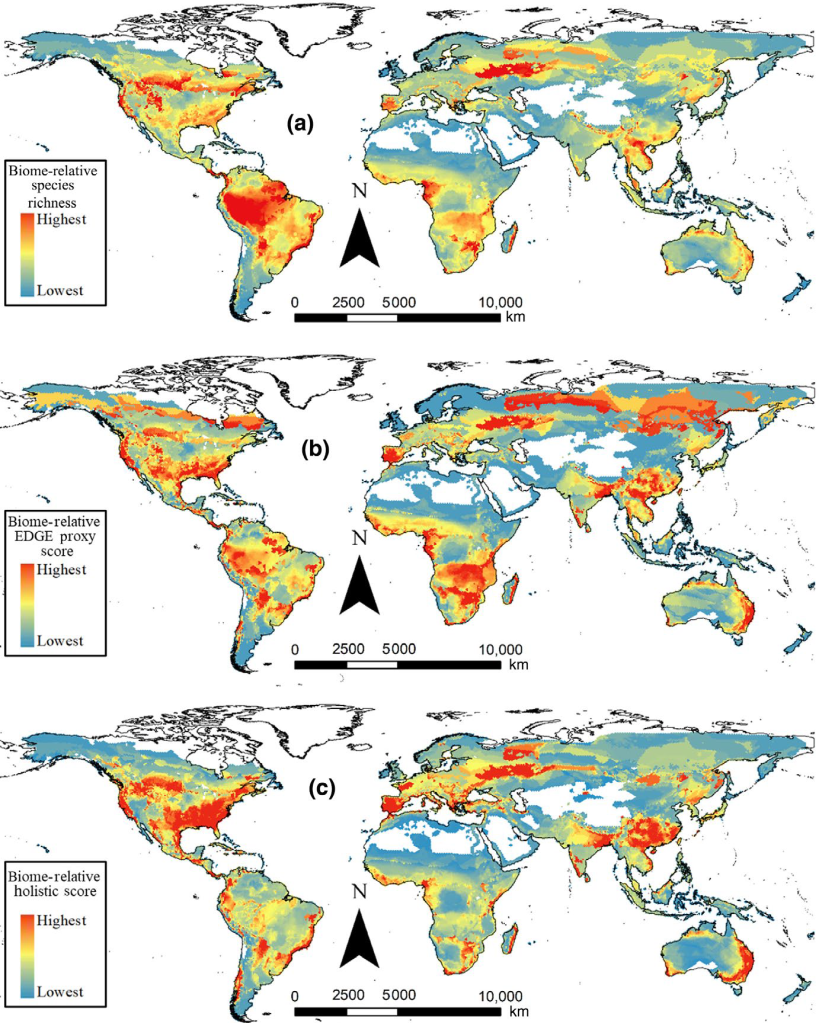
作为对比,我们使用了物种丰富度和演化独特且濒危的物种评分指标(Evolutionarily Distinct and Globally Endangered ,EDGE)绘制了两栖动物生物多样性图谱并对其进行了排序。结果显示,我们的方法预测了两栖动物保护的关键区域,而单纯基于物种丰富度或EDGE评分指标时并不明显。

Relative conservation priority scores for amphibians using species richness (a), EDGE score proxy
(b), and the integrative approach (c). We calculated priority scores for each approach by summing the scores (or number) of species overlapping each grid cell. The spatial distribution of high-scoring pixels differed considerably among the three approaches, with the integrative and EDGE score proxy approaches suggesting higher conservation priorities in the Paleotropics than the species richness approach

此外,通过衡量动物类群的优先保护等级,我们确定了温带及干旱区几个对于保护两栖动物至关重要而现在却被忽视的区域。在对全球两栖动物多样性全面掌握前,推荐使用我们的综合评分方法来确定两栖动物栖息地保护的地理优先级,同时可以用如EDGE评分方法等作为补充。本研究为避免基于简单的物种丰富度制定保护方案所带来的缺陷提供一种新的途径,并可用于改进未来保护区的设计方案。

Conservation priority scores for each pixel relative to other pixels within the same biome, for the species richness (a), EDGE score proxy (b), and integrative scoring approach (c). We calculated global-scale priority scores for each approach by summing the scores (or number) of species overlapping each grid cell. We scaled these scores to biome level by dividing the score of each pixel by the score of the highest-scoring pixel within the same biome. Our biome-scale adjustments highlight several key areas for conserving temperate and xeric-adapted amphibians, which are not visually apparent in our global-scale maps.

这一新方法可用来重新制定东北亚两栖动物保护规划,因为它强调了在保护优先级评估中常被忽视的区域的重要性。

Details of conservation priorities for amphibians in northeast Asia

*Clicking on this link is considered as a private request to the authors