New paper on amphibian habitat connectivity in collaboration with Mr Peng and Prof Lifrom Yanbian University! This research project started when wondering about habitat suitability and connectivity for the least studied amphibian of northeast Asia: the Clawed Salamanders! 与延边大学的彭玉玺和李颖老师的合作,在两栖动物栖息地连通性方面的新论文!这个研究项目始于对东北亚少有研究的两栖动物——爪鲵的栖息地适宜性和连通性的好奇!
Research area and Clawed Salamander record points used for modeling. The origin of the sample data includes field sampling, published references, and open data sets. The boundary data came from the College of Geography and Ocean Science, Yanbian University. 研究区和用于建模的爪鲵记录点。样本数据的来源包括现场采样、已发表的参考文献和开放数据集。边界数据来自延边大学地理与海洋科学学院.
Human activities and climate change have caused damage to the natural world, leading to increased attention on habitat protection. However, most conservation efforts focus on flagship species, while many other species lack protection and are gradually becoming extinct due to the lack of conservation efforts and public attention. 人类活动和气候变化对自然界造成了破坏,引发了对栖息地保护的日益关注。然而,大多数保护努力都集中在代表性物种上,而许多其他物种缺乏保护,由于缺乏保护措施和公众关注而逐渐灭绝。
The Liaoning clawed salamander (Onychodactylus zhaoermii) and the Jilin clawed salamander (Onychodactylus zhangyapingi) are two amphibians endemic to Northeast Asia, but they have not received enough conservation attention, and little is known about their distribution. In this study, we collected field survey and literature data for both species to obtain data on occurrence, and constructed ecological niche models to understand their suitable habitat and potential distribution. 辽宁爪鲵(Onychodactylus zhaoermii)和吉林爪鲵(Onychodactylus zhangyapingi)是东北亚特有的两种两栖动物,但它们并没有受到足够的保护关注,对它们的分布了解甚少。在本研究中,我们收集了两种物种的野外调查和文献数据,获取了出现数据,并构建了生态位模型,以了解其适宜的栖息地和潜在分布情况。
Habitat suitability distribution and species presence-absence maps for Onychodactylus spp. These models were selected from the seven selected models after tuning, based on the methods described in the text. 爪鲵属的栖息地适宜分布和物种存在/缺失地图。这些模型是在优化调整后从七个选定的模型中选择的,基于文本中描述的方法。
The ecological niche models revealed that the suitable habitat of the Jilin Clawed Salamander was primarily located within the Yalu River basin, as well as the western and eastern mountains of the Democratic People’s Republic of Korea (DPR Korea). On the other hand, the suitable habitat for the Liaoning Clawed Salamander was mainly distributed in the Xiuyan area of Liaoning in China, the Changbai Mountains, and north of the Tumen River basin. Although there is currently no direct evidence of the species’ presence in DPR Korea, the ENM results support their putative presence in the nation, as there are large patches of suitable habitat. 生态位模型显示,吉林爪鲵的适宜栖息地主要位于鸭绿江流域,以及朝鲜的西部和东部山区。另一方面,辽宁爪鲵的适宜栖息地主要分布在中国辽宁的岫岩地区、长白山地区和图们江流域北部。尽管目前没有直接证据表明这两个物种在朝鲜存在,但生态位模型结果支持它们可能存在于该国,因为存在大片适宜栖息地。
Corridor connection for Onychodactylus species in the transboundary area between China and DPR Korea. We identified 11 continuous patches larger than 1000 km2 on the presence/absence map of the Onychodactylus genus. These nodes are named and indexed with blue circle markers, labeled 1–11 on the map. Our findings reveal that the highest overall current density was 0.6726, concentrated in the purple area, indicating the highest current density and a potential corridor. 中朝跨境地区的爪鲵属栖息地之间的廊道连通性。我们确定了11个超过1000平方公里连续区域的爪鲵属的存在/缺失地图。这些节点用蓝色圆圈标记,并在地图上标为1-11。我们的研究结果显示,最高的总体流密度为0.6726,集中在紫色区域,表明有最高的流密度和潜在的廊道。
In addition, the connectivity model showed the presence of transboundary corridors between patches of suitable habitat, with some nodes (here defined as continuous patches of habitat enabling connection between suitable habitats) located in multiple provinces or within different countries. In our evaluation of the transboundary corridors in the eastern and western parts of the study area, we found that the surfaces located downstream along the Tumen River showed a better quality for a corridor. However, the gradual fragmentation and disappearance of the landscape may lead the two species to extinction. 此外,连通性模型显示了适宜栖息地之间存在的跨界走廊,其中一些节点(定义为能够连接适宜栖息地的连续栖息地片)位于多个省份或不同国家内。在对研究区域东部和西部的跨界走廊进行评估时,我们发现沿图们江下游的表面更适合作为走廊。然而,陆地逐渐破碎和消失可能导致这两个物种灭绝
Therefore, we recommend establishing a transboundary amphibian protection network in the China-DPR Korea river basin and encouraging collaborations for amphibian surveys and applied conservation projects in the Tumen River basin. 因此,我们建议在中朝流域地区建立跨国境两栖动物保护网络,并鼓励在图们江流域进行两栖动物调查和应用保护项目的合作。
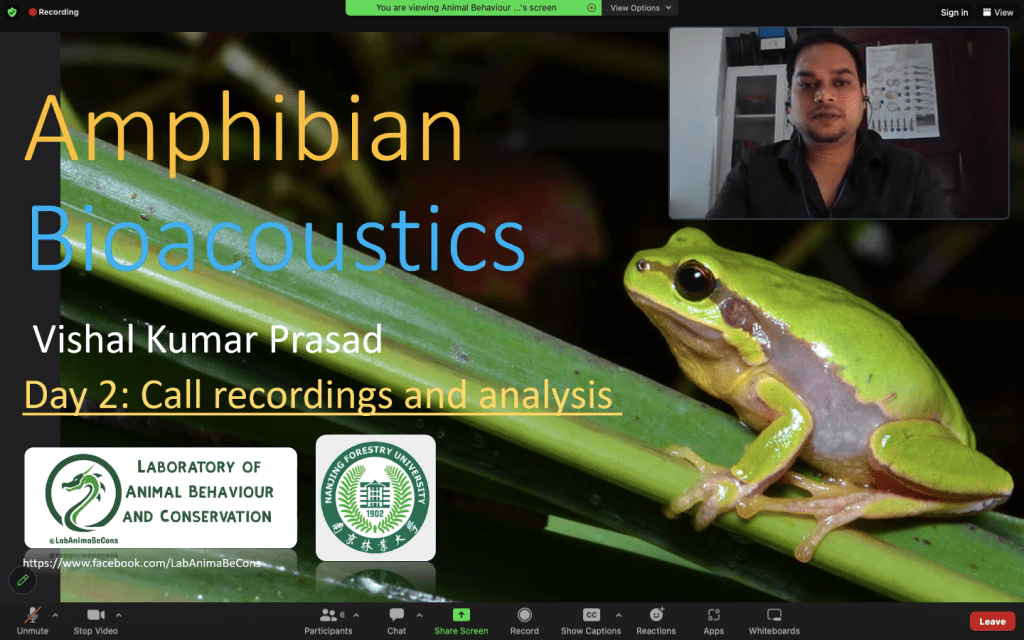
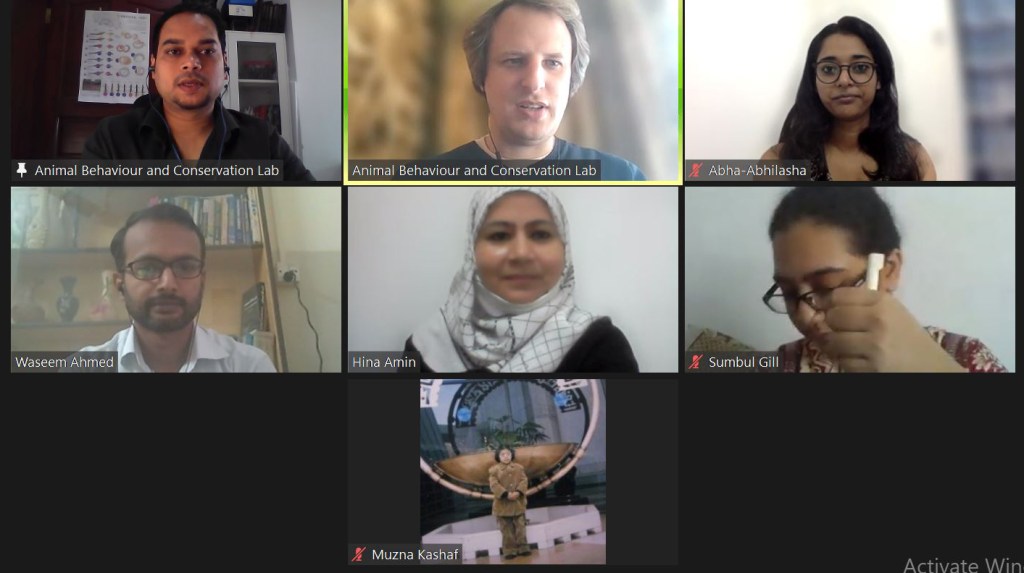
We are delighted to share the success of our recent two-day online workshop on Amphibian Bioacoustics that was conducted on 14 & 15 October. The workshop was facilitated by Prof. Amaël Borzée and the two-day sessions were conducted by Vishal Kumar Prasad. This workshop brought together scholars and researchers from over 5 countries to delve into the fascinating world of amphibian bioacoustics. The workshop exemplified the power of modern techniques in advancing our knowledge of amphibian behavior, ecology, and conservation through bioacoustics.
Day 1 was dedicated to enlightening the science of understanding animal behaviour through sound. Participants were introduced to the foundational principle of bioacoustics, delving into the essentials of sound production, propagation, and reception. The sessions also provided an in-depth exploration of various types of vocalizations. Day 2 provided a detailed understanding of recording units and technical equipment used in the field, helping participants enhance their sound recording skills. The final session of the workshop focused on the critical phase of bioacoustics research i.e. analysis using different software. Participants were guided through the process of handling and processing recorded data.
The diversity of perspectives and experiences brought by participants from different corners of the globe enriched the discussions and sparked new avenues of research.
Stay tuned for updates on upcoming events and initiatives from the Laboratory of Animal Behaviour and Conservation.
The illegal trade in wildlife has introduced various species to new environments worldwide, including amphibians. Invasive species have harmful effects on local species through competition, predation, and other ecological interactions, including introducing non-native pathogens. Several species in the focus area of this study, including Rana huanrenensis, have been introduced to offshore islands in the Republic of Korea.
Rana huanrenensis from the Republic of Korea.
The Republic of Korea has a significant amphibian trade, including live animals for both pet trade and human consumption. The trade originates mainly from China and the USA and has grown significantly over the past two decades. As a result, some amphibian species have been designated as Alert Alien Species and invasive species, such as the American bullfrog, and have caused a severe loss of aquatic biodiversity. Eradicating invasive species is very complicated and expensive, making prevention of introduction the most cost-effective approach.
The Republic of Korea imports live Brown frog (Rana) individuals from China for human consumption, and this trade was conducted legally as some native species of the Republic of Korea can be legally traded. However, Rana uenoi, which is endemic to the Korean Peninsula and Tsushima Island in Japan after being split from the Rana dybowskii species complex cannot be legally traded anymore.
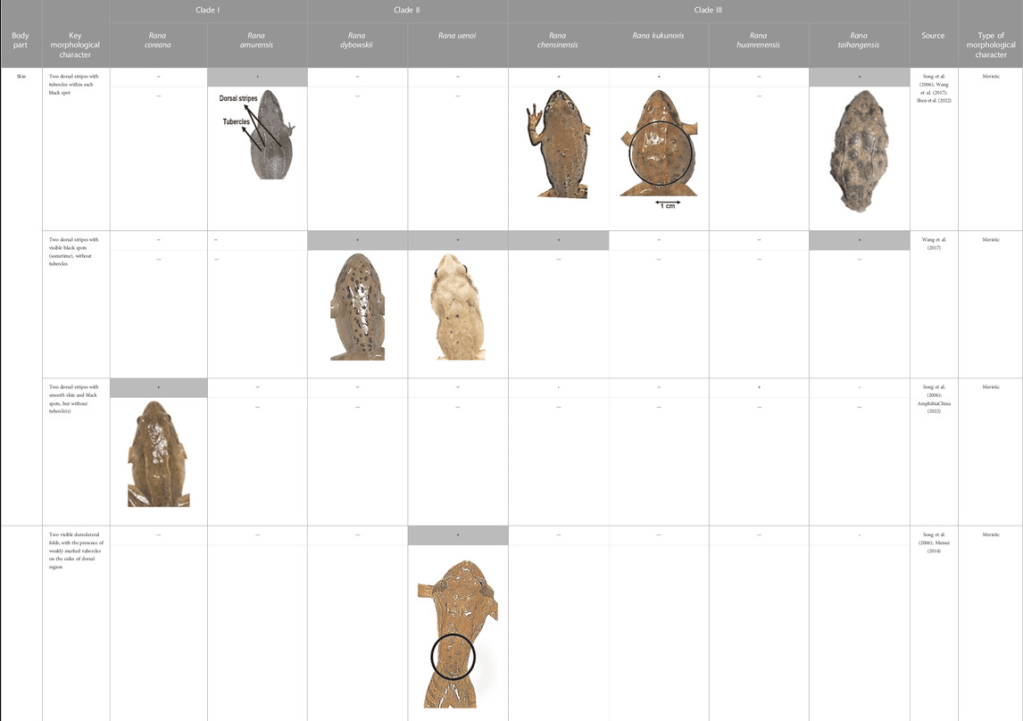
The Republic of Korea imports not only legally traded species but also non-native frog species that are morphologically similar to native ones, including Rana amurensis, Rana chensinensis, R. dybowskii, Rana kukunoris and Rana taihangensis. Once traded, some individuals may be released into nearby streams at the end of the legal sale period for welfare reasons, but this is a biosecurity threat because the frogs are not scanned for pathogens, and the African Swine Fever and Avian influenza pandemics have shown how quickly pathogens can spread. In addition, there is a threat of establishment, and hybridisation with local species.
International trade towards Korea requires updated regulations based on science-based recommendations to prevent the loss of biodiversity. Policy recommendations have the potential to help update national laws, especially in the case of the trade of invasive species. A policy recommendation on the trade of invasive American bullfrogs towards the Republic of Korea has coincided with a regulatory update in the trade of amphibians, but the discovery of non-native Rana species in the trade calls for additional updates in regulations. This policy recommendation has the potential to lead to further legal adjustments in the trade of the genus.
Risks of invasion
Amphibian trade can result in invasive species, causing two threats to the survival of native species. These threats include ecological interactions and pathogen dispersion, both of which have been documented in the invasive American bullfrog in the Republic of Korea. This species has impacted the ecology of native amphibians, reptiles, and birds, as well as increasing pathogen loads on native species.
Many Rana species have similar ecological requirements, and the impact of interactions between species pairs is unknown. Geographically distant clades of a single species may have significantly divergent ecological requirements, and displacement of individuals due to the introduction of non-native Rana species can result in competition and hybridisation, driving the extirpation of native Rana species. The negative effect of displacement can also be within a single species, resulting in individuals less adapted to the local environment or even species losses. Hybridisation can also magnify the invasive capacity of a species.
Morphological identification key to identify continental northeast Asian Rana
Rana species can transfer two major pathogens: Ranavirus and the chytrid fungus Batrachochytrium dendrobatidis (Bd). There have been mortality events occurring in both captive and wild populations in the Republic of Korea due to Ranavirus. Even if non-native Rana species have not been involved in these events, they pose a risk of escape from farms, and Ranavirus prevalence is higher in invasive Ranids in the Republic of Korea. Rana species can also be reservoirs for Bd, and the introduction of non-native Bd strains could have deadly effects. Therefore, the introduction of Rana species across natural boundaries can have disastrous consequences for local populations, including local extirpation.
The Republic of Korea’s Fourth National Biodiversity Strategy (2019-2023) contains action plans to address threats to biodiversity, including establishing mechanisms to control human-mediated species introduction and strengthening policy responses and post-introduction control of invasive species. The strategy also aims to protect endangered and endemic species and strengthen research and response to wildlife diseases, along with an improved wildlife rescue and care system. These actions are in compliance with legal obligations established by the Convention on Biological Diversity.
Current laws in the Republic of Korea allow for the import and captive breeding of certain Rana species with a permit, but measures are needed to prevent the introduction and establishment of non-native species that could harm native populations. Amphibians will soon be designated as aquatic organisms and regulated similarly to fishery products. Trade bans have already been implemented for some species in the Republic further strengthened.
Actionable recommendations
To prevent the introduction of new alien populations of Rana in the Republic of Korea, a ban on trading non-native Rana species should be implemented. This ban should also include domestic trade, specifically preventing the trade of R. uenoi from Jeju Island on the mainland. However, dead specimens of certain Rana species may be allowed for trade if it does not impact conservation efforts, and to prevent escapes and the release of pathogens.
To prevent the establishment of new invasive alien populations and the spread of pathogens, the release of any alien specimens and their offspring originating from past trade should be banned. Authorities should also use emergency measures to prevent the risk of population depletion, track and control potentially invasive species, and conduct broad-scale surveys for ranavirus and chytrid fungus. An updated National Species List that includes R. uenoi and a species identification key should be established to aid in border control and trade regulation efforts.
Conclusions
Non-native Rana species have been traded legally into the Republic of Korea, but regulations have not kept up with advances in taxonomy. While the establishment of alien Rana populations has not been confirmed, monitoring of populations and the presence of pathogens is necessary to prevent their establishment. The trade of non-native species for human consumption should be banned entirely, with the trade of native species limited to processed products and verifiable data to avoid the risk of invasion. The focus should be on Rana dybowskii, Rana amurensis, Rana chensinensis, Rana taihangensis, and Rana kukunoris, with additional analyses needed for conservation.
Welcoming the Fujian Bamboo Salamander to science! 欢迎虚竹小鲵走进科学!We described a new species, the Fujian Bamboo Salamander (Hynobius bambusicolus).
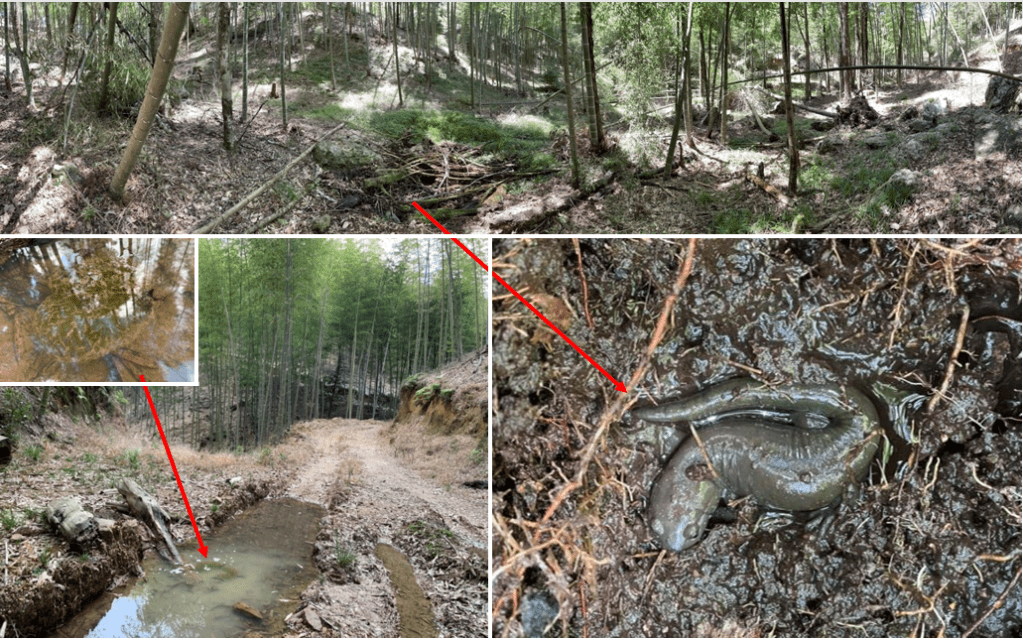
The Fujian Bamboo Salamander (Hynobius bambusicolus) in situ in Southern China
Human activities, such as anthropogenisation of landscapes, have led to the sixth mass extinction, with species of large size and narrow spatial range being most impacted. Between 900 and 130,000 species have become extinct since the 1500s, and even species that have not yet been described are going extinct without being documented. Amphibians are the most threatened animal class, with habitat loss being a major driver of their decline. To improve their status, a clear taxonomy is needed, especially in southern China where many species still need formal description or taxonomic revision. Conservation actions are crucial for maintaining evolutionary patterns free of anthropomorphic selection, but practitioners need to know what to protect, and thus species need to be described currently, as conservation does not correspond to threat status, and we can only protect what we know.
Most Hynobius salamander species in China are expected to have been described, but taxonomic resolutions are ongoing. There are six described species on the Chinese mainland and five on Taiwan island, all terrestrial, partially fossorial and breeding through larval development in water bodies. A Hynobius salamander collected in 1978 from Fujian has not been seen since, potentially because of local extirpations. We tested for phylogenetic clustering within the H. chinensis clade and determined the taxonomic status with phylogenetic tools, resulting in the description of a new species, Hynobius bambusicolus.
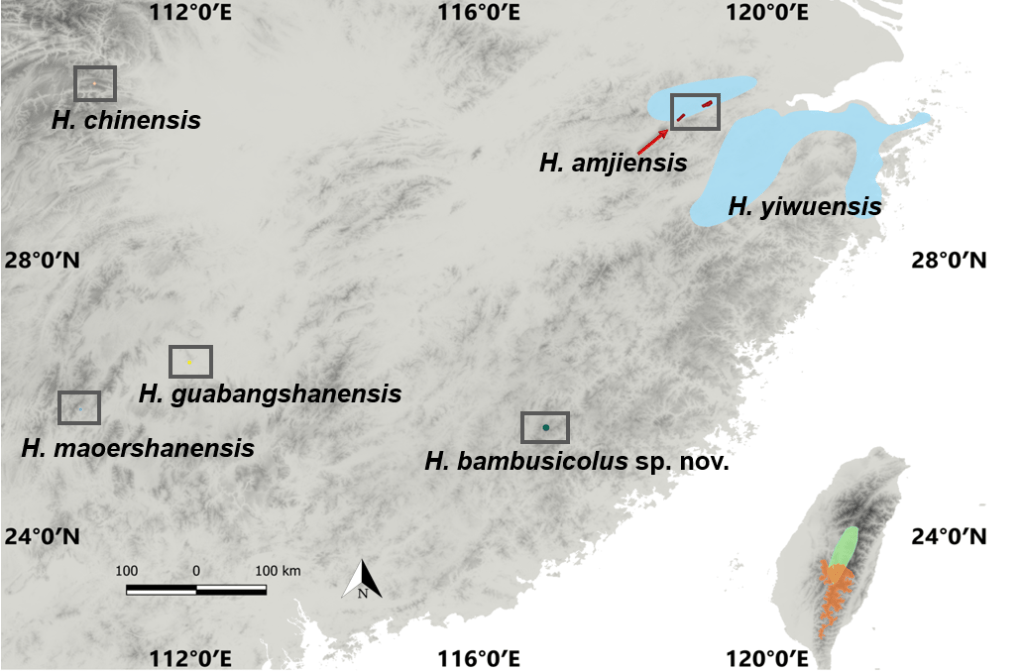
Distribution of Hynobius species in Southern China
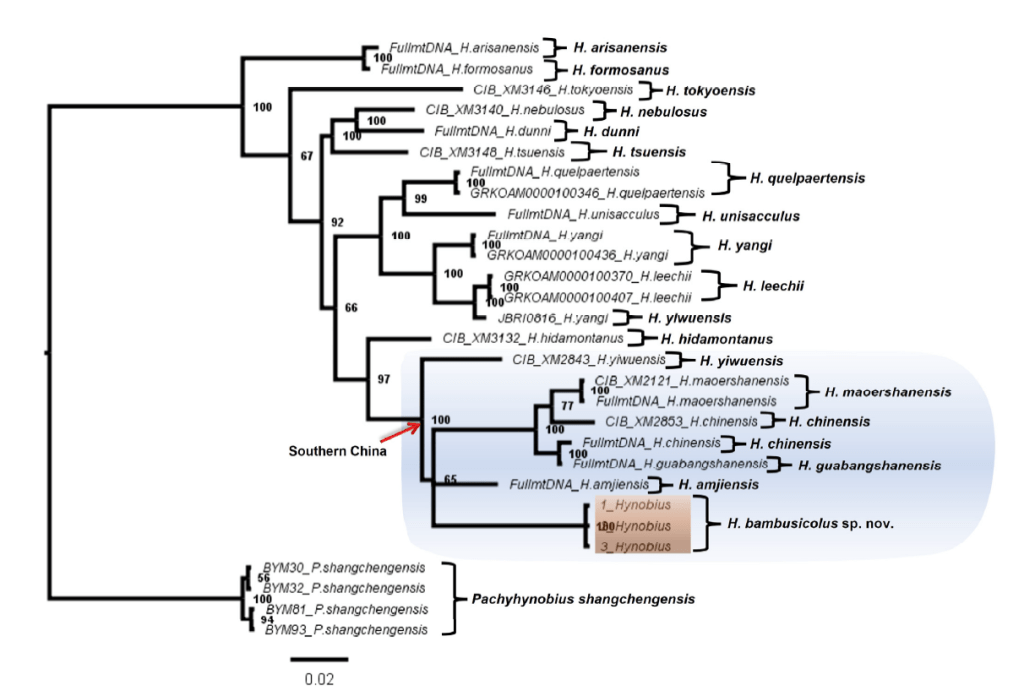
We found a significant variation between H. bambusicolus and all 18 other species based on rates of evolutionary divergence between sequence pairs. The average divergence rate was higher than for other pairs, supporting the position of the candidate species as a deeply divergent clade within the Southern Chinese group of East Asian Hynobiids. All phylogenetic trees coherently recovered the candidate species as monophyletic, identified as sister species to H. amjiensis in some trees.
Bayesian Inference tree inferred from 1451 bp of 16S rRNA, Cytb, and COI gene fragments of Hynobiid salamanders distributed across East Asia.
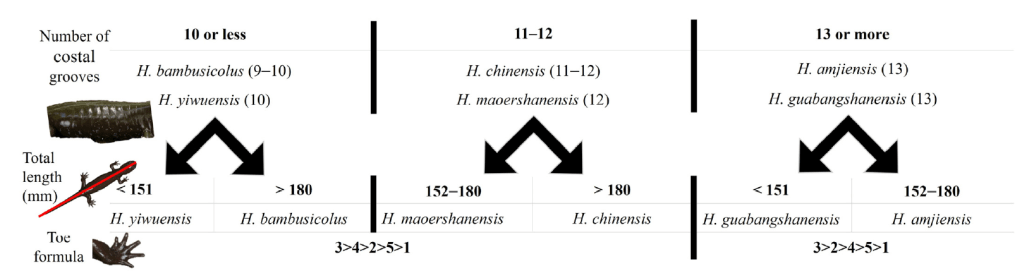
In the study, we obtained 55 haplotypes based on the gene fragment for COI, representing 16 species of Hynobiid salamanders across East Asia. The haplotype diversity was 0.98, and a shared relationship was observed between the haplotype group of the candidate species and geographically related haplotypes of Southern Chinese Hynobius. Morphometric measurements indicated that the species was larger in size, with a low number of coastal grooves and a toe formula similar to other species in the area. The number of costal grooves was identified as an important character for the non-invasive identification of the species.
We described the new species of Hynobiid salamander, H. bambusicolus, based on molecular analysis and morphology. The species was found in Fujian province, China, specifically in bamboo forests and is named the Fujian Bamboo Salamander. The species name comes from the habitat of the holotype and the Chinese name, 虚竹小鲵 (pronounced: Xū Zhú Xiǎo Ní), reflects the scientific name and is named after a character from the Jin Yong’s swordsman fiction, where an unknown Shaolin monk inherits great powers by coincidence and starts a legendary journey.
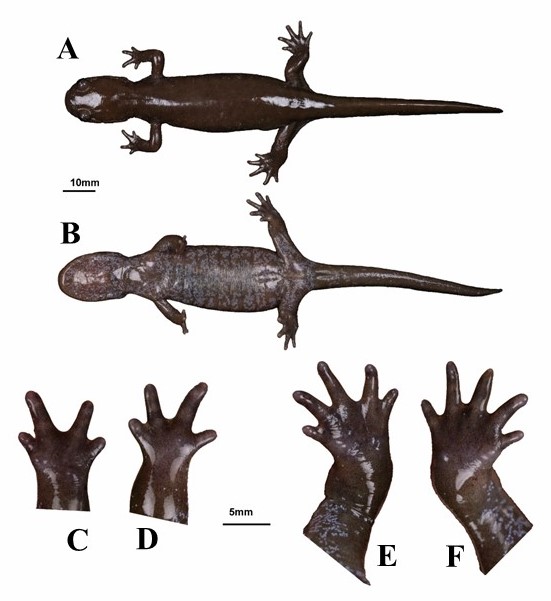
Example of Hynobius bambusicolus sp. nov. adult in life from Quxi village, Liancheng county, People’s Republic of China.
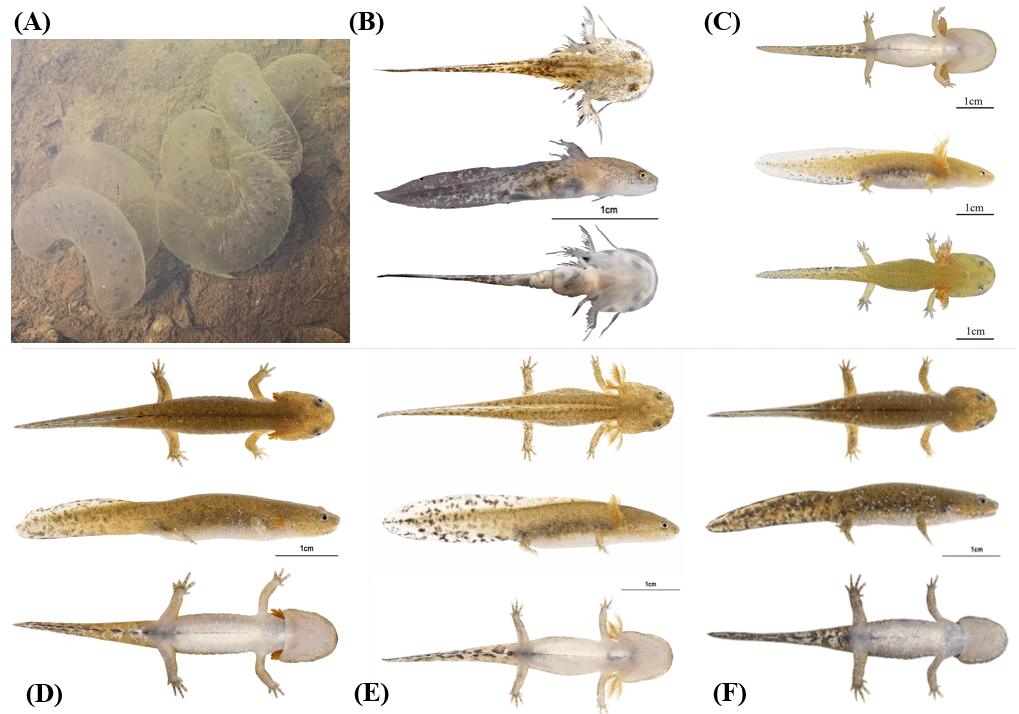
We only found H. bambusicolus in the Quxi village, Liancheng County in China. Its larvae and development stages are typical of Hynobius salamanders, with functional limbs developing slowly. The species can be identified through its location and a combination of 10 or fewer costal grooves with a total length greater than 180 mm. Juveniles have brown coloring and blue speckling that disappears with age, while adults are a uniform dark chocolate colour with light grey and blue speckling on the venter.
Representative developmental stages for eggs and larvae of Hynobius bambusicolus sp. nov. from Fujian, China. (A) pre‑hatching; (B) 16 days old. (C) 69 days old. (D) 74 days old. (E) 77 days old. (F) 87 days old.
Hynobius bambusicolus salamanders breed in shallow pools found in bamboo forests above 1400 m above sea level, laying their egg sacs (containing between 21 and 27 eggs) in pools made by tire tracks. Adult salamanders hide under logs, stones, or dead leaves in wet soil and humus in waterlogged areas. The salamanders emit a short, low-frequency call composed of four strong harmonics, possibly as an alarm call.
Natural habitat of the Fujian Bamboo Salamander (Hynobius bambusicolus) in Southern China
We described H. bambusicolus based on divergent genetic origins, unique morphological characteristics, and separate distribution from other Hynobius species. Identification of H. bambusicolus is easiest based on its geographic location, as it has no overlap with other Hynobius species and is an ancient lineage that likely experienced distribution changes due to paleogeographic and climatic variations. The area inhabited by this species also includes other Caudata, and competition with other genera may occur.
The H. bambusicolus salamander is micro-endemic and has a restricted distribution with an incredibly small population size, making it highly vulnerable to extinction. The species is adapted to sub-tropical bamboo forests, but also prefers cold temperatures for spawning. Surveys in 2023 confirmed that the species is known from a single locality with only a few extremely small water bodies, potentially containing a maximum of 20 breeding females. The population size is likely to be well below 200 breeding individuals, meeting the IUCN Red List criteria for critically endangered species. The establishment of an ex-situ population is recommended to prevent extinction due to climate instability and other stochastic risks.
Holotype of Hynobius bambusicolus collected in Quxi village, Liancheng county, People’s Republic of China
To protect the new species, hobbyists should avoid collecting and trading it, and keep information about its location confidential. Habitat loss, particularly through bamboo plantation and harvest, is the main threat to the species, and climate change is likely to contract its distribution. To reduce stresses on the species, herbicide use and water pumping in the area should be minimized, and habitat restoration efforts such as artificial ponds and rehabilitating old reservoirs should be implemented to boost population growth.
Reference: Wang Z., Othman S. N., Qiu Z., Lu Y., Prasad V. K., Dong Y., Lu C-H. & Borzée A. (2023). An isolated and deeply divergent Hynobius species from Fujian, China. Animals. 13:1661. DOI: 10.3390/ani13101661.
멸종 위기 종의 제한적인 서식지는 서식지 단편화 및 손실로 인하여 유전적 병목 현상과 환경에 대한 작은 변화를 증폭시킬 위험이 있습니다. 개체군 생존율 분석(Population viability analyses, PVAs)을 포한 생태학적 분석은 연구 종에 대하여 비침습적 또는 유해하지 않은 방법으로 개체군의 궤적을 예측할 수 있습니다. 따라서 연구 종들은 보전을 위하여 개체군을 모델링 하는데 필수적인 요소가 될 수 있습니다. 서식지 적합성 모델은 보호 구역을 지정을 제안하기 위하여 사용되었지만, 개체군 생존율 분석(Population viability analyses, PVAs)은 이 점에 대해 일반적으로 사용되지 않습니다.
한국에서의 수원청개구리(Dryophytes suweonensis)와 노랑배청개구리(D. flaviventris)에 적합한 서식지. 도시 지역과 도로가 겹쳐져 서식지가 불투명하게 나타나는 지도를 보여줍니다.
수원청개구리(Dryophytes suweonensis)와 노랑배청개구리(Dryophytes flaviventris)는 한국의 고유종이자 멸종 위기 종 입니다. 수원청개구리(D. suweonensis)와 노랑배청개구리(D. flaviventris)가 멸종 위기 처한 것은 서식지 파괴와 단편화 그리고 외래종 외 다른 포식자들에게 포식 당하기 때문입니다. 우리는 생태적 지위와 연결성 그리고 Vortex에 PVAs를 결합한 통합 모델링 접근법을 사용하여 보호 구역 지정에 대한 기준 시나리오에서 각 종의 멸종 가능성을 판단하였습니다.
한국의 수원청개구리(Dryophytes suweonensis)와 노랑배청개구리(Dryophytes flaviventris) 개체군 크기의 하위 개체군 서식지. 연결된 서식지 간의 최단 거리 경로와 먼저 연결성을 가질 수 있는 곳을 보여줍니다. 현재 조건에서 Vortex 시뮬레이션의 평균 멸종 예상 기간 (연도)은 하위 개체군에 표시됩니다. 그림 내에 있는 차트는 기준 시나리오에서 각 종에 대한 연도별 생존율을 나타냅니다.
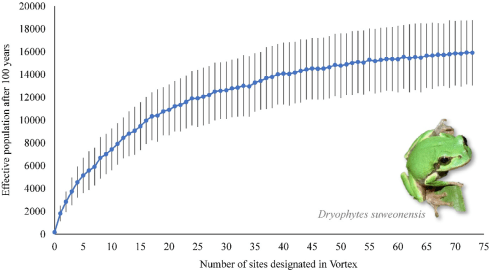
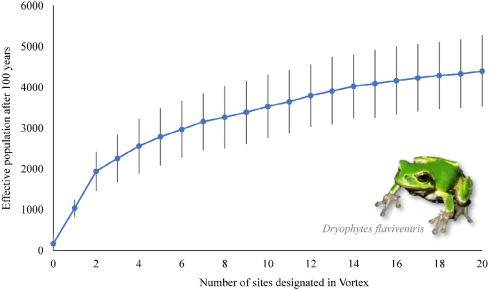
지정된 시나리오에서는 미래의 운반 능력 감소 중지(보호 지역 상태를 통하여 향후 서식지 파괴 중지), 자연 재해의 영향 감소(가뭄의 영향 완화) 및 사망률 감소(외래종 포식자의 개체수 통제와 올챙이를 성체까지 사육)을 통해 Vortex에서 시뮬레이션 되었습니다. 이러한 보전 관리의 통합성을 현재 실천되고 있는 ‘무 보전’이 아닌 ‘적극적인 보전 활동’으로 분류하였습니다. 또한 단계적 접근 방식을 사용하여 각 지역의 보전 우선 순위를 판단했습니다. 현재 조건(무 보전)에서 100년 후 결과적으로 유효한 메타 모집단은86.5%의 멸종율을 갖는 수원청개구리(Dryophytes suweonensis) 167 ± 325 개체 및 90.3%의 멸종율을 갖는 노랑배청개구리(Dryophytes flaviventris) 165 ± 200 개체였습니다. 전 지역(93개의 서식지, 426.9 km2)을 적극적으로 보전 및 관리를 한 결과 두 종의 메타 모집단 크기가 크게 증가한 멸종율은 0% 수원청개구리(D. suweonensis) 15,910 ± 2,855 노랑배청개구리(D. flaviventris) 4,400 ± 874로 나타났습니다.
단계적으로 지정된 시나리오를 위한 표준편차 포함한 수원청개구리(Dryophytes suweonensis)의 100년 후 메타 모집단을 나타냅니다.
단계적으로 지정된 시나리오를 위한 표준편차 포함한 노랑배청개구리(Dryophytes flaviventris)의 100년 후 메타 모집단을 나타냅니다.
우선 지정 순위를 결정하면 정부 기관에 보호해야 서식지 지정과 능동적 또는 수동적 관리를 적용해야 하는지 여부를 판단할 수 있을 것입니다. 어떠한 노력도 하지 않으면 수원청개구리(Dryophytes suweonensis)와, 노랑배청개구리(Dryophytes flaviventris)는 멸종될 것 입니다. 정부가 직접 위와 같은 내용을 적용하여 관리하는 보전은 유용할 뿐만 아니라 우선 순위로 보호 지역을 지정하는 방법론으로 우리의 연구는 향후의 연구로 이어질 수 있을 것 입니다.
한국의 수원청개구리(Dryophytes suweonensis)와 노랑배청개구리(Dryophytes flaviventris) 서식지 지정 우선 순위를 나타냅니다.
Andersen D., Jang Y. & Borzée A. (2022). Influence of landscape and connectivity on anuran conservation: population viability analyses to designate protected areas. Animal Conservation, published online. DOI: 10.1111/acv.12829