동부 구북구 전역의 두꺼비속(Bufo)의 계통학 및 분류학에 대한 새로운 해결책

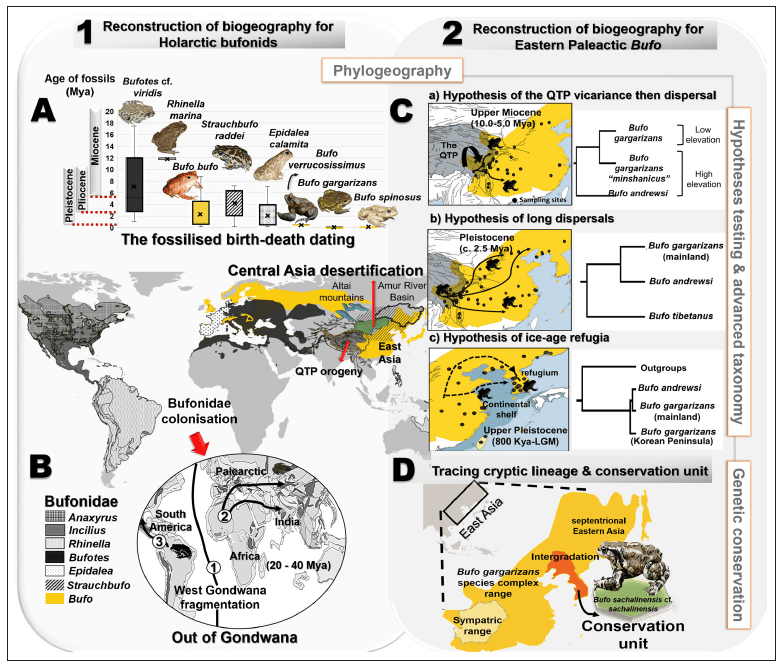
동부 구북구에 있는 두꺼비과(Bufo 속)는 지리적으로 광범위하게 분포하고 있기 때문에, 그 다양성을 알기 어렵고 종의 기원 또한 불확실하며, 분류학적인 경계도 불분명하다. 우리는 아시아 두꺼비과의 역사적 생물 지리를 재구성하고, 동아시아의 B. gargarizans의 사례 등에서 찾아볼 수 있는 종 복합체 분류 문제를 해결하기 위해 B. gargarizans 복합체의 전 지리적 범위에서 433 개체를 샘플링했다.
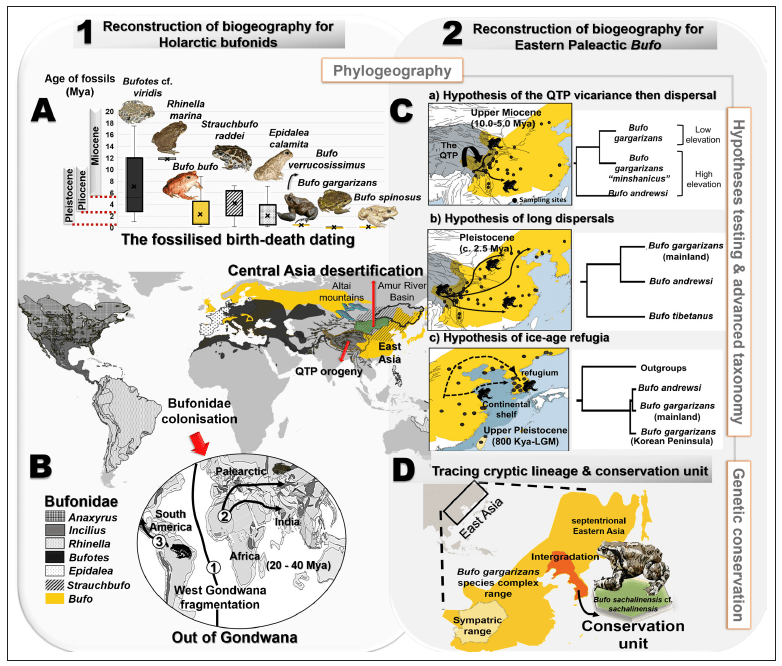
Resolution of the diversifications of bufonids in the Holarctic and the Eastern Palearctic.

예측 계통지리학 툴과 다중 유전자좌 단편을 사용한 고급 분류법을 통합하여 분석한 결과, 긴 분산 거리와 빙하기 레퓨지아의 효과가 결합되어 B. gargarizans 복합체에 있는 깊은 분기(divergence)를 초래했다는 것을 밝혀냈다. 종 구분 모델링 결과, 종 복합체의 최북단 개체군이 독립적으로 진화적 계통을 이루고 있음을 보여준다. 종 분포 모델과 이주 패턴은 황해의 동쪽과 서쪽 개체군의 생태학적 필요 조건에서 차이가 있으며, 광범위하게 분포되어 있는 B. gargarizans복합체로부터 황해의 동쪽 Bufo 계통군이 분리되어 있다는 사실을 뒷받침해준다.
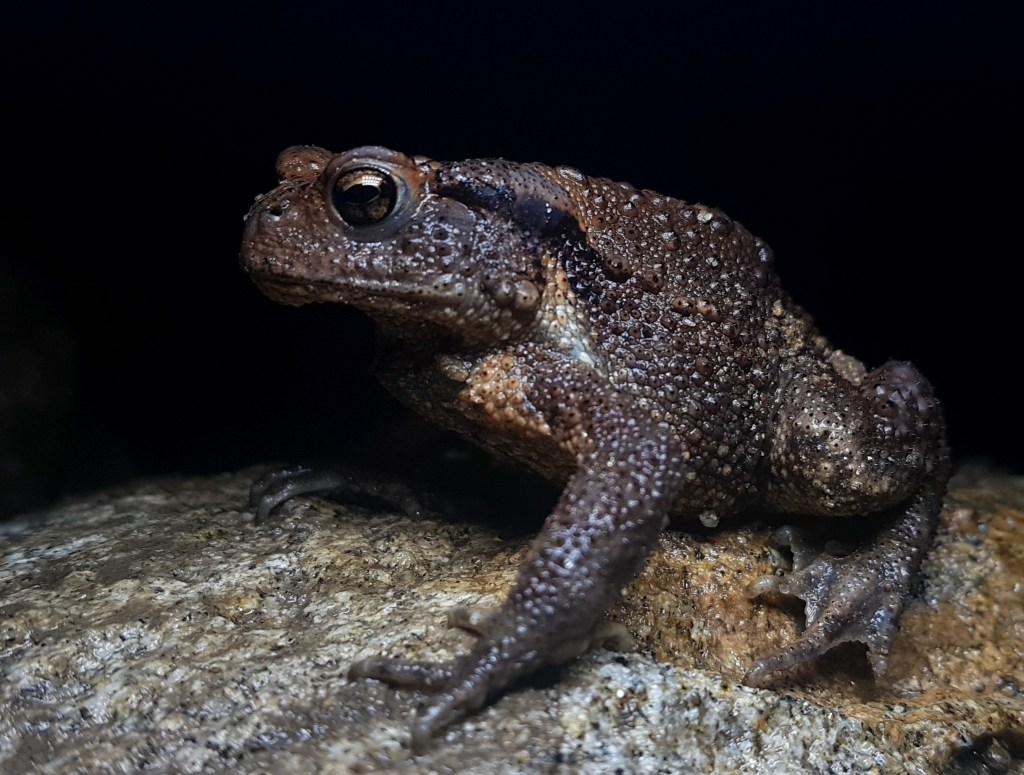
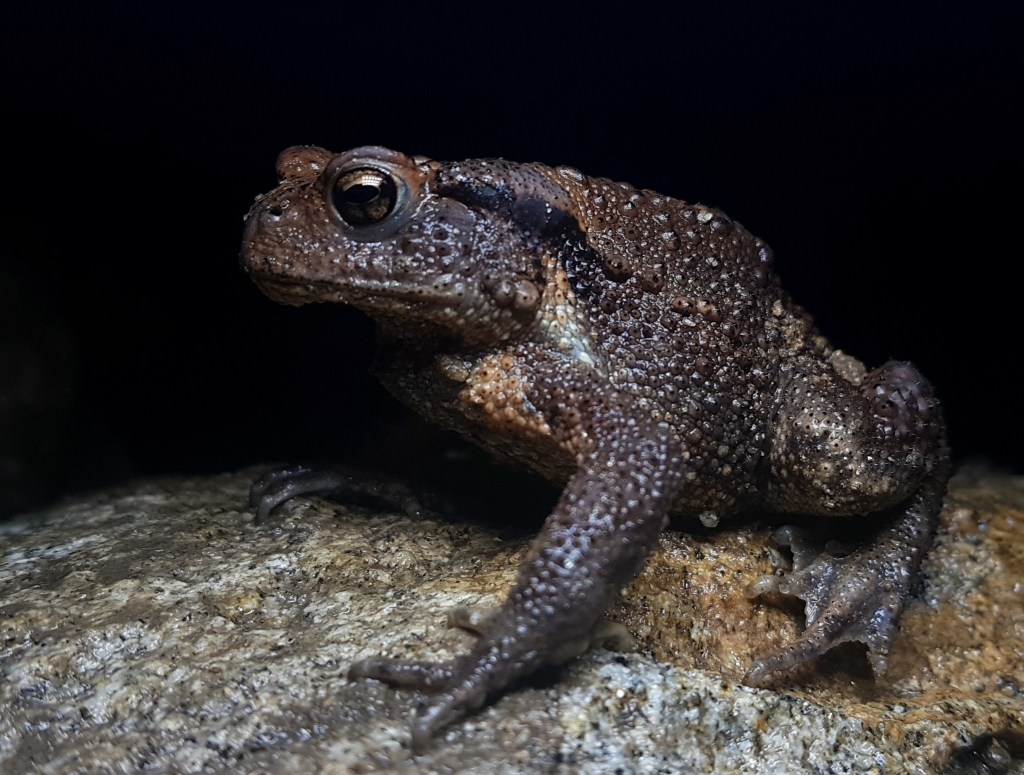
Bufo sachalinensis

B. gargarizans 복합체의 분류학적 경계를 재정비하기 위해 우리는 Bufo sachalinensis이라는 종명을 다시 부활시켰고, 중국에 있는 두 두꺼비 종이 헷갈리지 않도록 동북 두꺼비 (东北蟾蜍; Dōng Běi Chán Chú; 동베찬추) 라는 중국 이름을 부여했다. 또, 우리는 B. sachalinensis만이 한반도와 러시아에서 발생한다는 점을 강조하며, 이 종을 러시아의 B. sachalinensis sachalinensis와 한반도의 남부B. sachalinensis cf. sachalinensis (아직 아종에 대한 기술이 필요하다) 두 개의 보전 단위로 나누었다. 우리는 이러한 아종을 보전하기 위해 별도의 보전 관리 체계를 만들 것을 권장한다.

이 논문에 대한 자세한 내용은 eLifeScience https://elifesciences.org/articles/70494에서 확인할 수 있다.

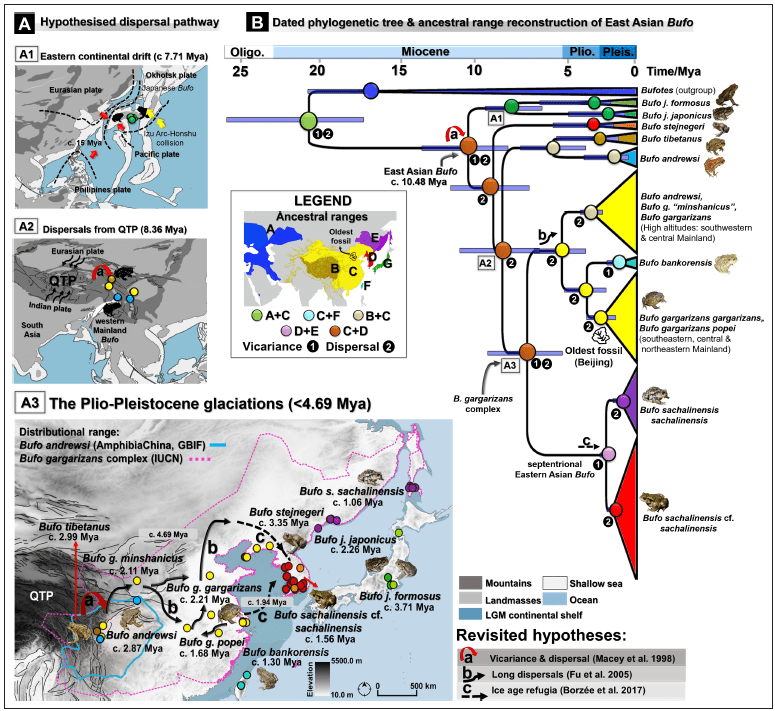
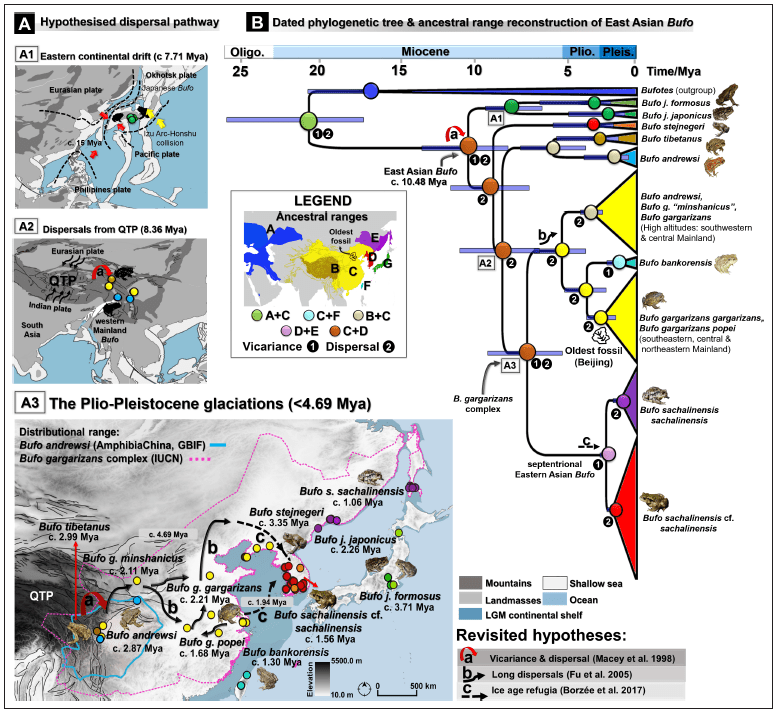
Dated phylogeny and biogeography patterns of Bufo in the Eastern Palearctic.

古北界东部蟾蜍属Bufo系统地理学与分类学新见解

古北界东部蟾蜍属Bufo的地理分布广泛,导致该类群的研究较为困难,其隐存多样性、物种复合体的起源与物种界限尚不明确。研究基于包含中华蟾蜍B. gargarizans复合体在内的全部分布区下433个蟾蜍属个体的广泛样品基础,重构了亚洲蟾蜍属的历史生物地理演化过程,并解决了东亚地区部分物种复合体的系统关系。

Resolution of the diversifications of bufonids in the Holarctic and the Eastern Palearctic.

研究基于多位点基因片段数据,整合了预测系统地理学方法与整合分类学手段,发现远距离扩散与冰川避难所的共同影响是导致中华蟾蜍B. gargarizans复合体内部高度分化水平的重要因素。物种界定模型支持中华蟾蜍复合体中最北端种群的独立支系的种级水平;并且物种分布模型和迁徙格局表明黄海东西部种群间的生态位存在差异,支持黄海以东的蟾蜍属支系独立于其他地区分布的中华蟾蜍B. gargarizans

Bufo sachalinensis

研究自中华蟾蜍B. gargarizans次定同物异名中恢复了Bufo sachalinensis Nikolskii, 1905的有效性,称东北蟾蜍Bufo sachalinensis,解决了中华蟾蜍复合体的分类学问题。此外,我们强调朝鲜半岛和俄罗斯仅分布有东北蟾蜍,其分为两个保护单位:俄罗斯的东北蟾蜍指名亚种B. sachalinensis sachalinensis与韩国南部的东北蟾蜍指名亚种参考亚种B. sachalinensis cf. sachalinensis(亚种有待进一步描述);我们建议将此二者划分为独立的保护管理单元。

论文详情请见eLifeScience期刊网站:https://elifesciences.org/articles/70494

Dated phylogeny and biogeography patterns of Bufo in the Eastern Palearctic.

New resolution in phylogeography and taxonomy of the true toads Bufo across the Eastern Palearctic

The broad geographic range of true toads (genus Bufo) in the Eastern Palearctic has resulted in hidden diversity, uncertain origins of species complexes and unclear taxonomic boundaries. To reconstruct the historical biogeography of Asian Bufo, and resolve the taxonomy of problematic species complex such as B. gargarizans in East Asia, we sampled 433 individuals across the totality of the B. gargarizans complex range.

Resolution of the diversifications of bufonids in the Holarctic and the Eastern Palearctic.

We integrated predictive phylogeographic tools and advanced taxonomy using multi-locus genetic fragments and we determined that the combined effects of long dispersal and glacial refugia resulted in deep divergence within the B. gargarizans complex. The species delimitation modelling supported the independent evolutionary lineage of the northern-most population in the species complex. The species distribution model and migration patterns suggested a difference in ecological requirements between the populations east and west of the Yellow Sea, supporting the segregation of the Bufo clade east of the Yellow Seafrom the widespread B. gargarizans.

Bufo sachalinensis

Resolving the taxonomic boundaries of the B. gargarizans complex, we resurrected Bufo sachalinensis, also giving it a Chinese common name as two species from the clade are now in the nation: Dōng Běi Chán Chú. Additionally, we highlight that only B.sachalinensis occurs on the Korean peninsula and Russia, divided into two conservation units: B. sachalinensis sachalinensis in Russiaand B. sachalinensis cf. sachalinensis, in southern Korea (where the subspecies still needs to be described). We recommend a separate conservation management system to preserve these subspecies. 

Further details on this scientific publication are available from eLifeScience https://elifesciences.org/articles/70494 .

Dated phylogeny and biogeography patterns of Bufo in the Eastern Palearctic.

Amphibian introductions to Ulleung Island.

New publication in BioInvasions Records: “Record of invasive Rana huanrenensis and Pelophylax nigromaculatus on Ulleung Island, Republic of Korea”. A paper led by Yoonhyuk Bae.

Invasive species have a significant negative impact on the environment where they have been introduced, and amphibians are among some of worse invasive species. All known amphibian introductions are linked to human activities, generally in relation with pest control or food provisioning.

This is the case of all amphibians on Ulleung Island, Republic of Korea, which were originally and mistakenly thought to be “reintroduced” after extirpation, or introduced for unrealised purposes such as food provisioning and pest-control. We conducted call and visual encounter surveys in all valleys of Ulleung Island, Republic of Korea, in April and May 2021 to detect the presence of amphibian species. The call surveys and subsequent call analyses revealed the presence of two geographically independent populations of Pelophylax nigromaculatus, and encounter surveys resulted in the sampling of Rana tadpoles identified as Rana huanrenensis with molecular tools. These results highlight the presence of these two species at low density on this island, but do not provide data on the impact of their presence.

Introduction routes of Pelophylax nigromaculatus and Rana huanrenensis to Ulleung Island.