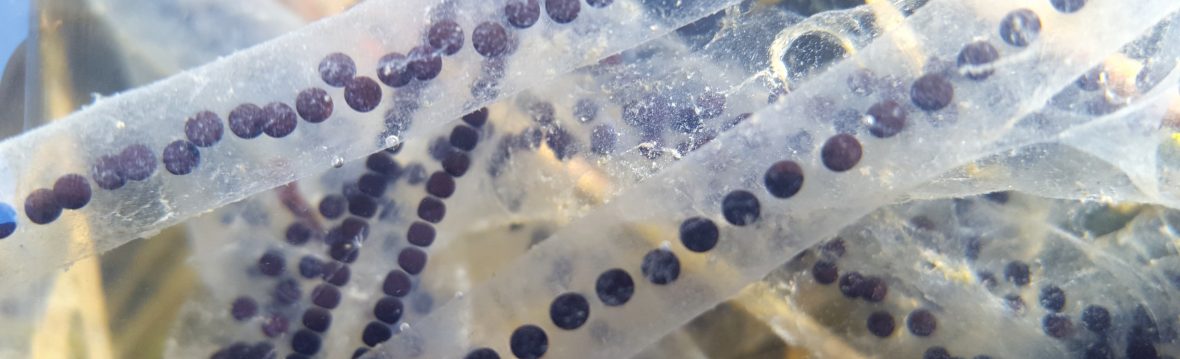
Newly described: Yangsan Clawed Salamander (Onychodactylus sillanus)

New publication through multiple collaborations including the description of Onychodactylus sillanus Yangsan Clawed Salamander (양산꼬리치레도롱뇽)!

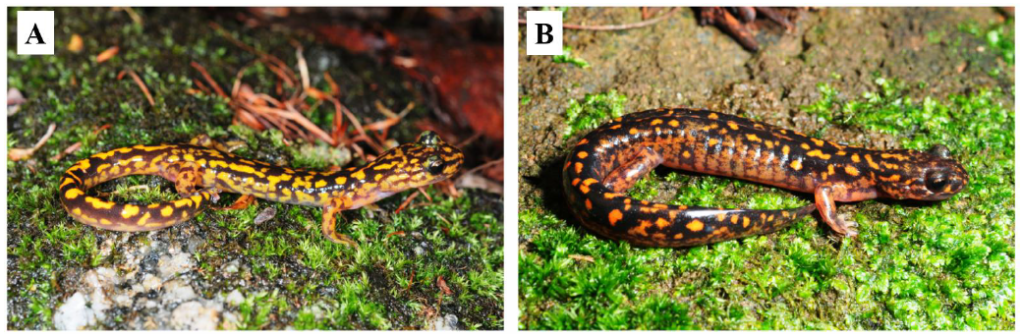
Onychodactylus sillanus in life. Legends in the publication.

For wildlife to be protected, it must first be known, as species that are not yet formally described are not the target of conservation attention, independently of threat levels. While habitat degradation has consistently increased across the last decades in the Republic of Korea, taxonomic and conservation efforts are lagging.

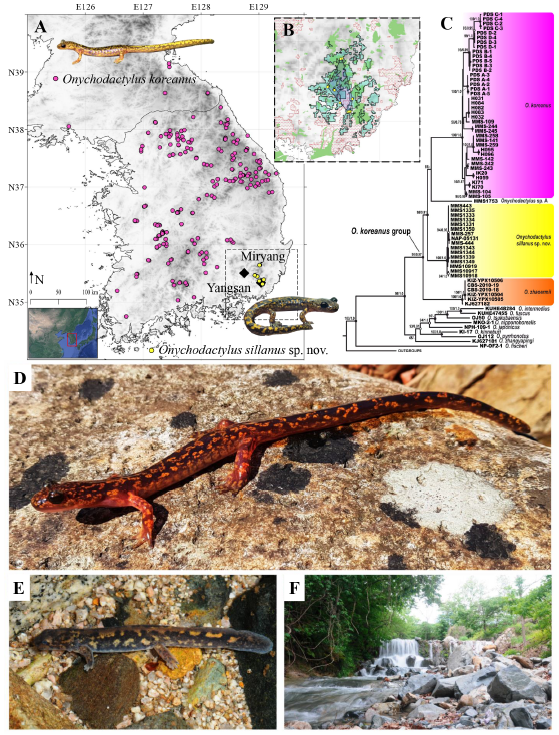
For instance, a clade of Onychodactylus clawed salamanders from the extreme southeast of the Korean Peninsula is known to have diverged circa 6.82 million years ago from its sister species O. koreanus, and despite the candidate species status of this lineage, its extremely restricted range is under intense anthropogenic pressure. Here, through the use of genetics, morphometrics and landscape modelling, we confirmed the species status of the southeast Korean Onychodactylus population and formally describe it as Onychodactylus sillanus (Yangsan Clawed Salamander; 양산꼬리치레도롱뇽).

Range, suitable habitat, and phylogenetic relationships of Onychodactylus sillanus.
Legends in the publication.

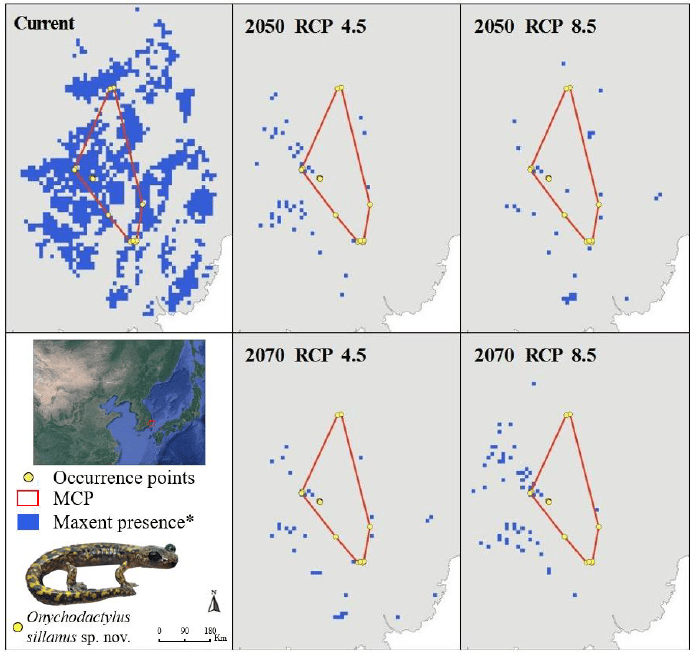
We then proceed to determine threats, habitat loss and risk of extinction based on climatic models under different Representative Concentration Pathways and following the IUCN Red List categories and criteria. We highlight a decrease in the extent of occurrence between 87.6% and 97.3 % within the next three generations based on several climate change scenarios, a decline high enough for the species to be listed as Critically Endangered based on the category A3 of the IUCN Red List of species. Our results will enable the development of protection programs and legitimise citizen activities protecting the population. A conservation action plan is a priority to coordinate the activities linked to the protection of the species.

Potential impacts of future climate change on the suitable habitat of Onychodactylus sillanus sp. nov. Legends in the publication.

Borzée A., Shin Y., Poyarkov N. A., Jeon J. Y., Baek H. J., Lee C. H., An J., Hong Y. J., Min M-S. (2022).  Dwindling in the mountains: description of a critically endangered and microendemic Onychodactylus species (Amphibia, Hynobiidae) from the Korean Peninsula. Zoological Research. 43(5):750-755. DOI: 10.24272/j.issn.2095-8137.2022.048

Newly described Chinese treefrog species: Kurixalus inexpectatus

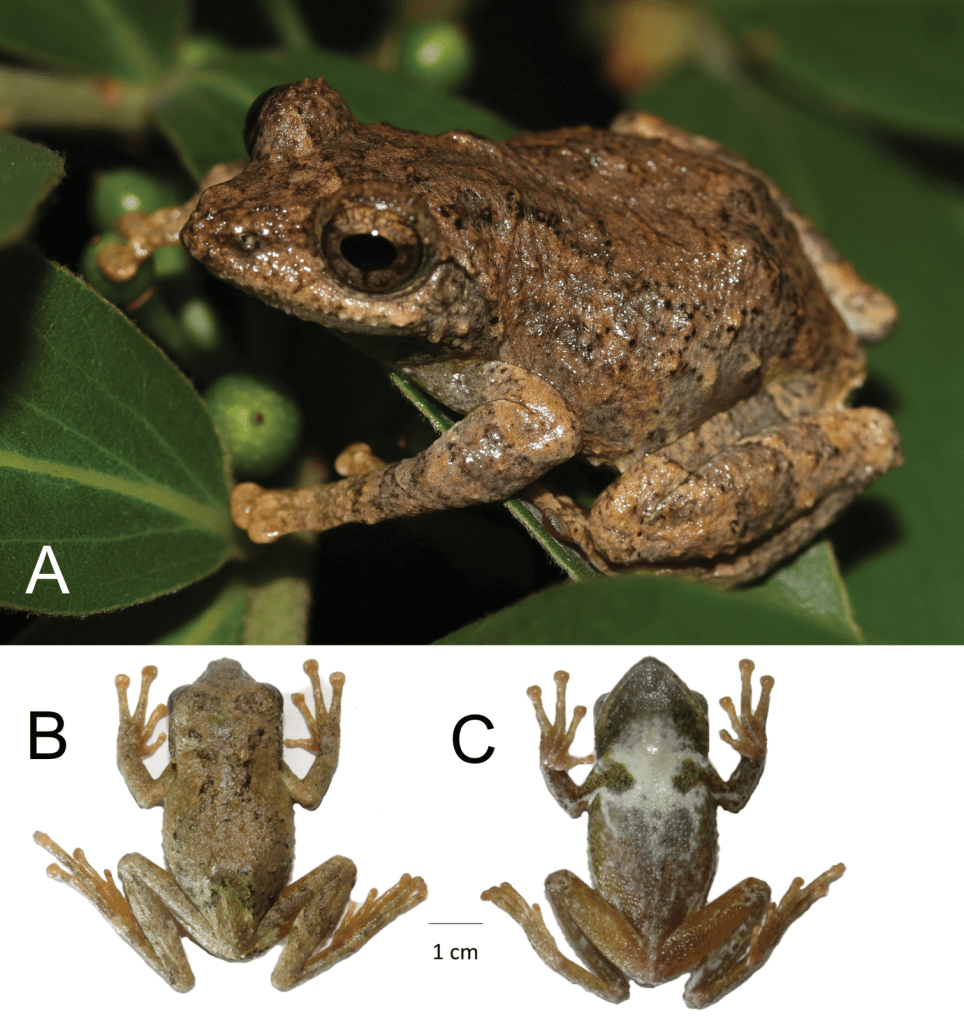
New lab paper with collaborators describing a new Rhacophorid treefrog from Zhejiang in China! The species is named Kurixalus inexpectatus (Changxing Treefrog ; 长兴原指树蛙 ) following it’s unexpected presence in the region, a full 600 km further north than the closest related species – and across the sea!

A Kurixalus sp. nov. specimen (HM 323117) in-situ from 26 April 2018 and B dorsal and C ventral view of NJFU20180704005.

The species diverged from its closest relative during the Late Pliocene to Pleistocene, ca. 3.06 Mya (HPD 95%: 5.82-0.01), based on calibrations with a relaxed clock species tree of unlinked mtDNA 12S rRNA and nuclear DNA TYR. The status of the newly-described species is also supported by a divergence in call properties and morphometrics. 

Holotype of Kurixalus inexpectatus sp. nov. A dorsal view B ventral view C right hand, ventral view D right foot, ventral view E dorsolateral view.

For more information on the backstory – and why we were looking for a totally different treefrogs, here is a fun read!

Vocal behaviour and ecology of syntopic Balloon Frogs from Central India

Most amphibians call but why do they call? Well, a male frog can call to attract a female or to defend his territory. As a part of the research, a team of scientists in Asia decided to study two elusive and syntopic species of balloon frogs – Marbled Balloon Frog and Indian Balloon Frog, and the findings of the study are published in BMC Zoology. Not much is known about their ecology and behaviour since they are highly secretive and spend most of their life underground. They surface only for a few days to breed. The research is also summarised in this video.

The two elusive syntopic species of Balloon Frogs, Uperodon systoma and U. globulosus

When breeding in same habitat, species may be forced to utilise the same habitat. This may increase the risk of cross breeding, which may result in unsuccessful reproduction. The researchers were interested to find ‘How do these two frog species overcome this problem and breed successfully?’. And they found that the two balloon frog species adapted to diverge in their acoustic behaviour by making a clear segregation in call properties. Helping them to distinguish their calls… making it easier to detect by females.

Acoustic segregation in the call properties of Uperodon systoma and U. globulosus. Our results demonstrated that the advertisement calls of U. systoma are pulsatile with a call rate of3.00 ± 0.97 calls per second while those of U. globulosus are not pulsatile with a lower call rate of 0.53 ± 0.22 calls per second. For both species, the variations in call properties among individuals was higher than that within individual, a pattern consistent with that of other fossorial anurans. The body condition and air temperature did not significantly impact the call properties of either species.

The two balloon frog species also used different calling locations within the same habitat. Creating a calling microhabitat partitioning. These strategies allowed them to breed successfully and help them co-exist!

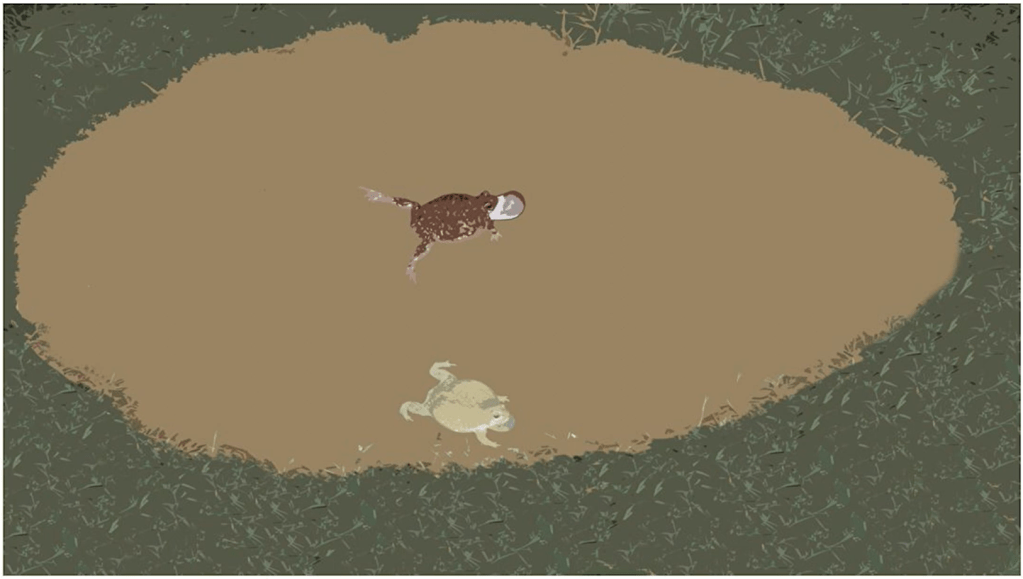
Breeding microhabitat segregation between Uperodon systoma and U. globulosus. we successfully demonstrated that there is a clear segregation in calling site microhabitat between the two species, where U. globulosus calls floating close to the bank of the waterbody while U. systoma calls floating further away from the bank

Also, both the species have a potential of individual recognition through individual calls as shown in this research study.

The outcome of the Beecher’s index (HS) showed that the calls of U. systoma can be used to identify 14 different individuals and the calls of U. globulosus can be used to identify 26 different individuals.

Conclusion: This study provides the first detailed analysis of the vocal behaviour of elusive marbled balloon frog and Indian Balloon Frog and highlighting the potential for pre-mating isolation, character displacement and assortative mating in these two syntopic species. Leading to the association between acoustic and calling microhabitat niche as an important behavioural and ecological trait.

Prasad V. K., Chuang M-F., Das A., Ramesh K., Yi Y., Dinesh K P. & Borzée A. (2022). Coexisting good neighbours: acoustic and calling microhabitat niche partitioning in two elusive syntopic species of Balloon Frogs, Uperodon systoma and U. globulosus (Anura: Microhylidae) and potential of individual vocal signatures. BMC Zoology. 7:27. DOI: 10.1186/s40850-022-00132-x

~ SAVE AMPHIBIANS OF HIMALAYAS AWARENESS PROGRAM! ~

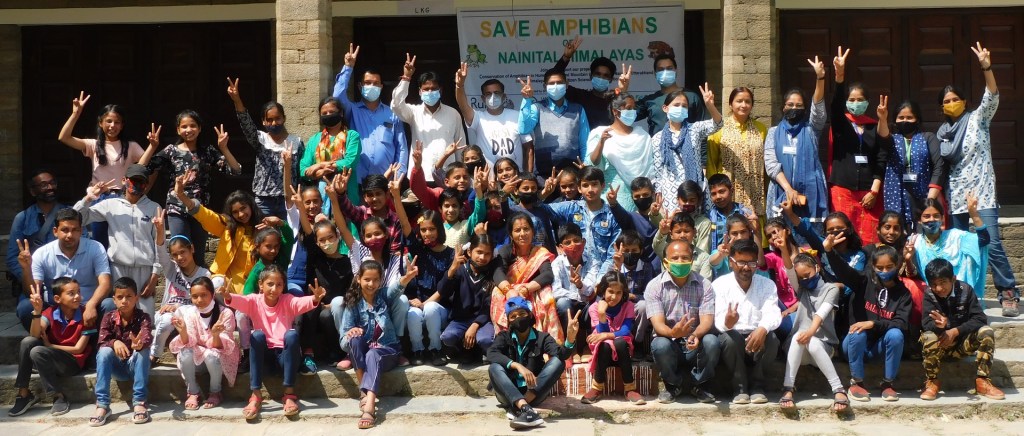
Some good news from the Himalayas of Uttarakhand, India! Our lab member Vishal Kumar Prasad and his team and colleagues organised a major awareness and education program: ‘Saving Amphibians of Nainital Himalaya’ on 2nd April 2022 for school students (age under 15) in Aarohi Peora, Nainital district. With the decline in covid-19 cases locally and further relaxation in restrictions, they were allowed to organise this program in villages.

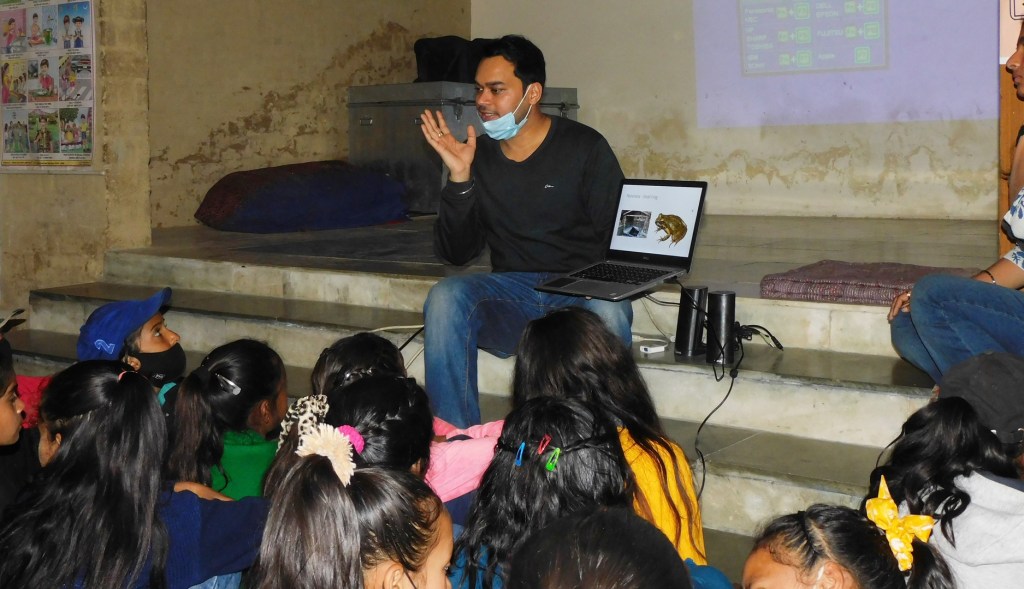
Vishal Kumar Prasad explaining about amphibian conservation to students in Nainital

The program included an interactive session on the research of endemic amphibians. Vishal presented his research work on the frogs and toads, natural history, importance, and threats the amphibians are facing in the Himalayan landscape. The team also organised some activities like memory games and the most exclusive the ‘FROG RACE!’ The winning team was awarded with prizes and certificates. All students enjoyed refreshments after a tiring ‘Frog Race’. Good teamwork was displayed by students in these group activities. This shows children are the hope for future conservation.

The ‘Frog Race’

Interestingly, there was a pre-assessment of the existing knowledge of children about amphibians by providing them a questionnaire (10 questions). This activity will be monitored after imparting further knowledge to the children to see how their perspective has changed over a period of time.  

Participants of the awareness and education program: ‘Saving Amphibians of Nainital Himalaya’

Awareness program about amphibian conservation in Nainital district

Participants of the awareness program on the 18th of March 2022

Vishal and his team organised on the 18th of March 2022 an awareness program on amphibians conservation for the children of Simayal village in the Nainital district in India. It was a two hours long event that included a short talk, a poster competition, and refreshments for about 20 children. Due to exams period, it’s difficult to conduct such event in a school and initially they didn’t expect much from the village children in terms of involvement and enthusiasm for toads and frogs, but surprisingly children were really excited about the amphibian stories.

Short talk on amphibian conservation

They tried to ignite their young minds with frog picture and videos and they all enjoyed the session and learned about amphibians that are found in their vicinity. Vishal hopes that this will bring some interest in the local anuran species. The children made some really cool posters and Mansi Raikwal (ninths grade) made the best poster with frog eggs, tadpole and adult frogs with a message about saving amphibians of Nainital district.

Best poster of the competition on amphibian conservation!