Blog

Newly described: Yangsan Clawed Salamander (Onychodactylus sillanus)

New publication through multiple collaborations including the description of Onychodactylus sillanus Yangsan Clawed Salamander (양산꼬리치레도롱뇽)!
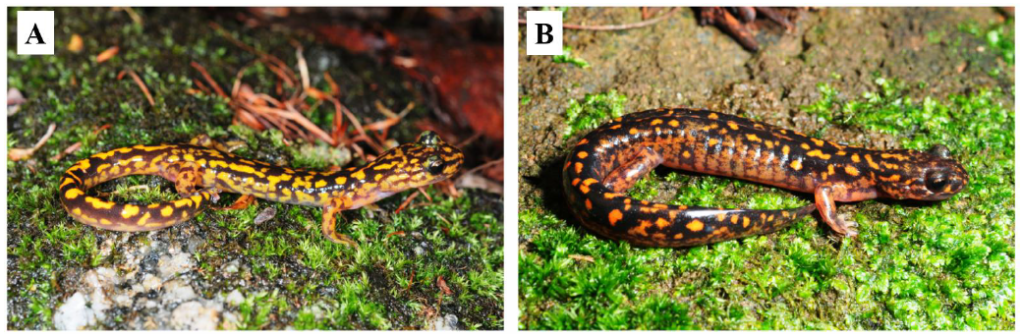
Onychodactylus sillanus in life. Legends in the publication.

For wildlife to be protected, it must first be known, as species that are not yet formally described are not the target of conservation attention, independently of threat levels. While habitat degradation has consistently increased across the last decades in the Republic of Korea, taxonomic and conservation efforts are lagging.

For instance, a clade of Onychodactylus clawed salamanders from the extreme southeast of the Korean Peninsula is known to have diverged circa 6.82 million years ago from its sister species O. koreanus, and despite the candidate species status of this lineage, its extremely restricted range is under intense anthropogenic pressure. Here, through the use of genetics, morphometrics and landscape modelling, we confirmed the species status of the southeast Korean Onychodactylus population and formally describe it as Onychodactylus sillanus (Yangsan Clawed Salamander; 양산꼬리치레도롱뇽).
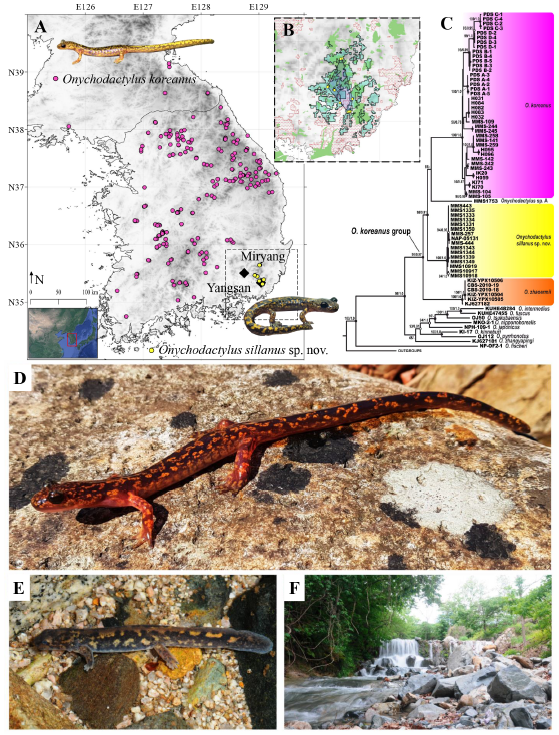
Range, suitable habitat, and phylogenetic relationships of Onychodactylus sillanus.
Legends in the publication.

We then proceed to determine threats, habitat loss and risk of extinction based on climatic models under different Representative Concentration Pathways and following the IUCN Red List categories and criteria. We highlight a decrease in the extent of occurrence between 87.6% and 97.3 % within the next three generations based on several climate change scenarios, a decline high enough for the species to be listed as Critically Endangered based on the category A3 of the IUCN Red List of species. Our results will enable the development of protection programs and legitimise citizen activities protecting the population. A conservation action plan is a priority to coordinate the activities linked to the protection of the species.
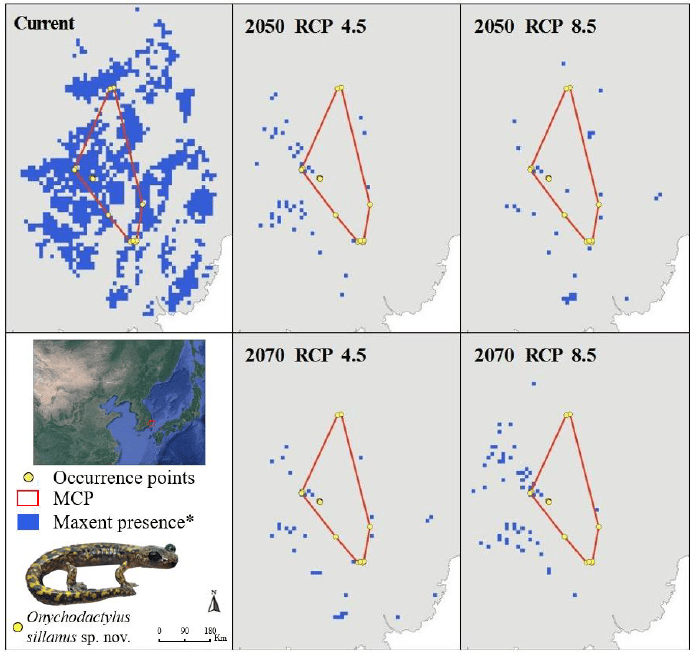
Potential impacts of future climate change on the suitable habitat of Onychodactylus sillanus sp. nov. Legends in the publication.

Borzée A., Shin Y., Poyarkov N. A., Jeon J. Y., Baek H. J., Lee C. H., An J., Hong Y. J., Min M-S. (2022).  Dwindling in the mountains: description of a critically endangered and microendemic Onychodactylus species (Amphibia, Hynobiidae) from the Korean Peninsula. Zoological Research. 43(5):750-755. DOI: 10.24272/j.issn.2095-8137.2022.048
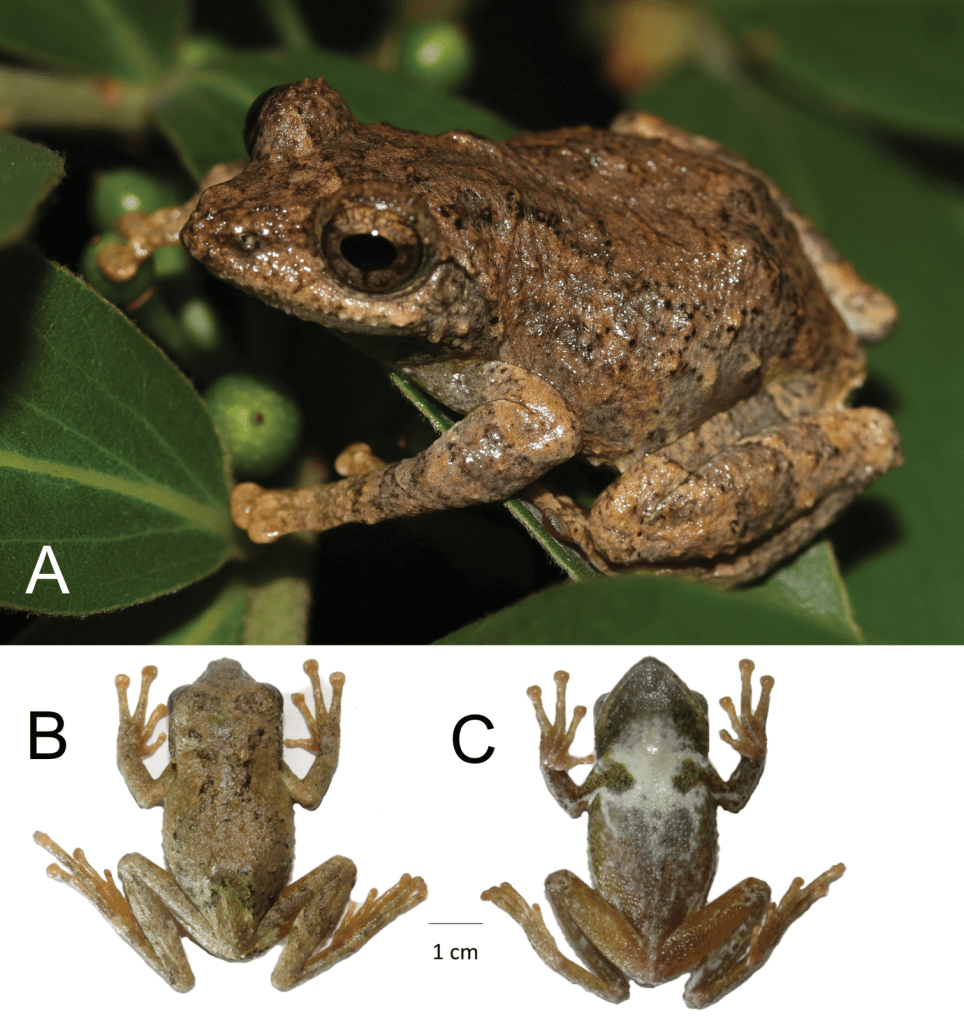
Newly described Chinese treefrog species: Kurixalus inexpectatus

New lab paper with collaborators describing a new Rhacophorid treefrog from Zhejiang in China! The species is named Kurixalus inexpectatus (Changxing Treefrog ; 长兴原指树蛙 ) following it’s unexpected presence in the region, a full 600 km further north than the closest related species – and across the sea!

A Kurixalus sp. nov. specimen (HM 323117) in-situ from 26 April 2018 and B dorsal and C ventral view of NJFU20180704005.

The species diverged from its closest relative during the Late Pliocene to Pleistocene, ca. 3.06 Mya (HPD 95%: 5.82-0.01), based on calibrations with a relaxed clock species tree of unlinked mtDNA 12S rRNA and nuclear DNA TYR. The status of the newly-described species is also supported by a divergence in call properties and morphometrics. 

Holotype of Kurixalus inexpectatus sp. nov. A dorsal view B ventral view C right hand, ventral view D right foot, ventral view E dorsolateral view.

For more information on the backstory – and why we were looking for a totally different treefrogs, here is a fun read!

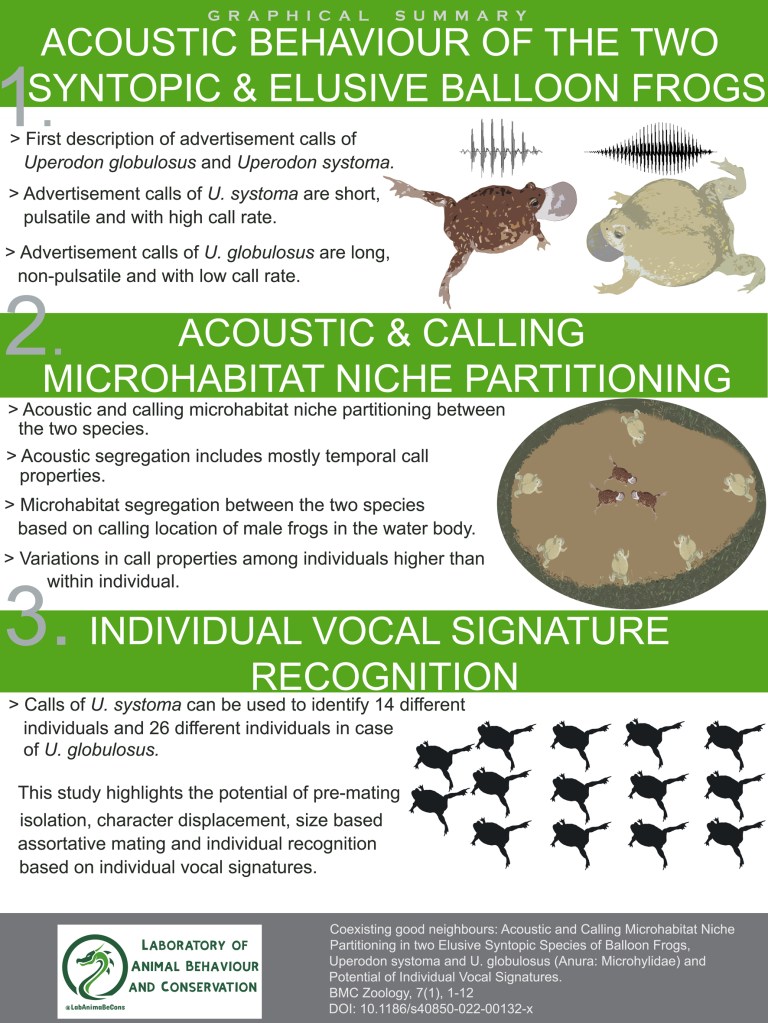
The graphical summary – acoustic behaviour of two syntopic and elusive balloon frogs

Graphical summary of the findings of the study

An easy-to-read graphical summary of the findings of our recently published study on the acoustic behaviour of two syntopic balloon frogs species (also available on video). The balloon frogs of the genus Uperodon remain understudied for their behaviour and ecology due to their highly fossorial and secretive life. The focal species, the Marbled Balloon frog and the Indian Balloon frog, appear above ground for a short period to breed at the onset of monsoon season in the month of June and July in the Indian subcontinent.

The study provides 1) the first description of the vocal repertoire of Uperodon systoma and Uperodon globulosus, 2) demonstrates the divergence in the call properties between the two species, 3) describes partitioning in the calling microhabitat niche between the two species based on calling location of male frogs in the waterbody, 4) determine the individual recognition potential through individual vocal signatures for each species.

The study highlights the potential of pre-mating isolation, character displacement, and size-based assortative mating in the two syntopic fossorial frog species, leading to an association between acoustic, calling microhabitat niche and body index divergence as important behavioural and ecological traits.

Link of the research article: https://www.researchgate.net/publication/360725618_Coexisting_good_neighbours_acoustic_and_calling_microhabitat_niche_partitioning_in_two_elusive_syntopic_species_of_Balloon_Frogs_Uperodon_systoma_and_U_globulosus_Anura_Microhylidae_and_potential_of_i/stats

Watch the promotional video: https://youtu.be/XQ5AaRGMpZo

Electrocution of wild Javan Gibbons

Our short paper on Javan gibbon electrocution cases has been published in the Journal of Threatened Taxa. While most primate electrocution is reported in urban areas, we found three electrocuted gibbons in the wild during our long-term study.

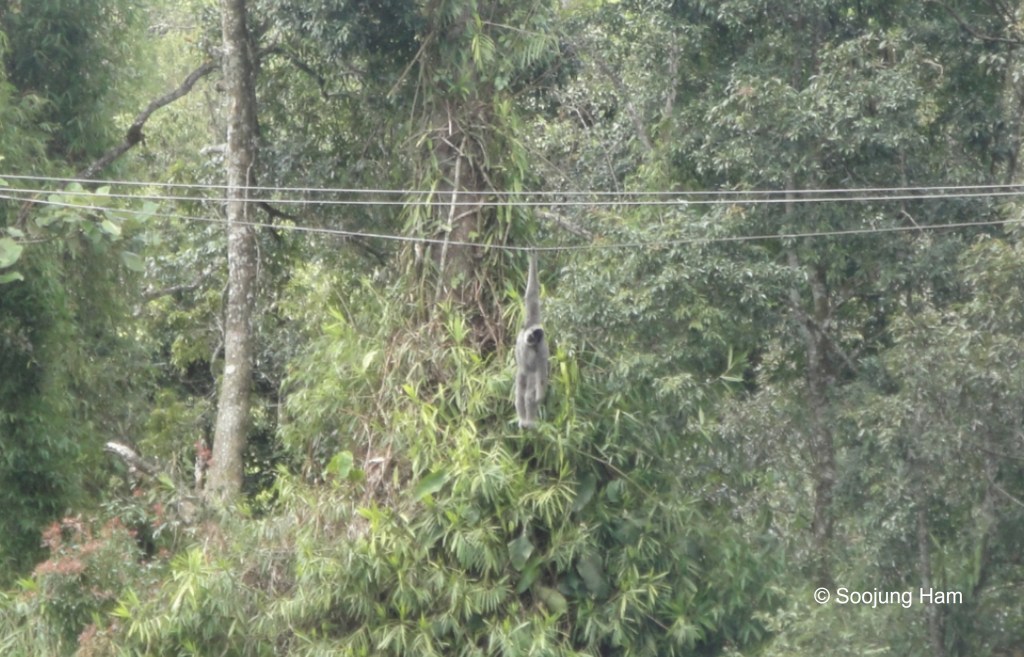
An adult Javan gibbon male electrocuted by power line close to the protected area,
Gunung Halimun-Salak National Park, Indonesia

Arboreal primates can easily access power lines, leading to immediate death in all cases we have. The last electrocution case was observed while drafting our manuscript, ensuring that this can continue if nothing is done for them.

Since the power lines often pass the forestry area, we suspect many more unreported cases of Javan gibbon or other wildlife death caused by electrocution. Prioritizing the high-risk area and managing conservation practices will be essential!

Yi, Y., Ham, S., Oktaviani, R., Dewi, M.C., Nur, M., Mardiastuti, A. & Choe, J.C. (2022). Cases of fatal electrocution of the endangered Javan Gibbons (Mammalia: Primates: Hylobatidae) by power lines. Journal of Threatened Taxa, 14(5): 20964–2096. https://doi.org/10.11609/jott.7758.14.5.20964-20969

Vocal behaviour and ecology of syntopic Balloon Frogs from Central India

Most amphibians call but why do they call? Well, a male frog can call to attract a female or to defend his territory. As a part of the research, a team of scientists in Asia decided to study two elusive and syntopic species of balloon frogs – Marbled Balloon Frog and Indian Balloon Frog, and the findings of the study are published in BMC Zoology. Not much is known about their ecology and behaviour since they are highly secretive and spend most of their life underground. They surface only for a few days to breed. The research is also summarised in this video.

The two elusive syntopic species of Balloon Frogs, Uperodon systoma and U. globulosus

When breeding in same habitat, species may be forced to utilise the same habitat. This may increase the risk of cross breeding, which may result in unsuccessful reproduction. The researchers were interested to find ‘How do these two frog species overcome this problem and breed successfully?’. And they found that the two balloon frog species adapted to diverge in their acoustic behaviour by making a clear segregation in call properties. Helping them to distinguish their calls… making it easier to detect by females.

Acoustic segregation in the call properties of Uperodon systoma and U. globulosus. Our results demonstrated that the advertisement calls of U. systoma are pulsatile with a call rate of3.00 ± 0.97 calls per second while those of U. globulosus are not pulsatile with a lower call rate of 0.53 ± 0.22 calls per second. For both species, the variations in call properties among individuals was higher than that within individual, a pattern consistent with that of other fossorial anurans. The body condition and air temperature did not significantly impact the call properties of either species.

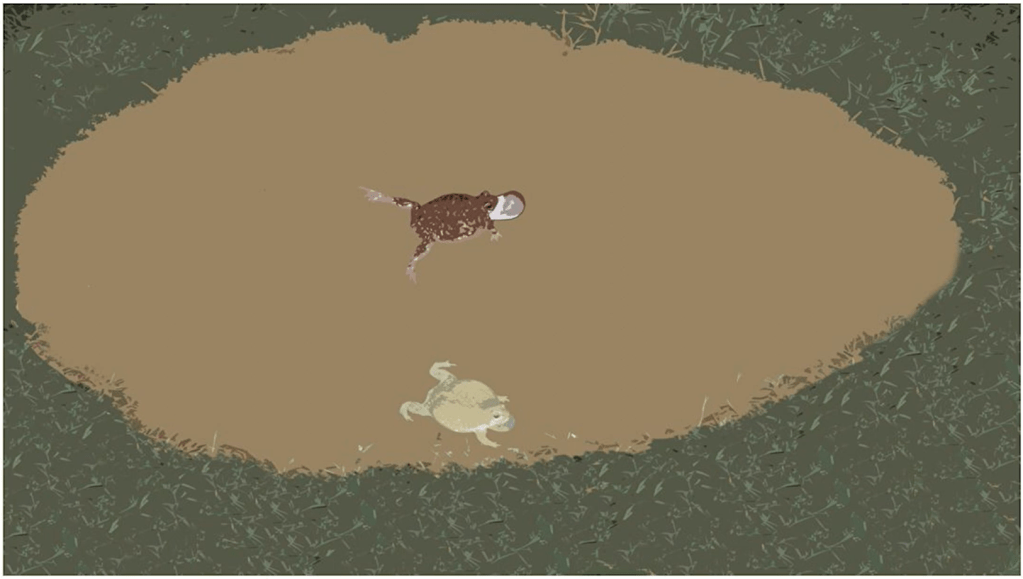
The two balloon frog species also used different calling locations within the same habitat. Creating a calling microhabitat partitioning. These strategies allowed them to breed successfully and help them co-exist!

Breeding microhabitat segregation between Uperodon systoma and U. globulosus. we successfully demonstrated that there is a clear segregation in calling site microhabitat between the two species, where U. globulosus calls floating close to the bank of the waterbody while U. systoma calls floating further away from the bank

Also, both the species have a potential of individual recognition through individual calls as shown in this research study.

The outcome of the Beecher’s index (HS) showed that the calls of U. systoma can be used to identify 14 different individuals and the calls of U. globulosus can be used to identify 26 different individuals.

Conclusion: This study provides the first detailed analysis of the vocal behaviour of elusive marbled balloon frog and Indian Balloon Frog and highlighting the potential for pre-mating isolation, character displacement and assortative mating in these two syntopic species. Leading to the association between acoustic and calling microhabitat niche as an important behavioural and ecological trait.

Prasad V. K., Chuang M-F., Das A., Ramesh K., Yi Y., Dinesh K P. & Borzée A. (2022). Coexisting good neighbours: acoustic and calling microhabitat niche partitioning in two elusive syntopic species of Balloon Frogs, Uperodon systoma and U. globulosus (Anura: Microhylidae) and potential of individual vocal signatures. BMC Zoology. 7:27. DOI: 10.1186/s40850-022-00132-x