I’m leading the Laboratory of Animal Behaviour and Conservation at Nanjing Forestry University, where we focus on a broad range of species. Projects were so far focused on the behavioural ecology and conservation of amphibian species in East Asia, but this is changing and you are welcome to inquire, maintaining a focus on North East Asia.
We are happy to share some updates from the people in our lab working in the Himalayas, India. This week we organised an amphibian conservation talk in Mukteshwar hill town to encourage local youths and public to protect the amphibians of Himalayas. Due to COVID-19 restriction, many people couldn’t join the talk but we are glad that some passionate young nature guides of the ‘Nature in Mukteshwar’ group made it to the event. Participants were very much interested and happy to learn about frogs of their region. We believe it takes positive intent and some efforts to educate people in the right direction and with consistency locals can pick up and get well on knowledge of their own local biodiversity. Without participation of local communities, no conservation program is successful. A big thanks to Ram and Ghazala for arranging everything! This program was organised under a grant received from Rufford Foundation, United Kingdom. We hope our work in the Himalayas will ignite many young minds to start thinking to save amphibians of the Himalayas!
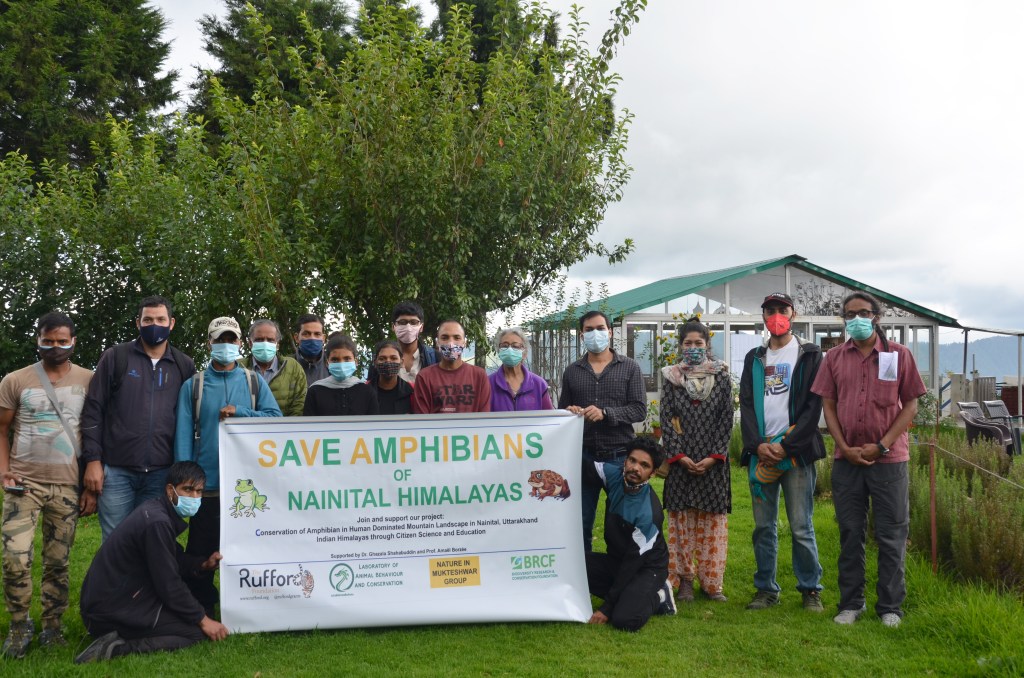
Participants of the workshop
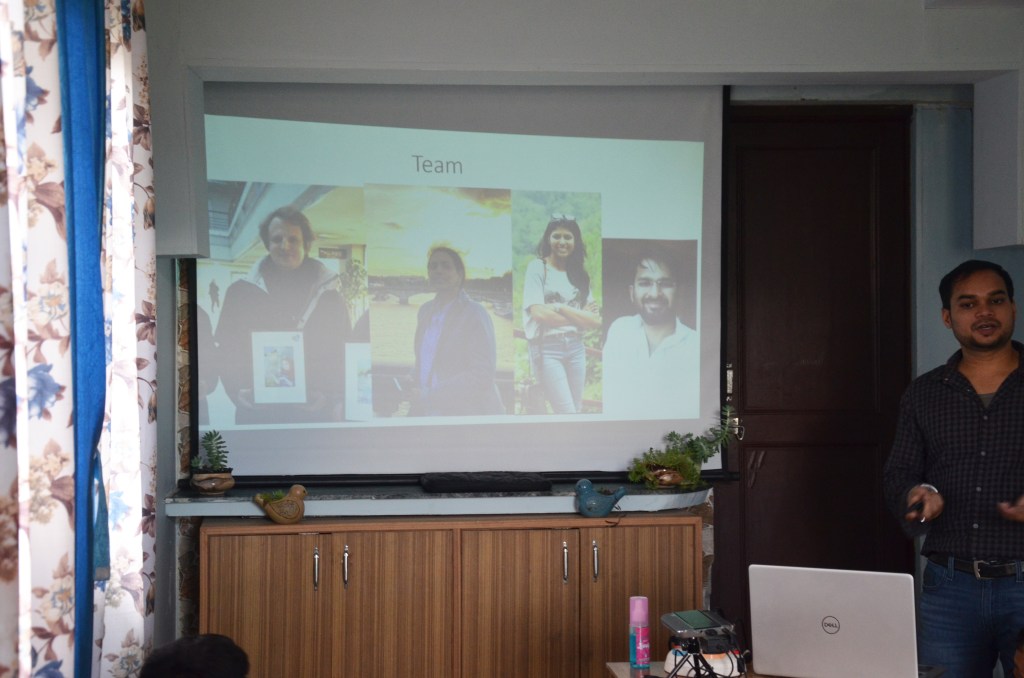
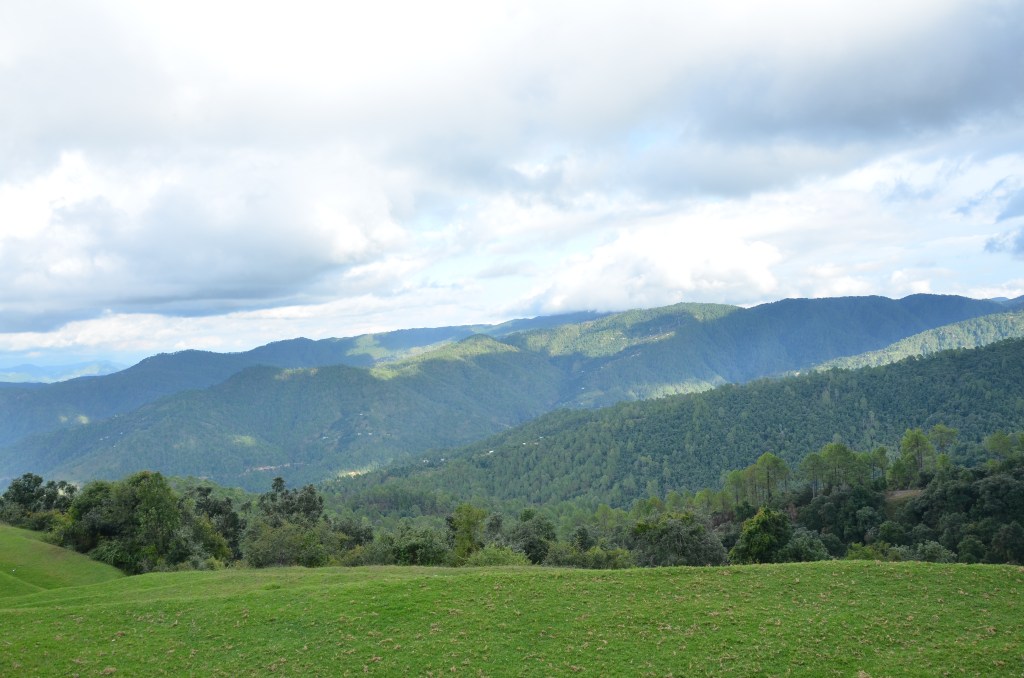
Vishal Kumar Prasad giving a talkThe team supporting Vishal Kumar Prasad’s projectLandscape of Mukteshwar
作为对比,我们使用了物种丰富度和演化独特且濒危的物种评分指标(Evolutionarily Distinct and Globally Endangered ,EDGE)绘制了两栖动物生物多样性图谱并对其进行了排序。结果显示,我们的方法预测了两栖动物保护的关键区域,而单纯基于物种丰富度或EDGE评分指标时并不明显。
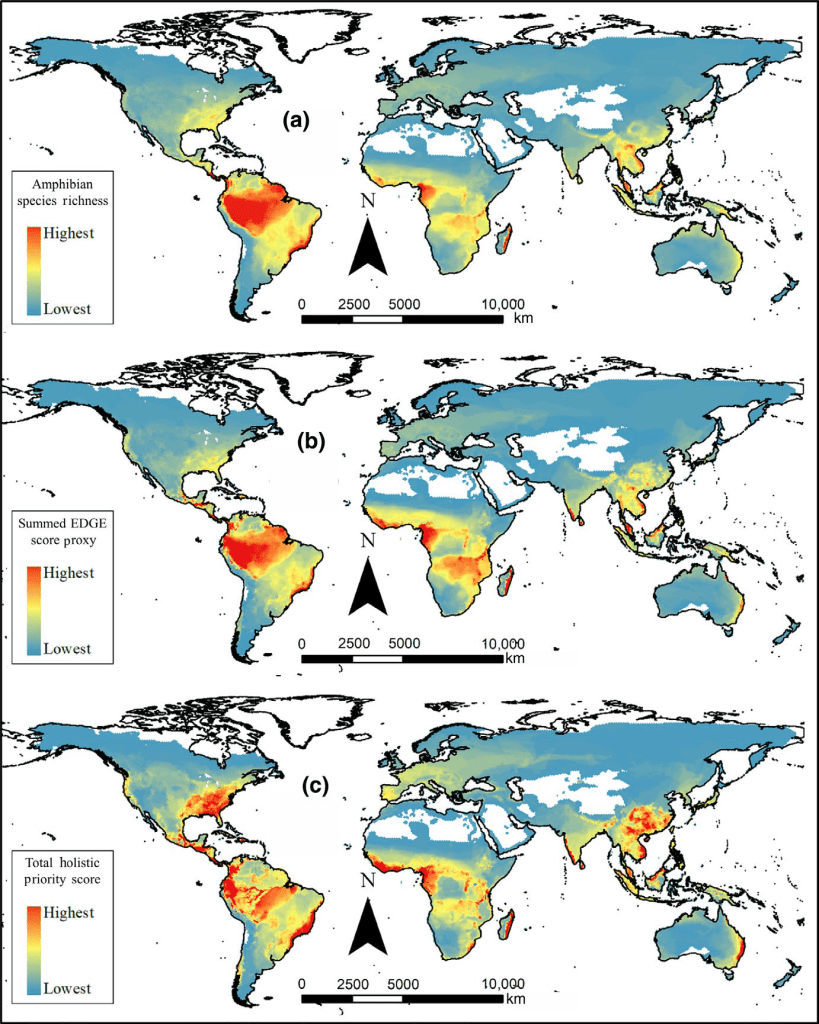
Relative conservation priority scores for amphibians using species richness (a), EDGE score proxy (b), and the integrative approach (c). We calculated priority scores for each approach by summing the scores (or number) of species overlapping each grid cell. The spatial distribution of high-scoring pixels differed considerably among the three approaches, with the integrative and EDGE score proxy approaches suggesting higher conservation priorities in the Paleotropics than the species richness approach
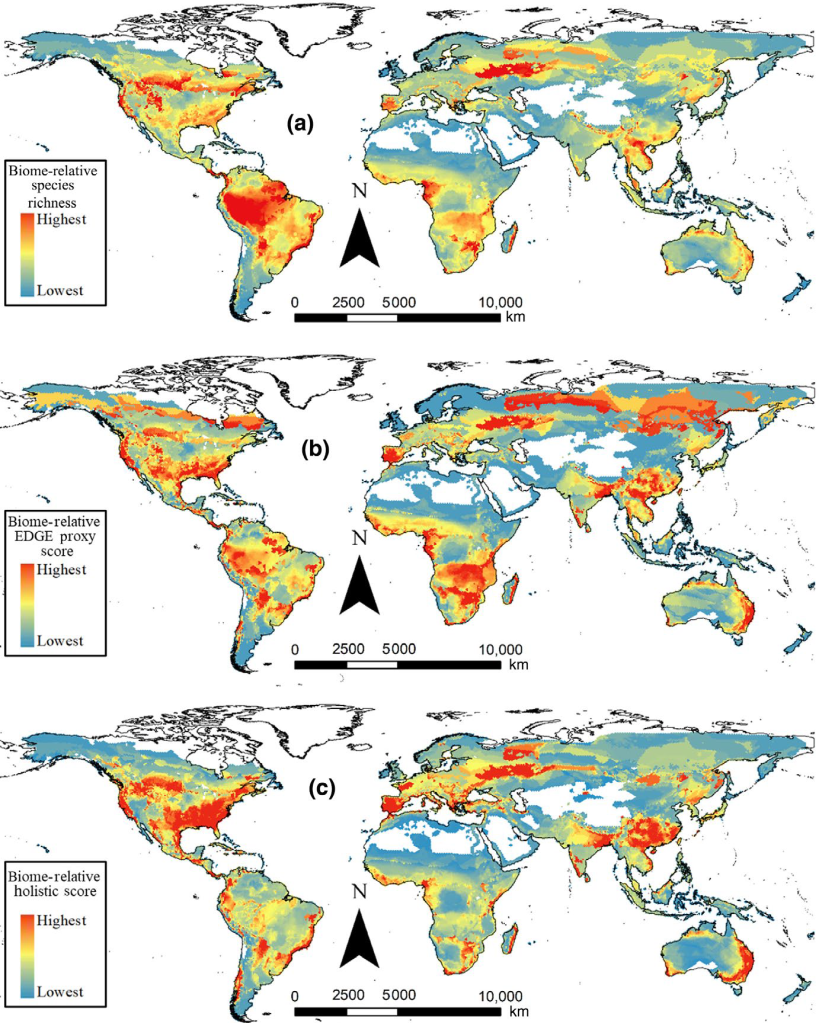
Conservation priority scores for each pixel relative to other pixels within the same biome, for the species richness (a), EDGE score proxy (b), and integrative scoring approach (c). We calculated global-scale priority scores for each approach by summing the scores (or number) of species overlapping each grid cell. We scaled these scores to biome level by dividing the score of each pixel by the score of the highest-scoring pixel within the same biome. Our biome-scale adjustments highlight several key areas for conserving temperate and xeric-adapted amphibians, which are not visually apparent in our global-scale maps.
New publication (PDF here*) in collaboration with Sky Button from Washington State University published in Global Change Biology: An integrative synthesis to global amphibian conservation priorities.
Human activities are driving many species to the brink of extinction, and the current distribution of protected areas only weakly alleviates pressure on threatened species. This discrepancy reflects the presence of protected areas on lands available instead of the ecological, evolutionary, or conservation values of species present. Habitat loss consequently continues to impact threatened species, as illustrated by geographic patterns of biodiversity loss for amphibians.
Given the need to better align the boundaries of protected areas with at-risk biodiversity, we assessed the importance of various factors for identifying global and biome-level conservation priority areas, specifically for amphibians. We identified, mapped, and ranked areas of critical conservation importance for all amphibian species on earth using a new integrative tool that scores the urgency of conserving each species and location based on a combination of species characteristics and ecoregion-level human impacts. Our integrative approach is novel in that it accounts for likely threats to Data Deficient species, considers the irreplaceability of unique species that are phylogenetically isolated, and addresses the localized conservation implications of species endemicity and projected future human impacts to an ecoregion.
For comparison, we also mapped and ranked amphibian biodiversity using species richness and an Evolutionarily Distinct and Globally Endangered (EDGE) score proxy. Our integrative approach predicted key regions for amphibian conservation that were not apparent when using a simple species richness or EDGE score proxy-based approach.
Relative conservation priority scores for amphibians using species richness (a), EDGE score proxy (b), and the integrative approach (c). We calculated priority scores for each approach by summing the scores (or number) of species overlapping each grid cell. The spatial distribution of high-scoring pixels differed considerably among the three approaches, with the integrative and EDGE score proxy approaches suggesting higher conservation priorities in the Paleotropics than the species richness approach
Furthermore, by scaling conservation priority scores relative to biome, we identified several temperate and xeric regions of crucial yet overlooked conservation importance for amphibians. Until global amphibian diversity is thoroughly catalogued, we recommend using our integrative scoring approach to set geographic priorities for amphibian habitat protection, while acknowledging that this approach may be complemented by others (e.g., EDGE scores). Our study provides an avenue for avoiding common pitfalls of more simplistic species richness-based approaches for conservation planning, and can be used to improve the future design of protected areas.
Conservation priority scores for each pixel relative to other pixels within the same biome, for the species richness (a), EDGE score proxy (b), and integrative scoring approach (c). We calculated global-scale priority scores for each approach by summing the scores (or number) of species overlapping each grid cell. We scaled these scores to biome level by dividing the score of each pixel by the score of the highest-scoring pixel within the same biome. Our biome-scale adjustments highlight several key areas for conserving temperate and xeric-adapted amphibians, which are not visually apparent in our global-scale maps.
This new approach is a game changer for amphibian conservation in northeast Asia, as it highlight areas that are usually ignored from conservation priotities.
Details of conservation priorities for amphibians in northeast Asia.
*Clicking on this link is considered as a private request to the authors
New publication updating the knowledge on all amphibian species of DPR Korea! A large piece of work, including 21 co-authors, and all amphibian experts of DPR Korea! (Official link here).
Determining the range, status, ecology and behaviour of species from areas where surveys and samplings are uncommon or difficult to conduct is a challenge, such as in the Democratic People’s Republic of Korea (DPR Korea). Here, we used genetic samples, field surveys, call recordings, photographic identification and a literature review to estimate the presence, range and status of amphibians in the DPR Korea.
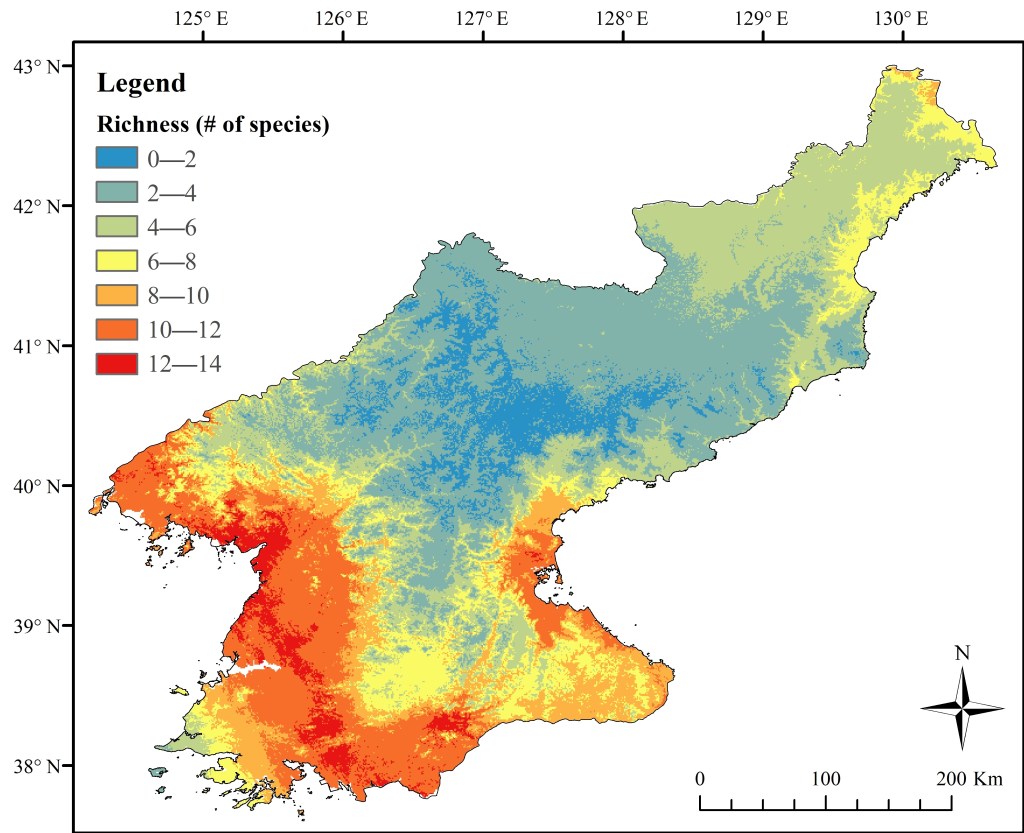
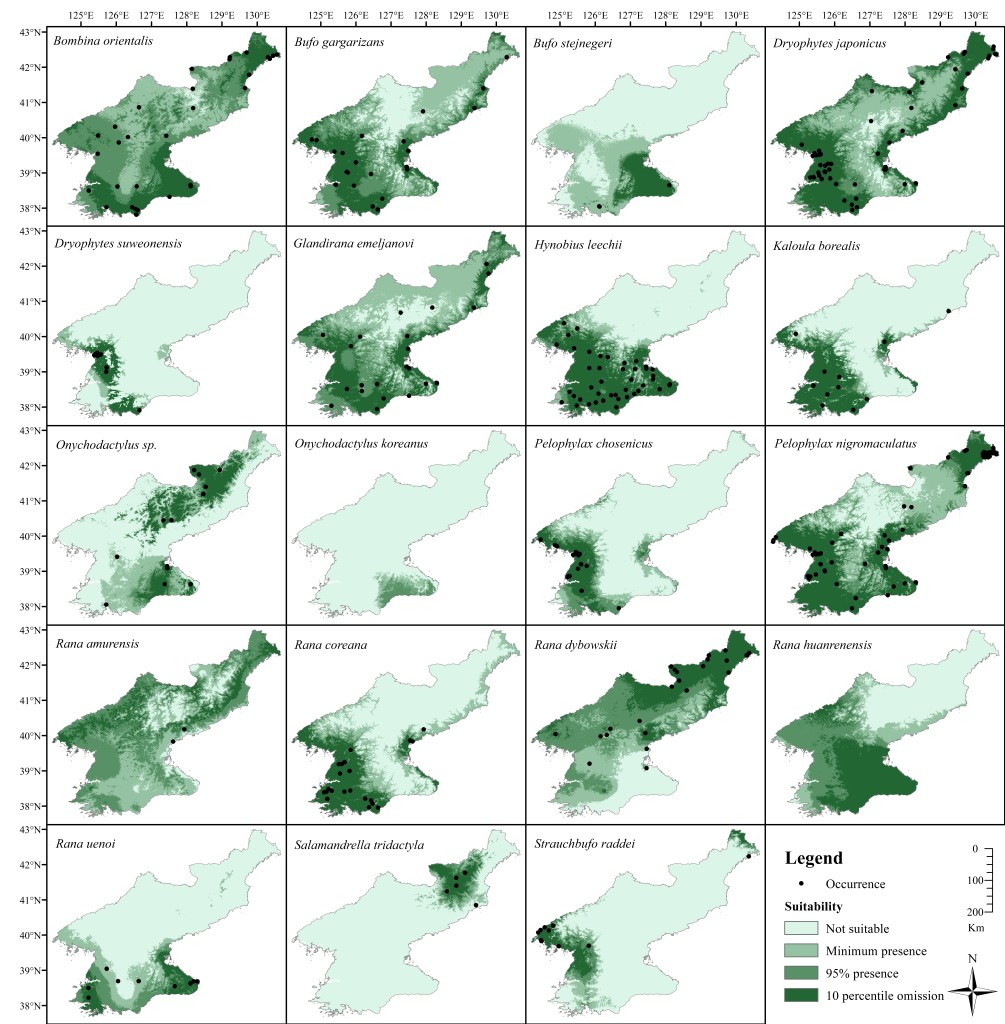
Amphibian species richness for all amphibian species recorded in DPR Korea. This map combines MaxEnt models using a sum of presence probabilities. See full text for details.
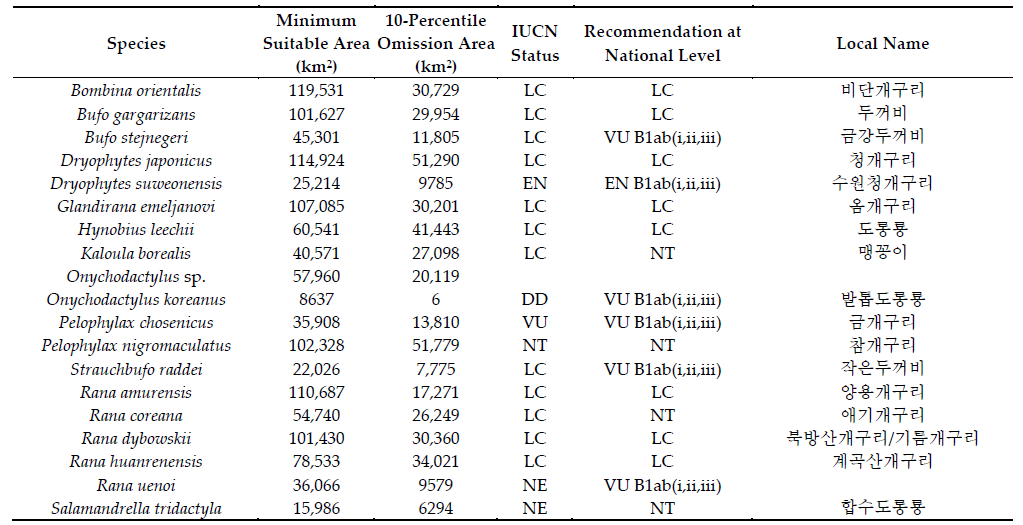
From our combined results and based on the IUCN Red List categories and criteria, we were able to estimate the national threat levels for most species. Our results demonstrated the presence of 18 native species and the suspected presence of Karsenia koreana and two Onychodactylus species. We reported the first record for Rana uenoi in the vicinity of Pyongyang using molecular tools and similarly confirmed the presence of Dryophytes japonicus at the same location.
Description of presence models used for each species in DPR Korea. The surface area in km2 provided matches with the 10-percentile training and the 95% presence used in models. IUCN threat levels as of February 2019 (www.iucnredlist.org). See full text for details.
Based on distribution and modelling, we can expect the contact zone between species within the Rana and Onychodactylus genera to be located along the Changbai Massif, a mountain range that marks a shift in ecoregions and acts as a barrier to dispersion.
The species richness was higher in the lowlands and at lower latitudes, with such areas populated by up to 11 species, while more northern regions were characterised by species richness of about half of that value. The combination of ecological models and known threats resulted in the recommendation of ten species as threatened at the national level following the IUCN Red List categories and criteria. This high number of threatened species was anticipated based on the high threat level to amphibians in bordering nations and globally.
While the ecology of species in the DPR Korea is still understudied, we argue that species relying on agricultural wetlands such as rice paddies are not under imminent threat due to the enduring presence of extensive agricultural landscapes with low rates of chemical use and mechanisation. The maintenance of such landscapes is a clear benefit to amphibian species, in contrast to more industrialised agricultural landscapes in neighbouring nations. In comparison, the status of species dependent on forested habitats is unclear and threat levels are likely to be higher because of deforestation, as in neighbouring nations.
MaxEnt models for all amphibian species recorded in DPR Korea. See full text for details.
The phylogeography of the Kaloula genus is still poorly understood. One of the difficulties is the absence of fossils to corroborate molecular dating estimates. Here, we examined the mitochondrial structure of Kaloula spp. in East Asia and focused on the impact of glaciations and past geological events on the northernmost species: Kaloula borealis.
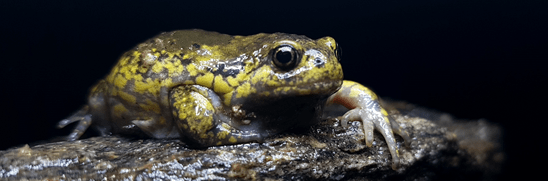
Kaloula borealis from the Republic of Korea
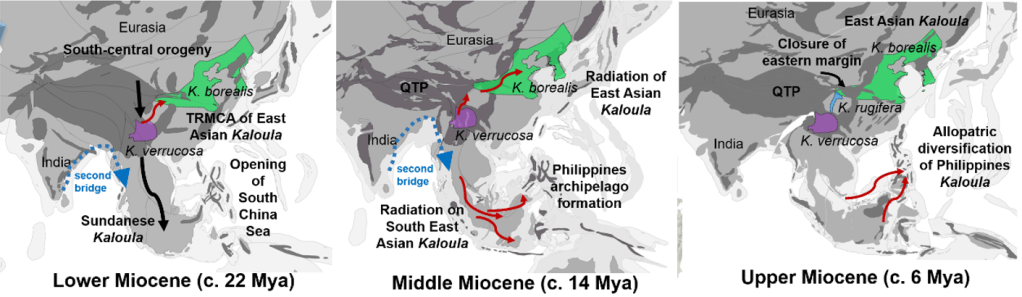
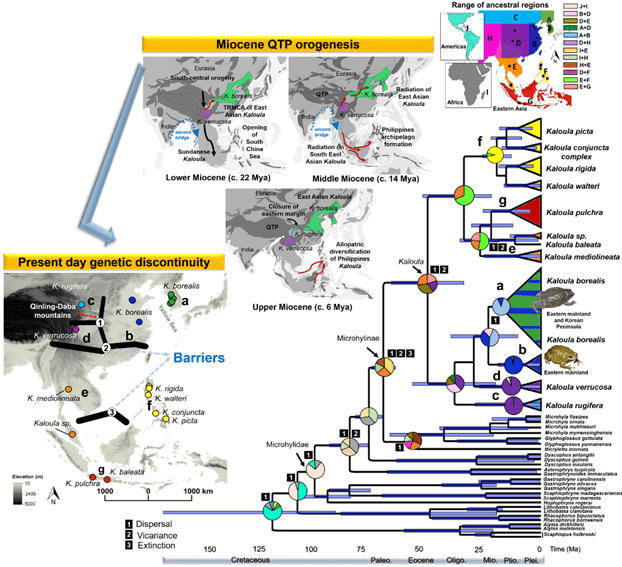
We determined the phylogenetic relationships, molecular dating and genetic connectivity assessments within the genus from 1,211 bp of concatenated mitochondrial 12S and 16S. The relaxed clock analyses reveal the emergence of Kaloula spp. common ancestor in East and South East Asia between the Eocene and Oligocene, c. 38.47 Ma (24.69 – 53.65). The genetic diversification of lineages then increased on the East Asian Mainland during the Lower Miocene, c. 20.10 Ma (8.73 – 30.65), most likely originating from the vicariance and radiation triggered by the orogeny of the Qinghai-Tibetan Plateau. Later, the dispersal towards the North East Asian Mainland during the Upper Miocene drove the population diversification of K. borealis c. 9.01 Ma (3.66 – 15.29). Finally, the central mainland population became isolated following orogenesis events and diverged into K. rugifera during the Pliocene, c. 3.06 Ma (0.02 – 10.90).
Miocene Qinghai-Tibetan Plateau orogenesis and related dynamic of Kaloula populations
The combination of population genetic and barrier analyses revealed a significant genetic isolation between populations of Kaloula spp. matching with the massive Qinling-Daba Mountain chain located in south-central China. Finally, we highlight a young divergence within the Eastern Mainland population of K. borealis, possibly attributed to refugia in South Eastern China from which populations later expanded.



 Laboratory of Animal Behaviour and Conservation