Blog

How threatened is the Huanren ground skink?

How threatened is Scincella huanrenensis? An update on threats and trends. https://doi.org/10.3390/conservation1010005

The Huanren skink is restricted to continental northeast Asia but it’s range and threats had not been understood and summarised until the fruition of this project. Our results are a collaboration of the work conducted by Yucheol Shin and Kevin Messenger as lead authors, and Kyo Soung Koo, Sang Cheol Lee, Mian Hou and Amaël Borzée.

It is important to understand the dynamics of population size to accurately assess threats and implement conservation activities when required. However, inaccurate estimates are harming both the threat estimation process, and the resulting conservation actions.

Here, we address the extinction threats to Scincella huanrenensis, a species described in the People’s Republic of China, but also occurring on the Korean peninsula. Estimating the threats to the species is not an easy task due to its unknown population status in the Democratic People’s Republic of Korea. Here we analysed the literature to acquire the known presence point for the species, along with datapoints originating from opportunistic field surveys, and employed habitat suitability models to estimate the range of the species.

Scincella huanrenensis photographed in Odaesan National Park in September 2019.

We then followed the categories and criteria of the IUCN Red List of Threatened Species to assess and update the extinction risk of the species. We found the species not to be fitting the threatened category at the global scale based on the range size, the only category for which enough data was available. We recommend the status of the species on the IUCN Red List of Threatened Species to be updated as it is now listed as Critically Endangered, a listing fitting a national assessment for the People’s Republic of China.

While this species is possibly less threatened than currently listed, this is not a genuine improvement, and specific conservation aspects should not be neglected due to its specialisation to medium to high elevation habitat.
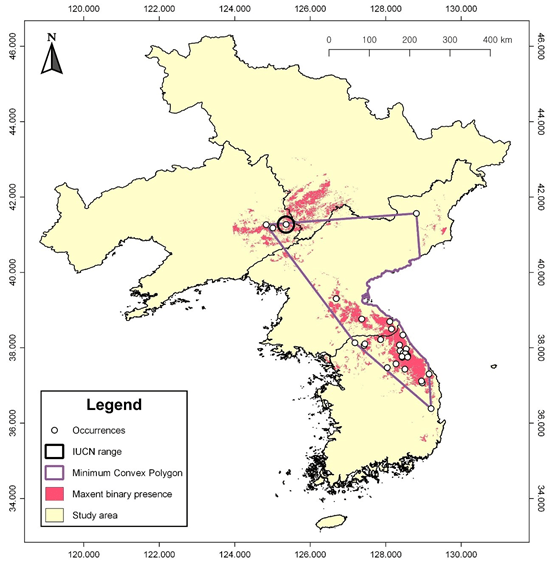
Ranges for Scincella huanrenensis. The range shaded in red was computed from a minimum convex polygon (MCP) restricted to land area and the Maxent binary presence map. The range size estimated from the MCP (87,648.1 km2) was considerably broader than the one based on Maxent binary map (26,721.9 km2). This discrepancy is likely due to poor sampling in Jilin and and Democratic People’s Republic of Korea. Also, the range “gap” between Liaoning-Jilin and the Democratic People’s Republic of Korea likely reflects poor sampling in these regions.

Link to the original publication: https://www.mdpi.com/2673-7159/1/1/5

Link to supplementary files: https://www.mdpi.com/2673-7159/1/1/5/s1
Conservation Requirements for the Suweon Treefrog

New publication in collaboration with Il-Kook Park and Prof Daesik Park from Gangwon National University! Here, we highlight that the survival of Suweon treefrog populations is linked to non-fragmented rice paddy cover (as there is no natural habitat left). We also demonstrate that the presence of greenhouses and other infrastructures in rice paddy complexes has a significant negative impact on populations.

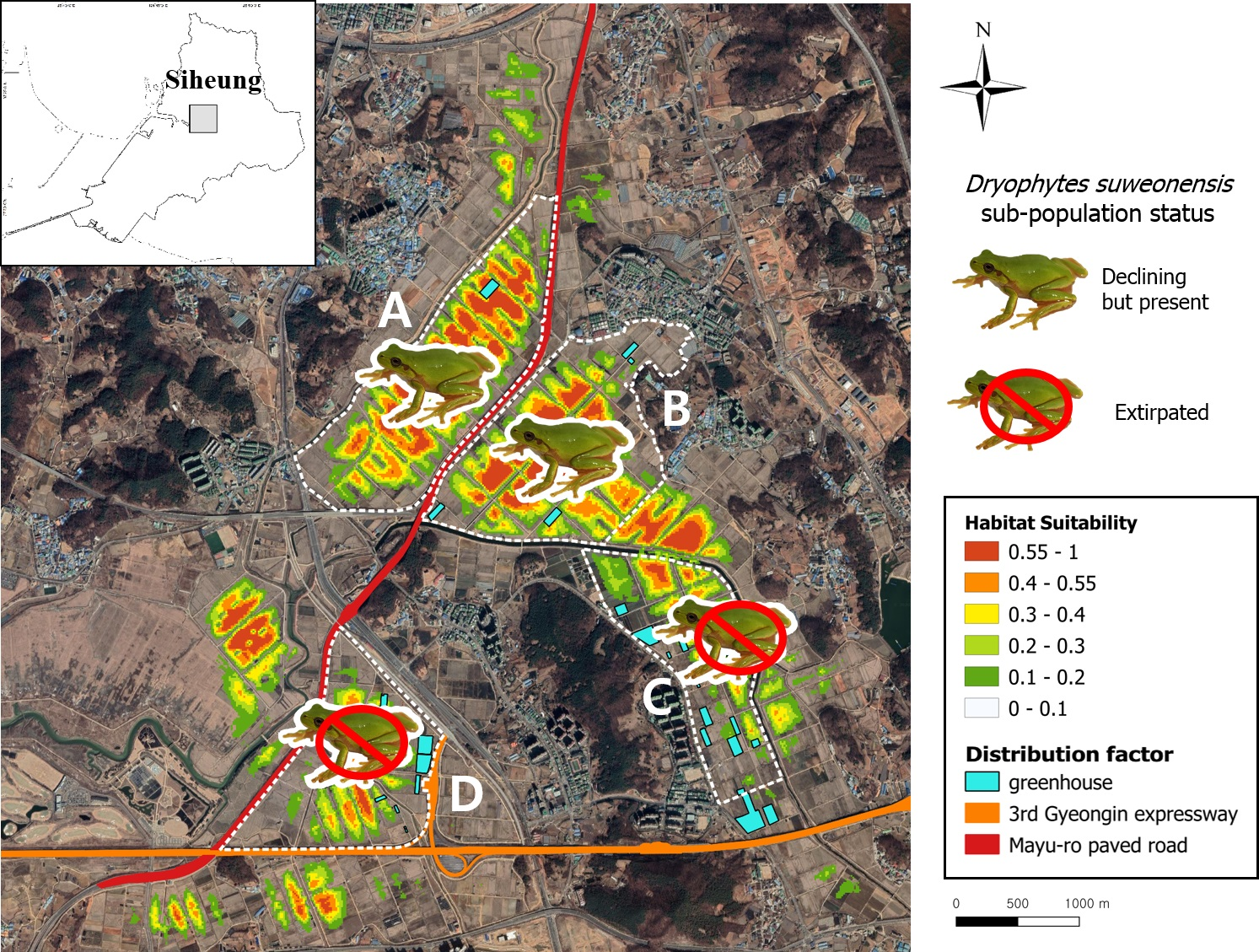
Habitat suitability for the Suweon treefrog (Dryophytes suweonensis) in Sihung, Republic of Korea, highlighting the areas where the species is extirpated, and the presence of greenhouses as their presence relates to the extirpation of the species at a site.

The Suweon treefrog (Dryophytes suweonensis) is threatened with habitat loss and most populations are under threat of extirpation. Over the last decades, sub-populations have become increasingly disconnected and specifically the density of paved roads has increased around the only site connecting northern and southern Seoul populations. We surveyed the locality in Hojobeol, Siheung, Republic of Korea to first confirm the decline in the number of sites where D. suweonensis was present. We then determined the remaining suitable habitat for D. suweonensis through a species distribution model.

Rice paddy cover and distance from the paved road are the most important factor defining suitable habitat for D. suweonensis. At this locality, uninterrupted rice paddies are a suitable habitat for the species when reaching at least 0.19 km2, with an average distance of 138 ± 93 m2 from the roads. We link the decrease in the number of sites where D. suweonensis is present with the decrease in rice paddy cover, generally replaced by localized infrastructures, greenhouses and habitat fragmentation. Rice paddies should remain connected over a large area for the protection of the remaining populations.

The PDF of the paper is available here.

Update on the range of Leopard cats (Prionailurus bengalensis) in Korea

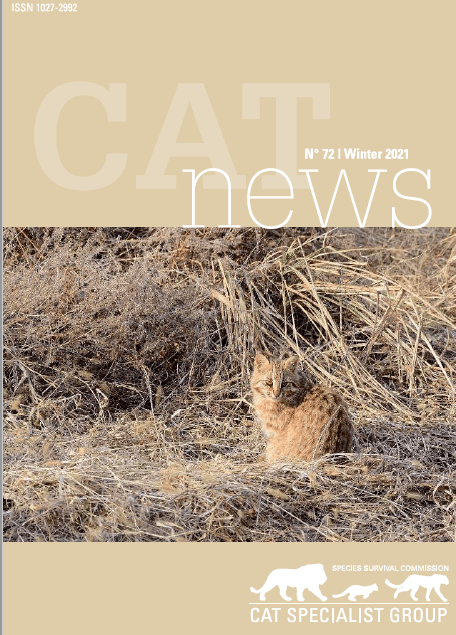
CatNews 72 with our figure on the cover (Prionailurus bengalensis euptilrurus)

New collaborative paper with Kim Kyungmin from the National Institute of Ecology and Prof. Jang Yikweon from Ehwa Woman’s University. This is a landmark for the lab as it is the first mammal publication, but also, our figure made it to the journal cover! Congratulation Kyungmin for the pretty picture!

Whichever the species, knowing the exact distribution of wildlife is important for conservation planning of species. Exact ranges are usually difficult to determine, and it is important to address the lack of information present in the literature when we come across it, especially in public databases. This is especially true for species under threat as knowing where they occur is a pre-requisite step for the establishment of protected species.

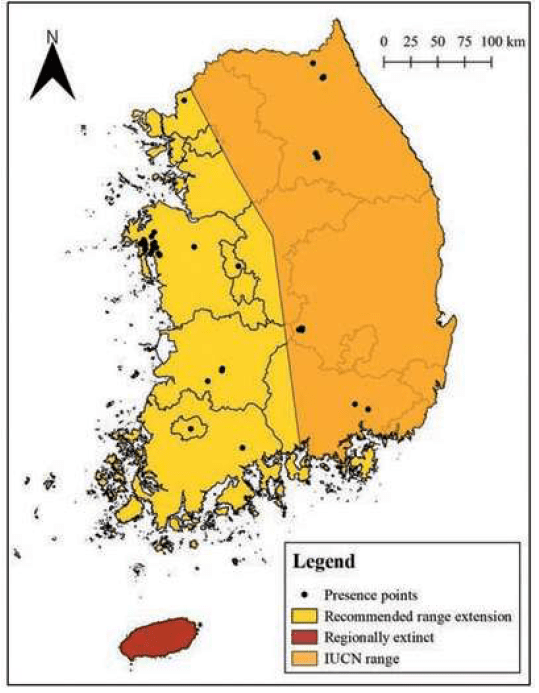
The leopard cat Prionailurus bengalensis euptilrurus is the last felid species extant in the Republic of Korea, where it is listed as Vulnerable. Here, we present data supporting the current distribution of the leopard cat in the Republic of Korea, with a focus on the western lowlands. Based on this information, we call for an update of the species’ range on the IUCN Red List. In addition, we suggest an update to the range of the species in Jeju island, where the species is now regionally extinct.

Distribution of Leopard cats in the Republic of Korea. Figure extracted from CatNews 72.

I can send the PDF upon request.

Non-invasive sound recording for nation first Phylloscopus yunnanensis

In a publication in Forktail co-authored with Dr. Moores from Birds Korea, we demonstrated that, contrary to the long-established invasive practices where birds are killed, first records of presence can be established through non-invasive methods. Here we reported the presence of a Chinese Leaf Warbler (Phylloscopus yunnanensis) in the Republic of Korea through recordings of vocalisations.

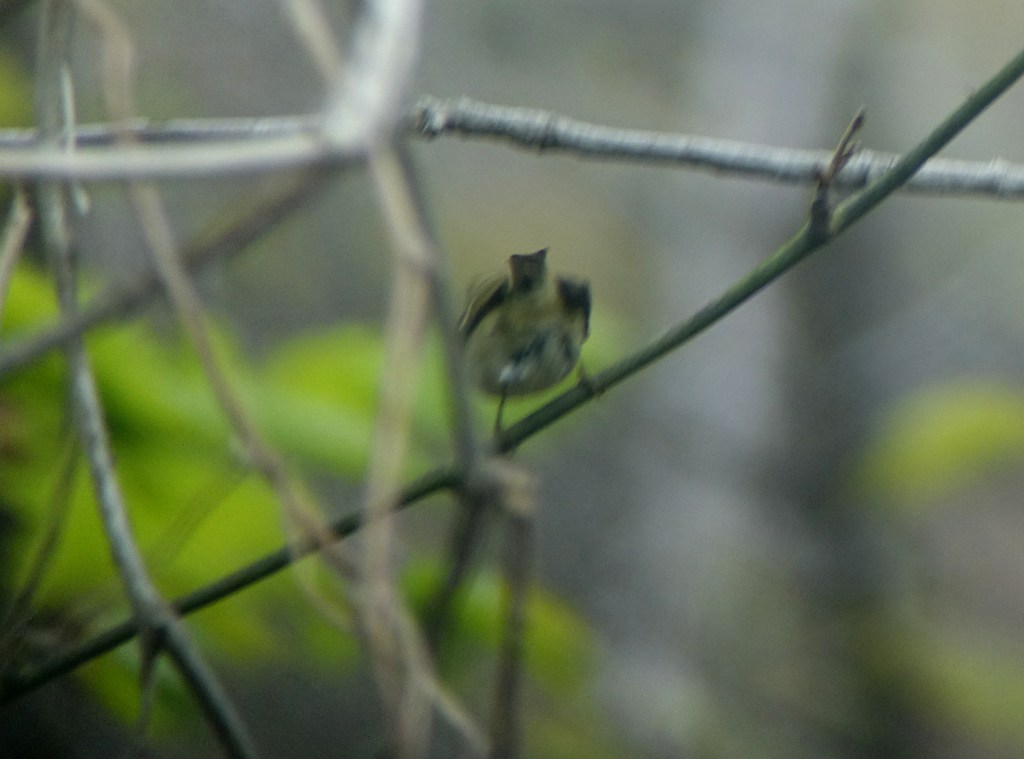
Phylloscopus yunnanensis, on Baekryeong Island, Incheon, Republic of Korea, on 1 and 2 May 2020.  The above image is the best that could be takenby Dr. Moores in at least five hours of standing around in a wind-swept field…

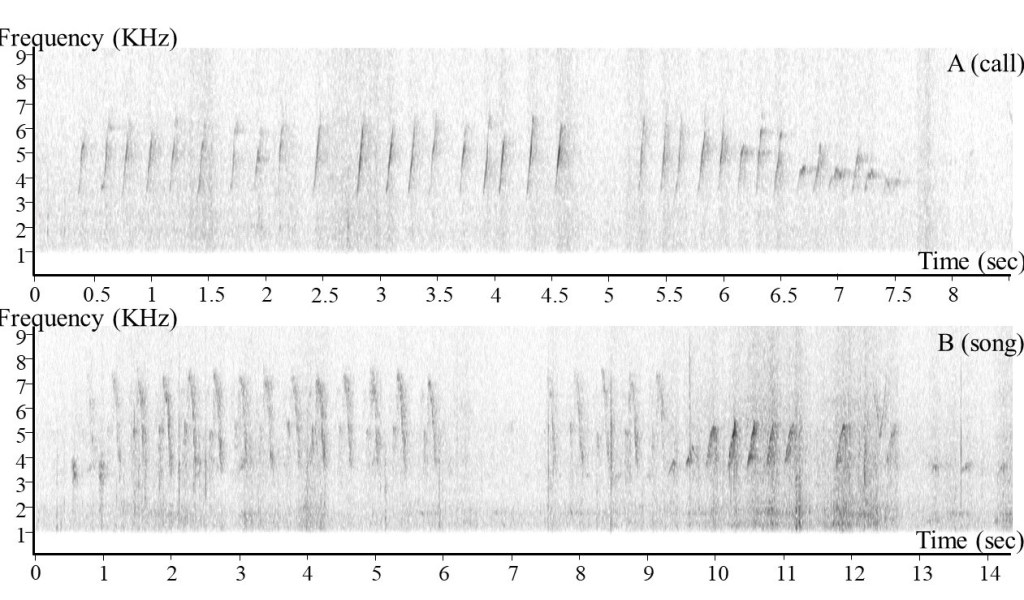
We recorded and analysed a Chinese Leaf Warbler (Phylloscopus yunnanensis) on Baekryeong Island, Incheon, Republic of Korea, on 1 and 2 May 2020. This was the first adequately-documented national record of the species. The calls and song of this species are diagnostic, and identification in the field based on these vocalisations was straightforward and immediate.

There is a strong prevalence in many regions of the world to place much higher value on records confirmed by photographs, specimens or in-the-hand measurements than on records documented only with sound-recordings.

To avoid invasive methods, we analysed the recordings to confirm the bird’s identity. While the origins of a preference for visual documentation are understandable, a wider acceptance of the value of sound-recordings in documenting the presence or absence of species will likely prove immensely helpful in improving the understanding of the distribution, abundance and conservation status of many taxa which are morphologically extremely similar.

(A) Call and (B) persistent song of Phylloscopus yunnanensis, May 2020, Baekryeong Island, South Korea.

You can read the article below. Clicking on this link represents a direct request to the authors for a copy of the article.

How much more invasive can the four worst invasive amphibians become?

Duttaphrynus melanostictus, Rhinella marina, Lithobates catesbeianus, Xenopus laevis

In a new collaborative project led by Desiree Andersen from the Lab of Animal Communication at Ewha Womans University, we assessed the risk of invasion by the four most invasive amphibian species worldwide:  Duttaphrynus melanostictus, Rhinella marina, Lithobates catesbeianus and Xenopus laevis.

Invasive species have a massive impact on their environment and predicting geographical zones at risk of invasion is paramount to the control of further invasions. We modeled global habitat suitability for all four species using ecological niche factor analysis to predict the most susceptible areas to invasion. 

Models showed suitable climatic conditions for all four species expanded beyond their current native and invasive ranges. Tropical, subtropical, and island biomes around the world were among the areas with the highest ENFA suitability for all four species. Further, marginality statistics indicate niche expansion in D. melanostictus, and generalism in the three other species. As only climatic variables were used in the modelling, these results show the ultimate distributions if all landscape conditions are met without significant barriers to invasion. 

Suitability indices (left) and thresholded suitability of ecological niche factor analysis (ENFA) compared with native range and occurrence data (right) for Duttaphrynus melanostictusRhinella marinaLithobates catesbeianus, and Xenopus laevis. Thresholds are based on the maximum true skill statistic (TSS) of the model predicted by actual values.