
A question that led to our recent publication in the journal Royal Society Open Science.
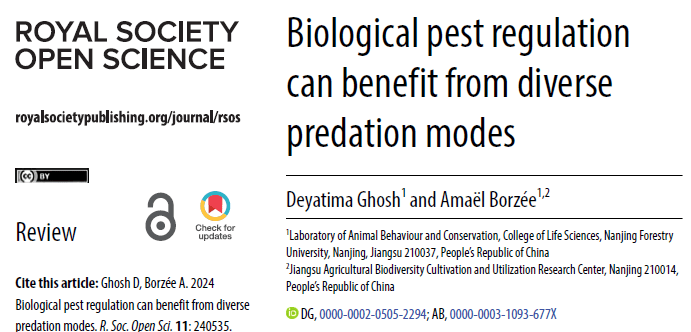
As the need for sustainable pest management grows, integrating animal cognition into biological control presents an innovative and effective approach. In our recent paper, “Biological pest regulation can benefit from diverse predation modes”, we explore the critical role of amphibians and reptiles in natural pest regulation, emphasising the cognitive mechanisms that drive their foraging behaviour.
Amphibians and reptiles, with their diverse predation strategies—ambush and active foraging—are key to efficient pest control. These species exhibit distinct cognitive traits, from perception and learning to spatial memory, all of which influence their interaction with prey. For instance, ambush predators rely heavily on movement cues, waiting for mobile prey, while active foragers actively seek out food, utilising olfactory and spatial cues to navigate their environment.

By understanding these cognitive processes, we can develop more targeted strategies to keep pest management evolving. As agricultural landscapes become more fragmented and ecosystems face increasing pressure, tapping into the behavioural flexibility of amphibians and reptiles offers a promising path. Their cognitive abilities not only make them efficient bioregulators but also provide a natural, environmentally friendly alternative to chemical pesticides, aligning pest control with biodiversity conservation. The future of pest management lies in understanding and leveraging these animal behaviours for both ecological and agricultural benefits.
Link: https://royalsocietypublishing.org/doi/10.1098/rsos.240535
 Laboratory of Animal Behaviour and Conservation