
Phylogeography and taxonomy 계통지리와 분류
꼬마도롱뇽 (Hynobius unisacculus)은 한국의 외나로도에서 발견되었으며, 남방도롱뇽
(Hynobius notialis)과 계통학적으로 가깝습니다. 꼬마도롱뇽은 고흥, 순천, 보성, 여수
지역과 지리산 북부 지역까지 서식합니다.
Hynobius unisacculus, or the Korean Small Salamander, was described from Oenaro Island in South Korea, and it is clustered with Hynobius notialis. The Korean Small Salamander occurs in Goheung, Suncheon, Boseong and Yeosu areas and further north towards Jiri Mountain.

Ecology 생태
꼬마도롱뇽의 번식 활동이 가장 절정인 시기는 3월 초입니다. 꼬마도롱뇽의 짝짓기
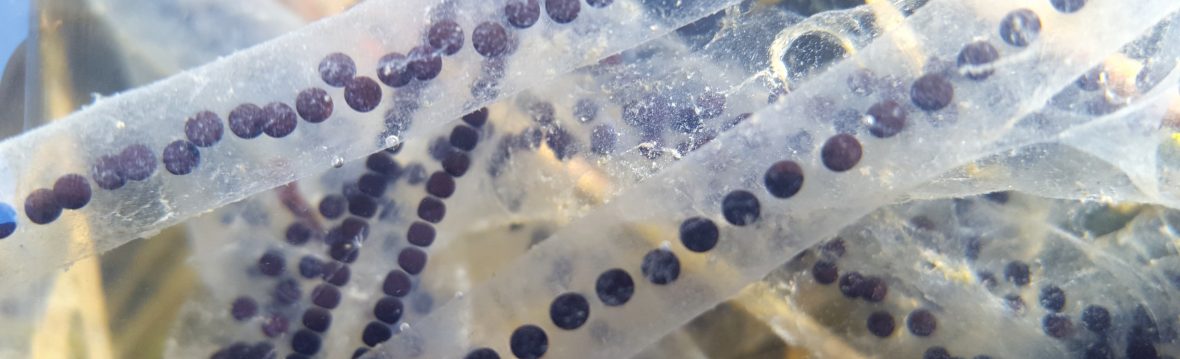
행동은 저세히 기록되어 있지 않지만, 알주머니는 일반적으로 덜 감겨 있으며, 각각의
알주머니에 17~88개의 알만 들어있고, 알줄기는 일반적으로 약하거나 없습니다.
알에서 부화하는데 까지는 약 10일 소요되며, 유생에서 변태하는 시기는 7~8월
입니다.
The species peak breeding activity is in early March. The mating behaviour of the species is not described in detail, but egg sacs are generally less coiled, contain only 17 to 88 eggs each, and the egg stalks are generally weak or absent. Hatching takes about 10 days, and metamorphosis happens in July or August.

Eggs – unhatched larvae

Larvae
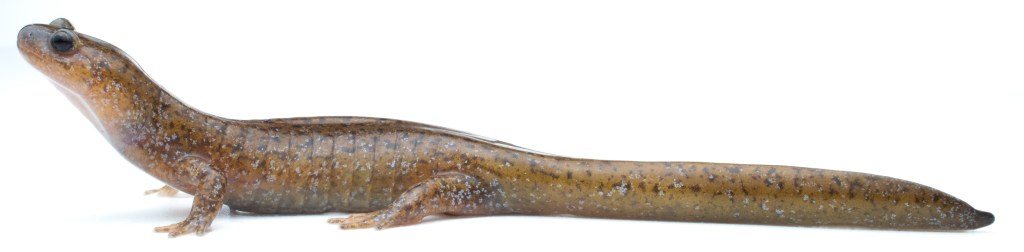
Adult
Conservation 보전
대부분의 Hynobius속의 도롱뇽들과 마찬가지로 서식지 파괴로 인하 위협에 직면해
있으며, 서식지 변화에 탄력적이지 못하고 기후 변화의 영향을 받아 서식지와 번식
생태에 모두 영향을 받고 있습니다. 꼬마도롱뇽은 개체수 감소로 인해
세계자연보전연맹 적색 목록(IUCN Red list)에 멸종 위기에 처한 종으로 등재되어
있습니다.
Similar to most Hynobius, the species faces habitat degradation, it is not resilient to habitat changes, and it is impacted by climate change for both suitable habitat and breeding phenology. The species is decreasing in population size, and it listed as Endangered by the IUCN Red List.
 Laboratory of Animal Behaviour and Conservation