We are delighted to share the success of our recent two-day online workshop on Amphibian Bioacoustics that was conducted on 14 & 15 October. The workshop was facilitated by Prof. Amaël Borzée and the two-day sessions were conducted by Vishal Kumar Prasad. This workshop brought together scholars and researchers from over 5 countries to delve into the fascinating world of amphibian bioacoustics. The workshop exemplified the power of modern techniques in advancing our knowledge of amphibian behavior, ecology, and conservation through bioacoustics.
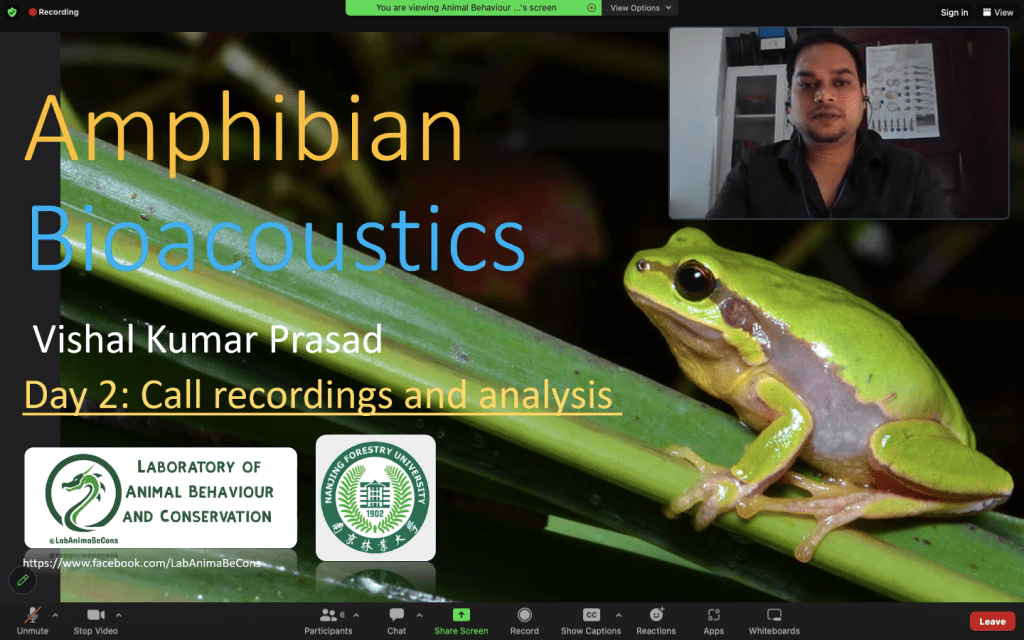
Day 1 was dedicated to enlightening the science of understanding animal behaviour through sound. Participants were introduced to the foundational principle of bioacoustics, delving into the essentials of sound production, propagation, and reception. The sessions also provided an in-depth exploration of various types of vocalizations. Day 2 provided a detailed understanding of recording units and technical equipment used in the field, helping participants enhance their sound recording skills. The final session of the workshop focused on the critical phase of bioacoustics research i.e. analysis using different software. Participants were guided through the process of handling and processing recorded data.
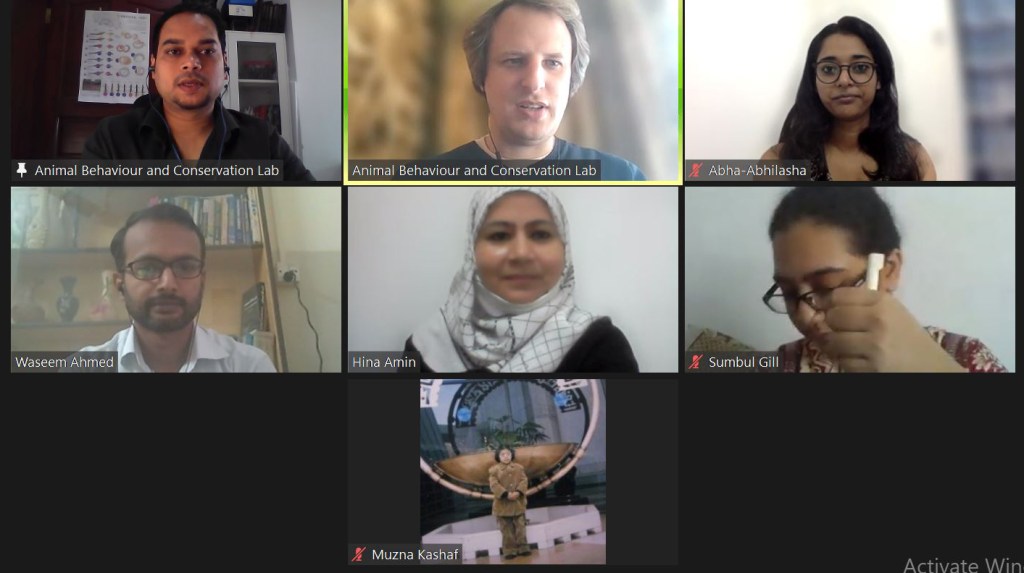
The diversity of perspectives and experiences brought by participants from different corners of the globe enriched the discussions and sparked new avenues of research.
Stay tuned for updates on upcoming events and initiatives from the Laboratory of Animal Behaviour and Conservation.

🌿🌎 #BioacousticsWorkshop #ConservationScience #GlobalResearchCollaboration 🌿🌍

 Laboratory of Animal Behaviour and Conservation