
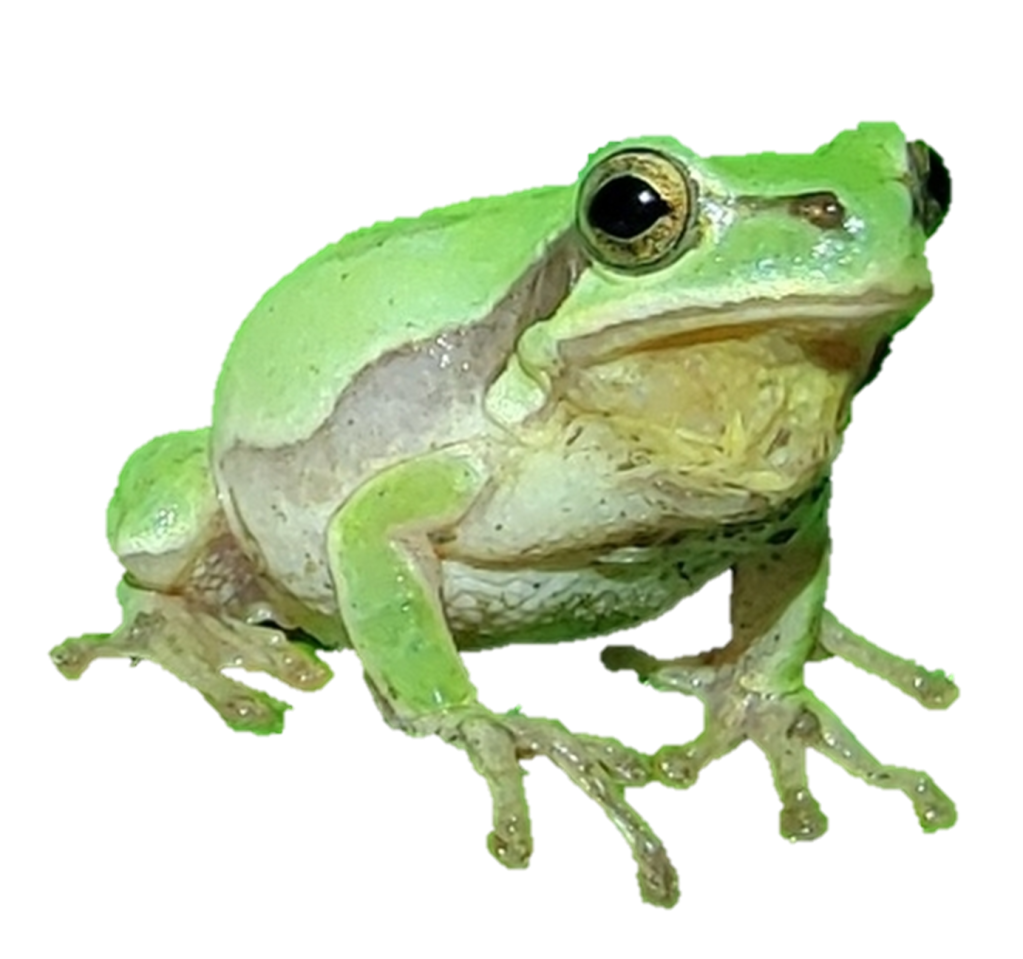
The immaculate treefrogs, Dryophytes immaculatus, were reported to be abundant in the plains of southern Jiangsu, China, until the 1980s. However, the species has scarcely been seen since the beginning of the century.
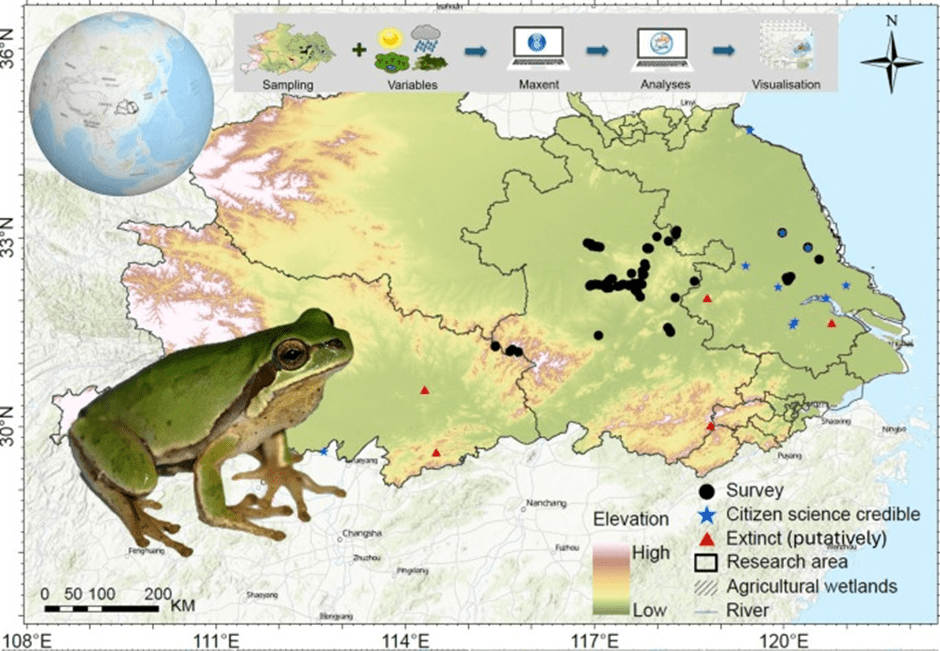
In our latest paper in BMC Zoology, We conducted field surveys at more than 6000 independent sites between 2017 and 2025, citizen science surveys resulting in more than 1300 entries, and questioned farmers, when possible, to determine the occurence and presence of D. immaculatus. We detected the species at 210 independent sites, obtained 12 additional independent sites from the citizen science data, and confirmed its local extinction at eight additional sites.
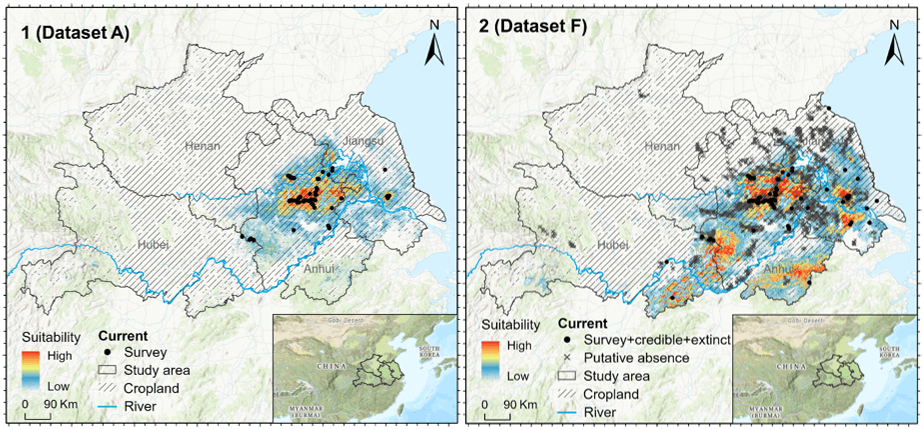
The model for the current timeline identified suitable habitat in an area marginally broader than the one where the species is currently found.
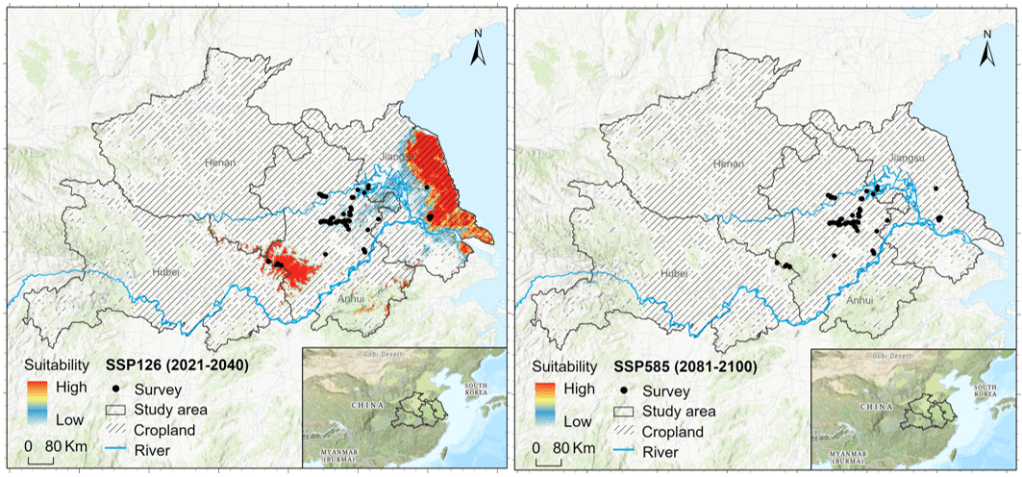
The climate change scenario models highlighted a shift in the location of the suitable habitat for all scenarios and time periods tested, with a weak overlap with the current distribution of the species.
Based on the data accumulated, we could also apply the categories and criteria of the IUCN Red List of Threatened Species, and we suggest the species to be listed as Endangered under both criteria B2ab (i, ii, iii, v) based on geographic range, and C2a (i) based on the small and declining population size.
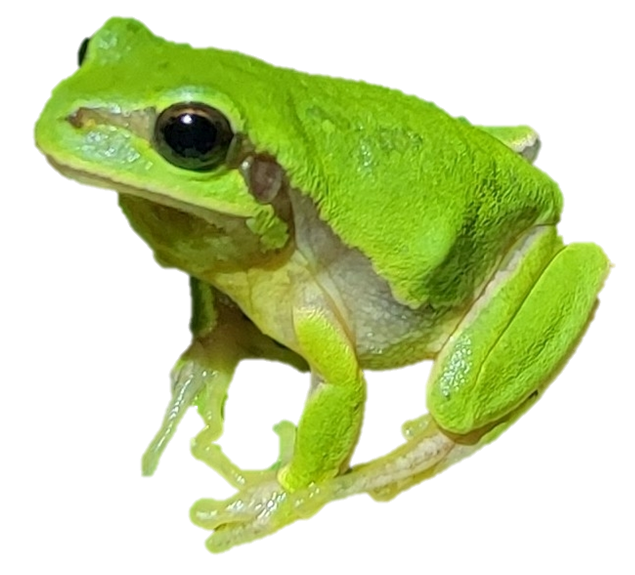
The range of D. immaculatus has contracted over the last decades, fast enough for people sharing their land with the species to remember them. In addition, the habitat suitable for the species keeps on declining, and it is predicted to entirely collapse in all future climatic scenarios. While not Critically Endangered yet, D. immaculatus is in need of conservation actions, especially to prevent future decline in habitat quality due to human activities.
Borzee A., Zhang X., Prasad V.K., Wang R., Wang Z., Qin S., Messenger K.R., Guo T., Jang Y. Wang J. (2026). From Least Concerned to Endangered? An integrated approach to determine the distribution, suitable habitat and future of Dryophytes immaculatus. BMC Zoology. 11:2. DOI: 10.1186/s40850-025-00248-w

 Laboratory of Animal Behaviour and Conservation