
A new global review synthesises conservation status assessments and decades of amphibian conservation research to reveal the latest trends in conservation status and outline priority actions for their protection. The findings underscore the alarming rate of declines, but also highlight promising signs of recovery where conservation is working. The authors stress that coordinated international action is essential to secure the future of frogs, salamanders, newts, and caecilians worldwide.
Amphibians continue to face an unprecedented high extinction risk, with 41% of species classified as threatened. The main drivers of threat include habitat loss, climate change, disease, pollution, and invasive species. The new review “Conservation Priorities for Global Amphibian Biodiversity“, led by Prof. Amaël Borzée, presents the most comprehensive synthesis to date of conservation progress, population trends, and policy measures guiding amphibian protection efforts worldwide.
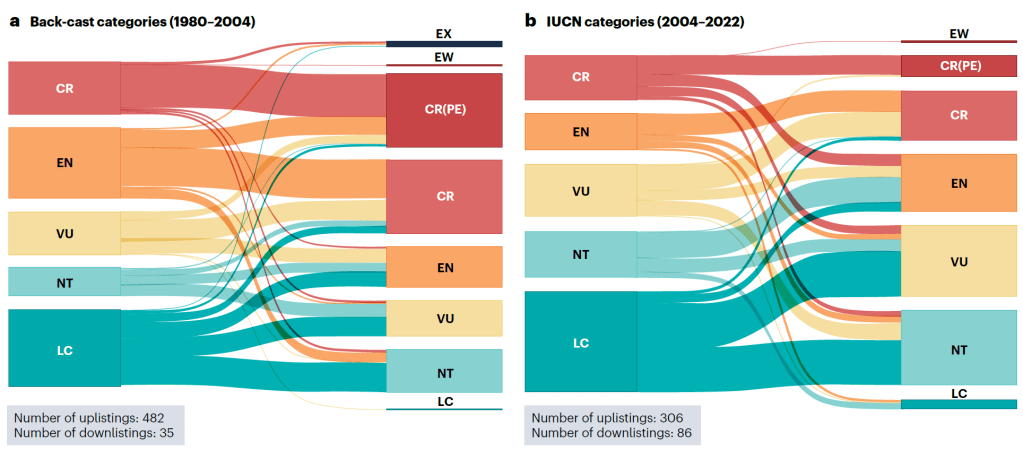
from 1980 to 2004 using backcast categories from the second Global Amphibian
Assessment (GAA2) (517 species). b, Category changes from 2004 to 2022 using
backcast categories from the GAA2 (392 species).
Since 1980, the conservation status of hundreds of amphibians has worsened, with 37 species now confirmed extinct, and another 185 have disappeared and are potentially extinct. Disease has been the primary driver behind many of these declines and remains a critical challenge for conservation efforts. Yet the review also highlights meaningful progress: the conservation status of 120 species has improved, thanks to effective habitat protection, targeted management, and dedicated recovery programs.

Global prioritisation tools, such as Threatened Amphibian Landscapes (TAL), Highly Threatened Genera, and Key Biodiversity Areas, are proving essential for guiding strategic investment and identifying priority sites and species for action, and the global Amphibian Conservation Action Plan provides evidence for methods that work. These tools help ensure that limited resources are focused where they will deliver the greatest conservation impact. Meanwhile, biodiversity indicators such as the IUCN Red List Index and the Green Status of Species Index continue to advance our understanding of conservation progress and the potential for species recovery.
While improvements in the conservation status of some species demonstrate the potential for recovery with targeted conservation action, the authors caution that current efforts remain insufficient. Long-term success will require conservation actions that align with global commitments, including the Kunming–Montreal Global Biodiversity Framework. Only through strengthened collaboration between governments, conservation organisations, research institutions, and local communities can we shift amphibians worldwide from crisis toward recovery.


 Laboratory of Animal Behaviour and Conservation