
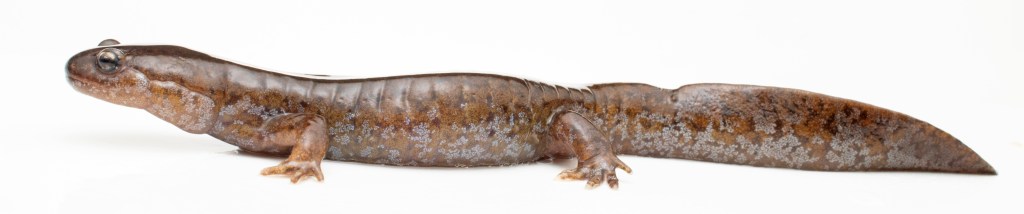
Phylogeography and taxonomy 계통지리와 분류
제주도롱뇽 (Hynobius quelpaertensis)은 1997년에 종으로 승격되었으며, 제주도롱뇽은
꼬마도롱뇽(H. unisacculus), 남방도롱뇽(H. notialis)과 계통학적으로 가깝습니다..
제주도롱뇽은 북쪽으로 한국의 내륙 지역인 부안까지 분포하며 지리산 북부 지역에도
일부 집단이 서식하고 있습니다. 내륙에서 남쪽으로는 장흥까지 분포하며 더
남쪽으로는 큰 섬인 제주도까지 분포하고 있습니다.
Hynobius quelpaertensis, or the Jeju salamander, was elevated to the species level in 1997 and it is clustered with H. unisacculus and H. notialis. The Jeju salamander is distributed north to Buan on the mainland, with some population north of Jiri Mountain. The species distributes southwards towards Jangheung, and some of the larger islands further south, all the way to Jeju Island.
Ecology 생태
제주도롱뇽은 제주도에서 12월 말부터 번식을 시작하지만 내륙에서는 4월 말까지도
번식합니다. 제주도롱뇽의 구애 행동은 도롱뇽(H. leechii)과 유사하지만, 수컷은 특정
나뭇가지를 차지하기 위해 다른 수컷들과 경쟁합니다. 알이 부화하는데 까지는 수
일에서 2주 정도 걸립니다.
The species starts breeding in late December on Jeju Island, but until April on the mainland. The courtship behaviour of H. quelpaertensis is similar to that of H. leechii, and males compete to preserve access to specific wooden sticks for egg deposition. The eggs take a few days to two weeks to hatch.


Eggs

Developping eggs
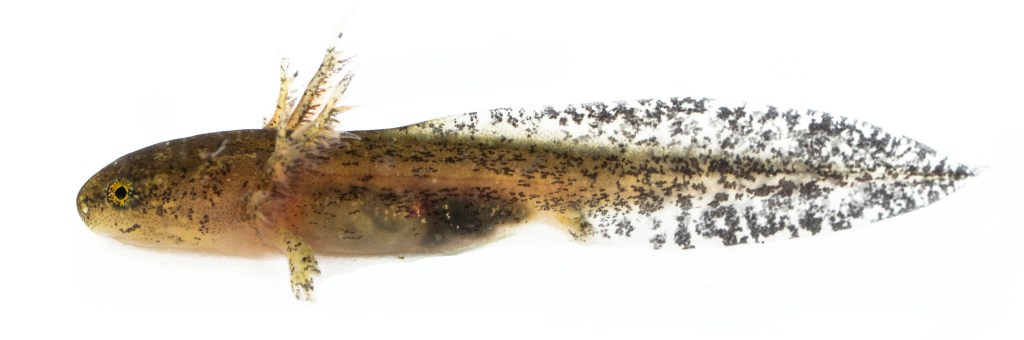
Larvae

Adult
Conservation 보전
제주도롱뇽은 서식지 변화 영향을 받으며 광범위한 서식지 변화에 민감합니다. 또한
기후 변화의 위협을 받고 있으며, 이는 제주도롱뇽의 서식지와 번식 생태에 모두
영향을 미칩니다. 제주도롱뇽은 서식 범위 내에서 흔하게 관찰이 가능함에도
불구하고 개체수가 감소하고 있으며 멸종위기 종 및 취약종으로 분류되어 있습니다.
The species is impacted by habitat modification, and it is sensitive to extensive habitat changes. It is also threatened by climate change, impacting both the suitable habitat and the breeding phenology of the species. Despite being common within its range, the species is declining in size, and it is listed as decreasing and Vulnerable.
 Laboratory of Animal Behaviour and Conservation